





Ken Johnson
At the start of each new year, I find myself fielding requests from all manner of outdoor enthusiasts who want to learn about wild edibles. It seems that as the cold, gray winter landscape gives way to the warmer notes of spring and summer, people feel a primal urge to get outside, explore, and forage.
So, every spring, I guide groups out into the countryside to teach them how to safely identify, gather, and process local wild foods. One such group last May showed special interest in chicory (Cichorium intybus) and how its root can be transformed into “wild coffee.” I thought I would share part of that discussion here as a reminder of our connection to the land and of the nutrient-dense foods growing all around us, often free for the taking.
Responsible Foraging
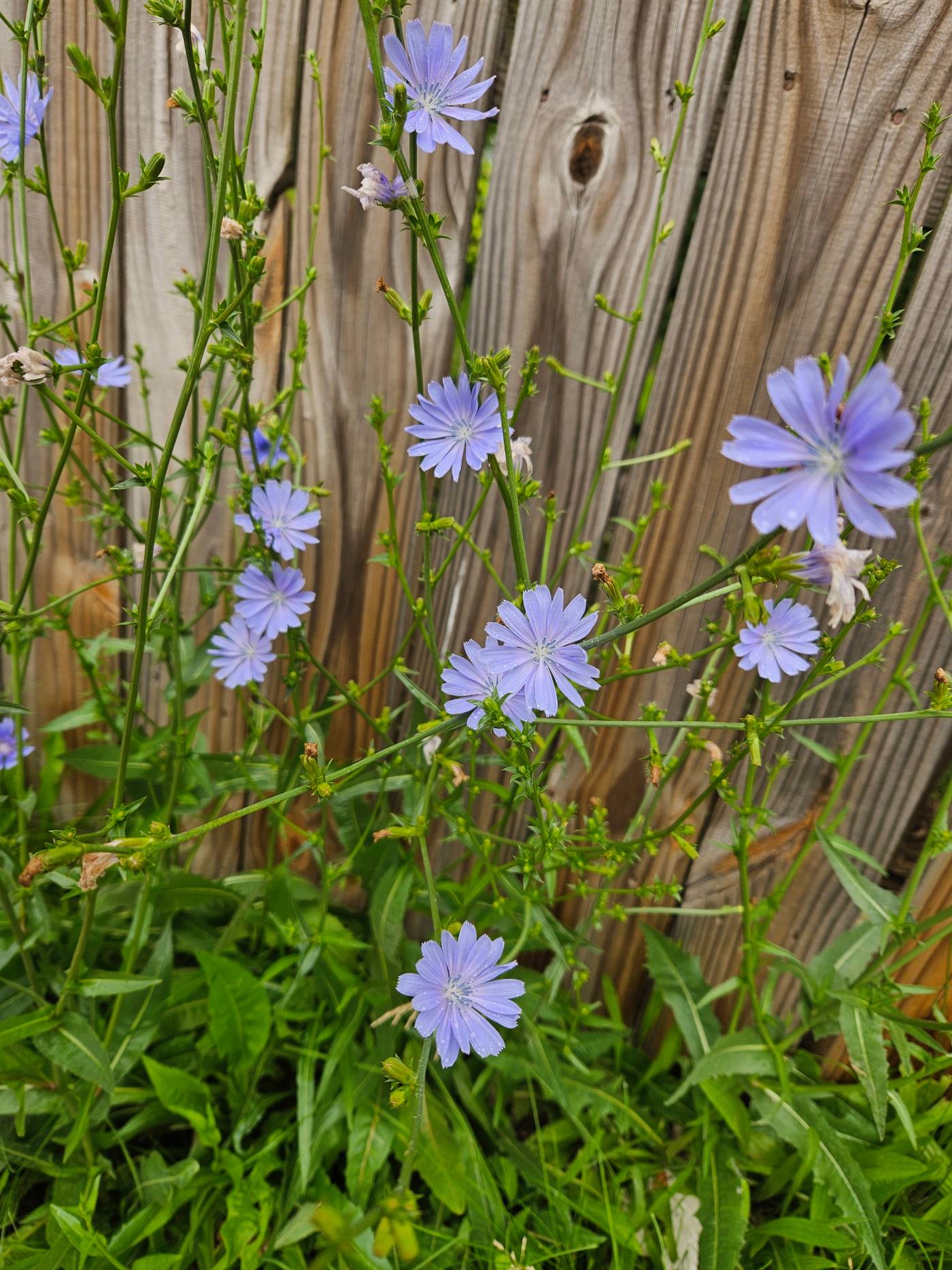
Pictured: Chicory flowers
To begin, safety is the foundation of every foraging walk. Proper plant identification is essential, and I always recommend carrying a reliable field guide. Chicory’s bright blue flowers are dandelion-like and sit alternately on wiry stems, but its leaves may vary greatly in shape and size depending on where they grow on the plant. Leaves are larger and “toothed” near the base and more lance-shaped farther up the stem. If a plant cannot be 100% verified, it should not be picked.
Next, foragers must also collect responsibly and ethically by avoiding overharvesting and by securing landowner permission before gathering. Regulations vary by location, including parks and public lands, so one should always confirm local rules before picking. Failure to follow local requirements can result in stiff fines.
Students are warned to avoid plants growing in ditches, along busy highways, or on ground treated with herbicides or pesticides, as they may be contaminated.
Another caution that is stressed to gatherers is to limit the intake of any new wild plant until you know how your body will react. Chicory can cause gastric distress for some individuals if consumed in significant quantities. It also contains a type of latex that may trigger allergic reactions in some individuals. Proceed cautiously until you are confident you can tolerate it.
That said, wild chicory is still an ideal plant for introducing students to foraging. It is abundant everywhere there is disturbed soil, easy to identify, has no known poisonous lookalikes, and is tasty.
Chicory in the Landscape
From mid-spring through summer, roadsides and walking paths across much of the United States and Canada become dotted with the periwinkle-blue, and occasionally white or pink, flowers of chicory. Originally native to Europe and Asia, chicory was introduced to North America around 1700 and promoted as drought-resistant fodder for cows and sheep.
Thomas Jefferson became such a fan of chicory that he cultivated it at Monticello and shared seeds with friends, including George Washington. Still, folks had not yet discovered all the beneficial uses of wild chicory. That would change during the hardships of the Civil War.
During the war, Union naval blockades severely limited the availability of regular coffee beans to Southern populations. New Orleans, the country’s second-largest coffee port, was shut down. In response to the shortage, people experimented with alternatives such as acorns, sweet potatoes, okra seeds, peanuts, corn, and eventually chicory root.
The slightly bitter roots were roasted and ground into a coffee substitute. The brew became especially popular in parts of Louisiana, where locals adopted the French practice of mixing dark coffee with chicory to stretch limited supplies. The blend produced an unexpectedly smooth, nutty flavor and soon became widely known as New Orleans-style coffee…a name that stuck.
Uses and Benefits
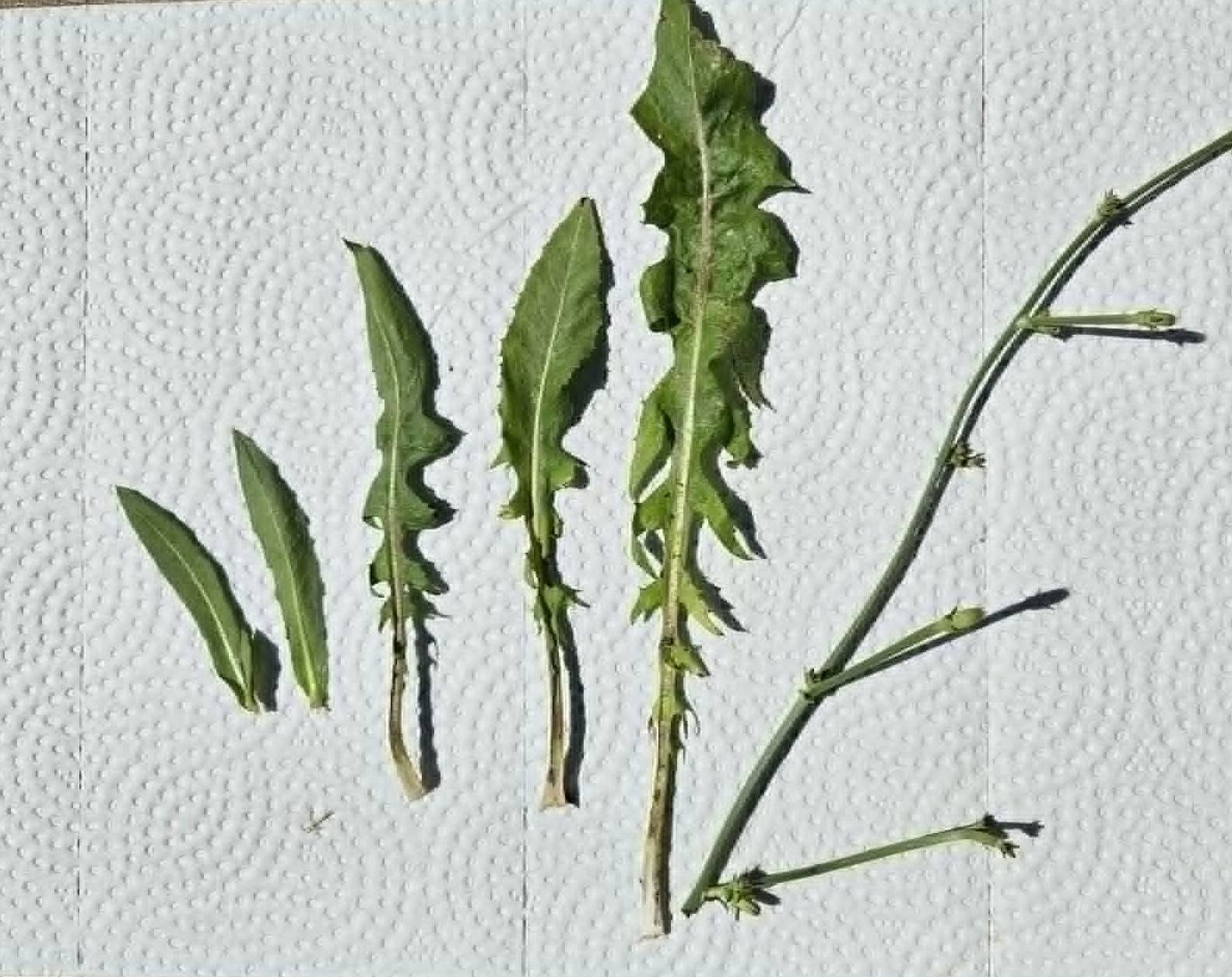
Pictured: Chicory leaves and stems
Subsequently, America’s interest in wild chicory continued to grow. Homesteaders, survivalists, and people from many walks of life began taking notice of the plant. Dietitians promoted chicory as a caffeine-free alternative to coffee, while health professionals valued its root for containing the dietary fiber inulin, a prebiotic that supports digestion.
Certain Native American tribes used the leaves, stems, and roots of chicory to produce yellow and greenish-yellow dyes. Today, preppers and bushcraft practitioners still value the nutrient-dense leaves and flowers as a reliable emergency food source.
The young leaves can be used in salads and sautés, and they can be combined with chopped root to make tea. The stems are sometimes pickled to add crunch to winter salads. Then, of course, there is the warm, nutty taste of chicory coffee.
Making Chicory Coffee
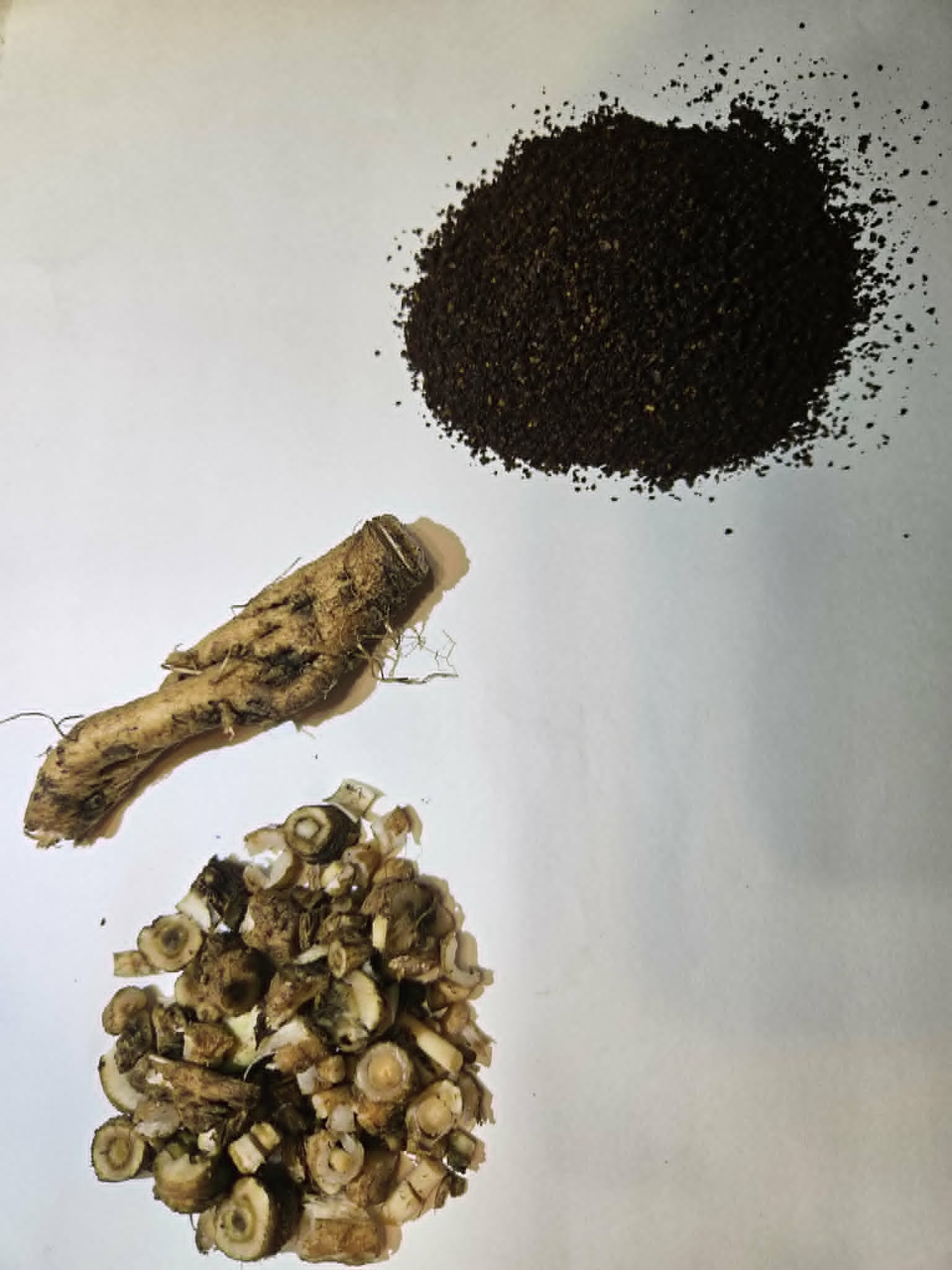
Pictured: Chicory root and ground chicory root
Making chicory coffee is fairly simple, whether you are brewing a pure roasted chicory drink or mixing it with your favorite dark coffee blend. In a pinch while camping, I roasted chicory root in a coffee can and ground it up with a rock into passable coffee grounds. However, for the casual or first-time user, a conventional oven and a French press or drip coffee maker probably work best.
- Gather fresh chicory roots from a contaminant-free location, avoiding roadsides and treated areas.
- Wash and scrub the roots thoroughly with water and a stiff vegetable brush.
- Slice the roots into small, pea-sized pieces using a cleaver, shears, or sharp knife.
- Spread the chopped roots on a foil-lined baking sheet and dry them in an oven at 140°F to 200°F.
- Stir occasionally to prevent scorching; escaping steam is part of the normal drying process.
- When the steam dissipates and the root pieces begin to darken, remove them from the heat and allow them to cool.
- Grind the dried roots in small batches using a bladed coffee grinder.
- If the ground root feels mushy, it still contains moisture; return it to the oven for about 10 minutes.
- Once fully dried and ground, place the material back on a baking sheet and roast it at 325°F.
- Roast for 40 to 90 minutes, checking and stirring every 15 minutes.
- Spread the roasted grounds on a plate and cover loosely with a paper towel to cool.
- Brew the roasted chicory as you would coffee, using 1 to 2 teaspoons per cup.
- For a traditional blend, mix chicory and coffee grounds in equal parts.
- Add honey, stevia, or creamer to taste.
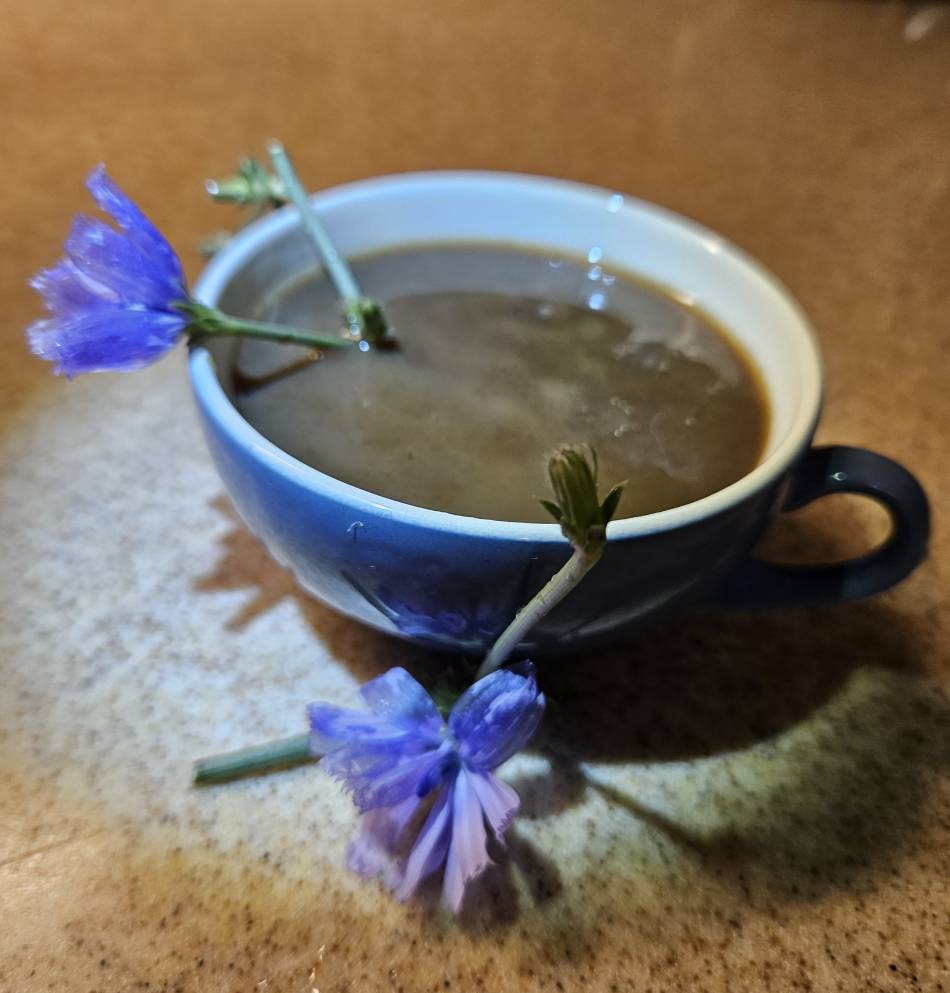
With its distinctive blue flowers, deep taproot, and long history of practical use, chicory offers more than a wild coffee substitute. It is a reminder that the landscape around us is full of useful plants, provided we approach them with curiosity, care, and respect.