


By Heath Wood
After spending the evening knocking out summer maintenance projects on the property I would be hunting this fall, a good friend and I climbed into the truck and started the drive home. Like any two country boys with whitetails on their minds, our conversation quickly turned to deer season and the possibilities that awaited us in the coming months.
As we made our way down the road, we scanned every green field we passed, imagining what mature bucks might be using those same areas once fall arrived. Just as expected, nearly every field held deer. A few young bucks were visible, but then we spotted several mature bucks mixed into the groups, which only added fuel to our excitement and anticipation for the upcoming season.
Then, as we crested one final hill, everything changed. We both looked to the left across a large hay field and, almost at the same time, shouted, “Giant!”
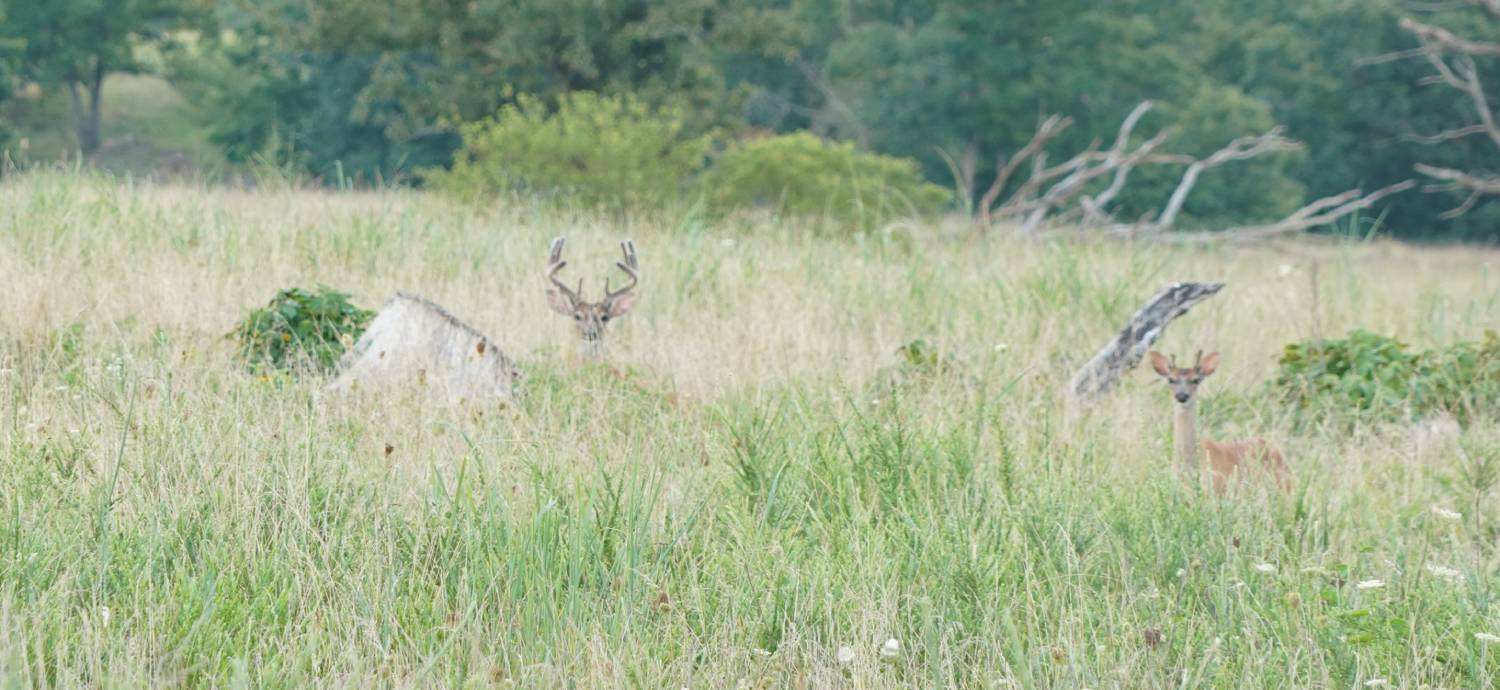
Standing in the back of the field was a true velvet giant, accompanied by two other mature bucks. Yet there was no question which deer captured our attention. This buck towered above the rest, carrying an impressive frame that we estimated to be 20 to 22 inches wide with long, towering tines. The buck wasn’t far from the property we had just finished working on, and as we watched him disappear into the summer evening, one thought kept running through our minds: maybe this is the year a true giant steps within bow range.
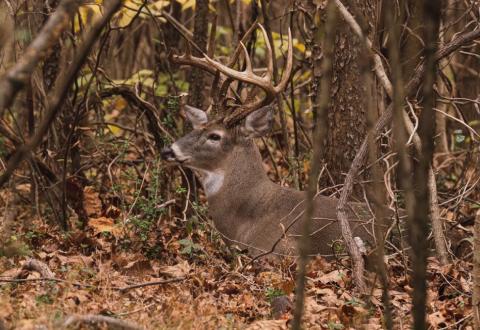
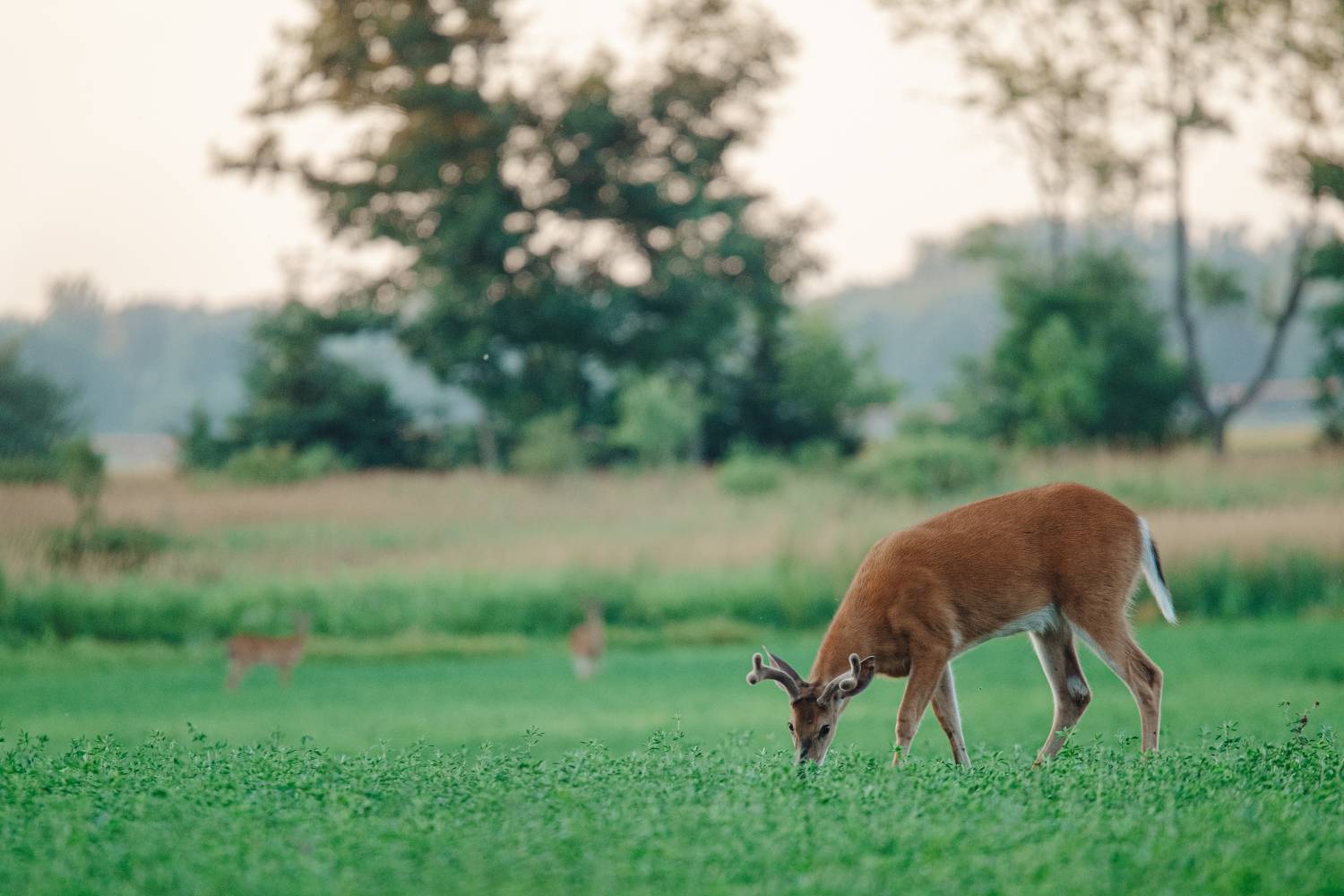
By July, the first glimpses of bucks begin to fuel the excitement of the upcoming season. Whether it happens from the roadside, like the encounter my friend and I experienced, or through trail camera photos, these sightings are what deer hunters have been waiting months to see. Mature bucks begin stepping into bean fields, clover plots, and mineral sites while wearing thick velvet antlers that appear to grow larger with each passing day. Every new trail camera image brings a wave of excitement and anticipation, giving hunters a chance to study their potential targets, estimate age and size, and wonder where these bucks came from. For many hunters, these early summer encounters create the hope that this could finally be the year a mature buck makes a mistake and steps within bow range.
While it's easy to focus on that wide inside spread, or inches of antler, those velvet covered racks tell a much bigger story. Antlers are one of the fastest growing tissues in the animal kingdom, and their development reflects everything from a buck's age and genetics to the quality of the habitat where he lives. Understanding how antlers grow is just one more way that hunters can better evaluate bucks, improve their hunting properties, and make smarter management decisions long before opening day.
The Incredible Antler Cycle
Unlike horns, which continue growing throughout an animal's life, for example, on a cow or a goat. Antlers are shed and regrown every year. Shortly after a buck drops his antlers in late winter or early spring, the process starts all over again.
As daylight increases in spring, rising testosterone levels trigger antler growth. Specialized cells on the pedicles, the permanent bony structures on a buck's skull, begin rapidly producing new antler tissue. Over the next four to five months, those antlers can grow at an astonishing pace, often exceeding an inch per day during peak development. No other bone in the animal kingdom grows this quickly.
During this time, the antlers remain covered in velvet, a soft, fuzzy skin packed with blood vessels and nerves. Velvet serves as the antler's lifeline, delivering oxygen, calcium, phosphorus, protein, and other nutrients directly to the growing bone. Damage to the velvet can permanently affect the antler underneath because the growing bone is still alive and developing. For example, if a deer has been injured by a vehicle accident, the bone or antler can be bent out of normal shape, then harden when velvet is ready to shed, resulting in a non-typical looking buck during the fall.
Why Summer Nutrition Matters
Growing antlers requires an enormous amount of energy. Although genetics determine a buck's maximum antler potential, nutrition often determines how much of that potential is actually reached.
Throughout spring and summer, bucks dramatically increase their food intake. Their diet shifts toward highly digestible plants rich in protein, minerals, and energy. During peak antler growth, some of a deer’s favorite foods consist of high protein forbs and legumes such as soybeans, clover, and native vegetation, which is why you often see deer in fields or crop fields during summer evenings and throughout the night.
Protein is especially important because antlers are composed largely of protein during their early development before becoming mineralized bone. As the antlers harden later in the summer, calcium and phosphorus become increasingly important.
Healthy habitat filled with diverse native vegetation often provides far more nutritional value than hunters realize. While food plots certainly help, quality natural browse helps supply the majority of a deer's nutritional needs.
Age: The Biggest Factor Hunters Overlook
One of the biggest mistakes hunters make is assuming every buck should grow massive antlers. Age plays an enormous role. A 2½-year-old buck may carry nice antlers, but his body is still investing heavily in skeletal growth and muscle development. Much of the nutrition he consumes goes toward simply becoming a mature deer.
As bucks reach 4½ to 6½ years old, more of those nutritional resources can be devoted to antler growth. You may get mad or aggravated at other hunters who say, “pass them up until next year”, yet that's when many bucks reach their peak potential. This also explains why a buck that scores 125 inches one year might suddenly jump to 145 or even 160 inches the following season. Hunters often assume the improvement came solely from better nutrition, but in many cases, the buck matured into his prime. Patience is one of hunters’ biggest challenges because our hearts start beating fast and adrenaline flows through our veins, yet it can be one of the most effective management tools available.
Genetics Matter - But Only to a Point
Hunters love discussing genetics, but genetics are often blamed, or credited, more than they should be. Genetics establish a buck's ceiling.
Nutrition, health, stress, disease, and age determine how close he gets to that ceiling. A genetically gifted buck living on poor habitat may never get to his full potential. Meanwhile, an average genetics buck living on exceptional habitat can produce surprisingly impressive antlers.
This is why neighboring properties sometimes produce dramatically different bucks despite sharing the same local gene pool. The expression, “the grass is greener on the other side of the fence”, may actually be a true statement.
The Role of Velvet
Velvet isn't simply a protective covering, it functions as a living support system. Inside the velvet are thousands of blood vessels delivering nutrients directly into the growing antler. The velvet also contains nerves, making growing antlers surprisingly sensitive.
As summer progresses, testosterone levels begin rising. Blood flow to the velvet gradually decreases, causing the tissue to dry out and die. By late August or early September in many regions, bucks begin rubbing trees and shrubs to remove the dried velvet, revealing the hardened bone underneath. Those first rubs mark an important behavioral shift as bucks transition from summer feeding patterns toward the fall breeding season.
Why Some Bucks Explode From One Year to the Next
Each summer, hunters eagerly compare new trail camera photos to images from previous years, searching for signs of growth and improvement. In some cases, the difference can be remarkable. Several factors can influence how much a buck’s antlers develop from one year to the next.
One of the biggest contributors is age. As a buck reaches a more mature age class, he has the ability to put more energy into antler growth. Environmental conditions also play a major role. Adequate rainfall can improve natural forage and help food plots produce higher quality nutrition, providing deer with the resources needed to reach their full potential.
Other factors, such as reduced deer densities, can also have an impact by decreasing competition for available food sources. With less pressure on the landscape, deer may experience less stress and have more energy available for body and antler development.
In many situations, it isn’t just one factor that creates a dramatic improvement; it’s a combination of several. A mature buck with quality genetics, living in excellent habitat during a year with favorable weather conditions, has the best opportunity to maximize his antler potential.
Reading Summer Trail Camera Photos
July trail camera photos provide hunters with far more information than just a glimpse of antler size. While impressive racks naturally grab attention, there are several other details worth studying when evaluating summer bucks.
Body condition can reveal a great deal about a deer’s overall health. Thick necks, full shoulders, and good body weight are all indicators that a buck is benefiting from quality nutrition and favorable habitat conditions. Consistent daylight activity can also provide valuable insight, as bucks that regularly appear during shooting hours may be following predictable summer feeding patterns.
Bachelor groups offer another piece of the puzzle. Bucks that spend the summer together often establish similar routines and may continue using the same areas until velvet begins to shed and fall behavior takes over. Unique antler characteristics, such as split brows, stickers, drop tines, crab claws, or other abnormalities, are especially helpful when identifying individual bucks once velvet is gone.
Tracking antler growth by comparing trail camera photos every few weeks can also help hunters determine when bucks begin to slow their growth and which deer may continue adding inches later into the summer. By paying attention to all of these details, hunters can develop a much better understanding of their local deer herd long before opening day arrives.
Helping Bucks Reach Their Potential
Hunters who own or manage property can significantly influence herd health. The goal shouldn't simply be growing bigger antlers, it should be creating healthier deer overall.
Some of the most effective habitat improvements focus on creating a healthy, balanced environment that provides deer with the resources they need throughout the year. Increasing native browse through timber stand improvement can greatly improve available nutrition, while planting diverse food plots with both warm and cool season species helps provide a consistent food source across changing seasons.
Protecting bedding areas is equally important, as reducing unnecessary disturbance allows deer to feel secure and conserve energy. Maintaining balanced deer numbers through proper doe harvest can help prevent over browsing and ensure available resources are not stretched too thin. Providing reliable water sources in areas where natural water is limited can also improve habitat quality.
Perhaps one of the simplest, yet most overlooked, improvements is limiting summer disturbance around key bedding areas. If you don’t have a reason to be there, stay out. Allowing deer to move naturally and minimizing pressure during the summer months can pay big dividends when hunting season arrives.
More Than Inches of Bone
It's easy to become obsessed with big antlers during the summer months. Trail camera photos fill social media, and every giant buck sparks dreams of opening day success. But, velvet antlers represent much more than inches of bone. They tell the story of a buck's health, age, nutrition, and the quality of the habitat he calls home. They reflect months of abundant groceries, favorable weather, and years of survival. For hunters willing to look beyond the tape measure, July sightings, whether in person or from camera photos, provide valuable insight into the entire deer herd.
As the velvet continues to grow over the coming weeks, remember that every image captured on your camera is more than just another big buck. It's a snapshot of one of nature's most remarkable biological processes, and perhaps a preview of the hunt you'll remember for the rest of your life.