


Written by Brodie Swisher
What Every Hunter Needs to Know About the Tick-Borne Red Meat Allergy
For generations, hunters have understood that ticks are simply part of spending time in the woods. We check our legs after a spring turkey hunt, pull them off our dogs, spray down our clothes and occasionally find one crawling across the bathroom floor after a long day in the deer stand.
But in recent years, hunters have started hearing another term associated with ticks: Alpha-Gal.
Unlike Lyme disease, ehrlichiosis or Rocky Mountain spotted fever, Alpha-Gal isn't an infection caused by a bacterium or virus. Instead, a tick bite can trigger an immune response that leaves a person allergic to a sugar molecule found in most mammals.
For hunters, that creates a particularly strange scenario. The very animals we pursue for food—including deer—can become part of a dietary problem for someone who develops Alpha-Gal syndrome.
So, is Alpha-Gal actually on the rise? Or are we simply hearing more about it because doctors understand it better and social media has brought more attention to the condition?
The answer is a little bit of both.
Here's what hunters need to know.

What Is Alpha-Gal?
Alpha-Gal syndrome, commonly called AGS, is an allergy to a carbohydrate called galactose-alpha-1,3-galactose, or simply "alpha-gal."
Alpha-gal is found naturally in most non-primate mammals. That includes animals such as cattle, pigs, sheep, goats, rabbits and deer. It can also be found in mammal-derived products such as dairy, gelatin and certain other products or medications.
The unusual part is how the allergy develops.
In the United States, Alpha-Gal syndrome is most commonly associated with the bite of the lone star tick. When certain ticks bite a person, substances in their saliva—including alpha-gal—can stimulate the immune system. In some people, the immune system responds by producing alpha-gal-specific IgE antibodies. Later exposure to alpha-gal can trigger an allergic reaction.
And the symptoms aren't always what people expect from an allergy.
Someone might experience hives, swelling, stomach pain, nausea, vomiting or diarrhea. More serious reactions can involve difficulty breathing, dizziness or anaphylaxis. One of the most confusing characteristics of Alpha-Gal is that symptoms are often delayed, commonly occurring several hours after eating mammalian meat rather than immediately after a meal.
That delay can make it difficult for someone to connect the reaction with something they ate hours earlier.
For hunters, there's another important distinction: being exposed to alpha-gal doesn't automatically mean you have Alpha-Gal syndrome.
A person can test positive for alpha-gal IgE antibodies without experiencing clinical symptoms. The CDC's latest research emphasizes that diagnosis requires both compatible symptoms and evidence of alpha-gal-specific IgE—not simply a positive blood test.
How Does Alpha-Gal Compare with Lyme Disease?
Both Alpha-Gal and Lyme disease have something important in common: ticks are involved.
But biologically, they are very different conditions.
Lyme disease is an infectious disease caused by bacteria of the Borrelia burgdorferi complex. In the United States, it is primarily transmitted by infected blacklegged ticks.
Alpha-Gal syndrome, on the other hand, is not an infection. It is an allergic or immune-mediated condition that can develop after exposure to alpha-gal through a tick bite.
Think of the difference this way:
Lyme disease: A tick transmits a disease-causing microorganism.
Alpha-Gal: A tick bite can sensitize the immune system to a molecule found in mammalian products.
The symptoms can also be very different.
Lyme disease can produce symptoms such as fever, fatigue, headache, muscle and joint aches and, in some cases, the characteristic expanding erythema migrans rash. Untreated Lyme disease can progress to more serious complications.
Alpha-Gal is more likely to show up as an allergic reaction after exposure to mammalian products. Hives, gastrointestinal problems, swelling, respiratory symptoms and, in severe cases, anaphylaxis can occur.
Another major difference is timing.
Lyme disease symptoms typically develop over days to weeks following infection, while Alpha-Gal reactions can occur hours after eating mammalian meat or being exposed to certain mammalian-derived products.
Listen to the Gamekeeper Podcast episode: Chiggers and Ticks Explained
How Is Alpha-Gal Contracted or Spread?
This is probably the most important thing for hunters to understand.
You don't "catch" Alpha-Gal from eating deer meat.
You don't get it from being around someone who has it.
You don't get it from handling a deer carcass.
And Alpha-Gal isn't spread from person to person like the flu.
Instead, the condition can develop after a bite from a tick capable of triggering alpha-gal sensitization.
In the United States, the lone star tick has been most strongly associated with Alpha-Gal syndrome. The lone star tick is widespread throughout the South, Midwest and parts of the Northeast, and both nymphs and adult females commonly bite humans.
Researchers have also found evidence that other tick species may play a role. A 2025 report documented Alpha-Gal syndrome following an Ixodes scapularis—the blacklegged tick commonly associated with Lyme disease—bite, demonstrating that the story may be more complicated than simply saying "lone star ticks cause Alpha-Gal."
Is Alpha-Gal Really on the Rise?
This is where things get interesting.
Yes, the evidence suggests Alpha-Gal is a growing concern. But increased awareness and better diagnosis are also a major part of the story.
CDC surveillance has shown a substantial increase in suspected Alpha-Gal cases over time. Between 2017 and 2022, more than 357,000 alpha-gal-specific IgE tests were submitted in the United States, involving nearly 295,000 people. The number of people receiving positive test results increased from 13,371 in 2017 to 18,885 in 2021.
But there's an important catch.
A positive alpha-gal blood test does not automatically equal Alpha-Gal syndrome.
The CDC's 2026 blood-donor study found surprisingly high levels of alpha-gal IgE sensitization in some states. Among the five states with the highest seroprevalence—Arkansas, Kentucky, Missouri, Tennessee and Virginia—an estimated 24% of sampled adults had alpha-gal IgE antibodies. Yet only a small minority of people who are sensitized actually have clinical Alpha-Gal syndrome.
That distinction matters.
It means we cannot simply look at the number of positive blood tests and say, "One out of every four people in these states has Alpha-Gal."
They don't.
Many have antibodies but no symptoms.
So why are we hearing so much more about Alpha-Gal?
Doctors know more about it.
Alpha-Gal syndrome wasn't formally recognized until the early 2000s. For years, patients experiencing unexplained hives, stomach problems or nighttime allergic reactions could go through a long list of potential diagnoses before anyone thought to connect the symptoms with a delayed reaction to meat.
Today, physicians and allergists have a specific blood test that can look for alpha-gal-specific IgE antibodies.
Hunters are talking about it more.
Social media has also dramatically changed the conversation.
A hunter who suddenly can't eat venison may post about it. Another hunter sees the post. Someone else recognizes the symptoms. A physician hears the story from a patient. And suddenly something that once seemed extremely unusual becomes part of the hunting community's vocabulary.
That increased awareness is a good thing.
But social media can also make a condition appear more prevalent than the scientific evidence actually proves.
So, is Alpha-Gal increasing?
The safest answer is yes, there appears to be a real increase in recognition, testing and documented cases, and there is evidence of widespread sensitization in areas with significant tick exposure. But scientists cannot yet say precisely how much of the apparent increase represents more disease versus better detection and awareness.
For hunters, that's reason enough to take it seriously without becoming alarmed.
Is There a Cure for Alpha-Gal?
Unfortunately, there is currently no guaranteed cure for Alpha-Gal syndrome.
Treatment focuses primarily on avoiding exposure to alpha-gal and managing allergic reactions when they occur.
For someone diagnosed with AGS, that can mean avoiding mammalian meat such as beef, pork, lamb and venison. Depending on the individual, dairy products, gelatin and other mammal-derived ingredients may also cause problems. The severity and triggers can vary considerably from person to person.
There's also an important reason for hunters to continue taking tick prevention seriously even after diagnosis.
Another tick bite may worsen or reactivate reactions.
The CDC recommends that people with AGS prevent additional tick bites. Some people may eventually become less sensitive and tolerate certain alpha-gal-containing foods again, but that is an individualized medical decision that should be made with a healthcare provider.
How Can Hunters Prevent Alpha-Gal?
The best way to prevent Alpha-Gal is something hunters should already be doing—prevent tick bites. There is currently no vaccine that prevents Alpha-Gal syndrome.
That makes tick prevention especially important for people who spend significant amounts of time in the woods.
- Treat your clothing and gear - Permethrin-treated clothing can provide another layer of protection.
- Use an effective repellent - Use repellents containing active ingredients such as DEET, picaridin, IR3535, oil of lemon eucalyptus, para-menthane-diol or 2-undecanone.
- Check yourself after every hunt - Don't wait until you find a tick attached to your skin.
- Shower after being outdoors - A shower can help remove unattached ticks and gives you another opportunity to find ticks before they attach.
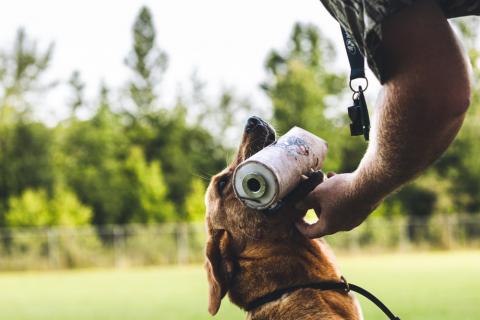
- Don't forget the dog - Our dogs are walking through the same cover we are, and worse. And they often carry ticks into the house.
- Pay attention to unusual symptoms - If you repeatedly experience unexplained hives, stomach problems, swelling, breathing difficulties or other allergic symptoms several hours after eating venison or other mammalian meat, don't simply write it off as food poisoning or a bad meal.
The Bottom Line for Hunters
Alpha-Gal is a strange condition, and there's still plenty scientists don't know about it.
But one thing is becoming increasingly clear - hunters have a legitimate reason to pay attention.
The number of recognized Alpha-Gal cases has increased dramatically, researchers are finding substantial levels of alpha-gal sensitization in some tick-heavy regions, and the geographic picture continues to evolve. At the same time, better testing, increased physician awareness and the explosion of information on social media mean that we're finally identifying people who may have spent years wondering why certain foods suddenly made them sick.
That doesn't mean hunters should be afraid of venison.
The lesson isn't to stay out of the woods. It's to stay informed, and stay protected.
And when it comes to Alpha-Gal, a little prevention may be worth a lot more than waiting on a cure that’s yet to be discovered.