



By Heath Wood
There’s a hard truth about whitetail hunting that doesn’t get talked about enough: the quality of your property matters a whole lot less than how you access it.
Over the years, I’ve picked up a few simple hunting tips that can make a huge difference in overall success. One of the best pieces of advice I ever heard about coyote hunting was, “Only hunt where coyotes actually are.” It sounds obvious, almost like a “well, of course” moment, but when you really think about it, that mindset alone can greatly improve success rates. The same idea applies to deer hunting. A few years ago, someone told me, “The deer are seeing or smelling you every time you enter or leave your hunting spot.” They explained that mature bucks quickly recognize pressure, and every deer that gets spooked while walking in or out adds to that pressure, creating tension that makes mature bucks even more cautious.
A property can have the best habitat in the county, thick bedding cover, strong food sources, plenty of water, and a healthy deer population, but if every hunt involves spooking deer on the way in or educating them on the way out, it’s not really hunting; it’s just bumping deer around the property.
That realization hit me while thinking about an area I had hunted close to home for the past few years. On paper, it had everything needed to hold mature bucks. The cover looked great, there was water nearby, and deer sightings were common. Yet one question kept coming to mind: Why weren’t mature bucks showing up consistently? That’s when I decided it was time to take a closer look at the property and figure out what could be changed or done differently to improve the odds of success.
Making a property “huntable” is about more than hanging stands. It’s about designing every move with intention, so deer never know you’re there. When done right, the ground becomes a low pressure sanctuary where mature bucks feel comfortable moving in daylight.
Start With Access, Not Stands
Most hunters make the same mistake, they hang stands where deer should be and then figure out how to get them there later. Before you ever pick up a stand, study how you can enter and exit the property without being detected. That means considering factors such as prevailing winds throughout the season, thermals in hilly country, or creek bottoms. Then, think about deer bedding areas and the most used travel routes. If deer are smelling you before you get to your tree stand, blind, or your saddle tree, the game is over, before it even starts. Noise and visibility along your approach are also vital, if deer see you, they know what areas to avoid. The goal is simple, access the stand without crossing where deer are, where they’ve been, or where they’re going. If you can do that, you will see more deer when hunting.
Sometimes that means taking the long way around. Sometimes it means not hunting a spot at all unless conditions are perfect. Then, other times, you have to remember the famous Field of Dreams movie quote, if you build it, they will come.
Build a Quiet Entry and Exit Route
Once you’ve identified low impact access areas, you must see if there is a path, road, creek bottom, or something to use as an entrance and exit route. If so, it’s time to make them usable and quiet. If not, make it that way!
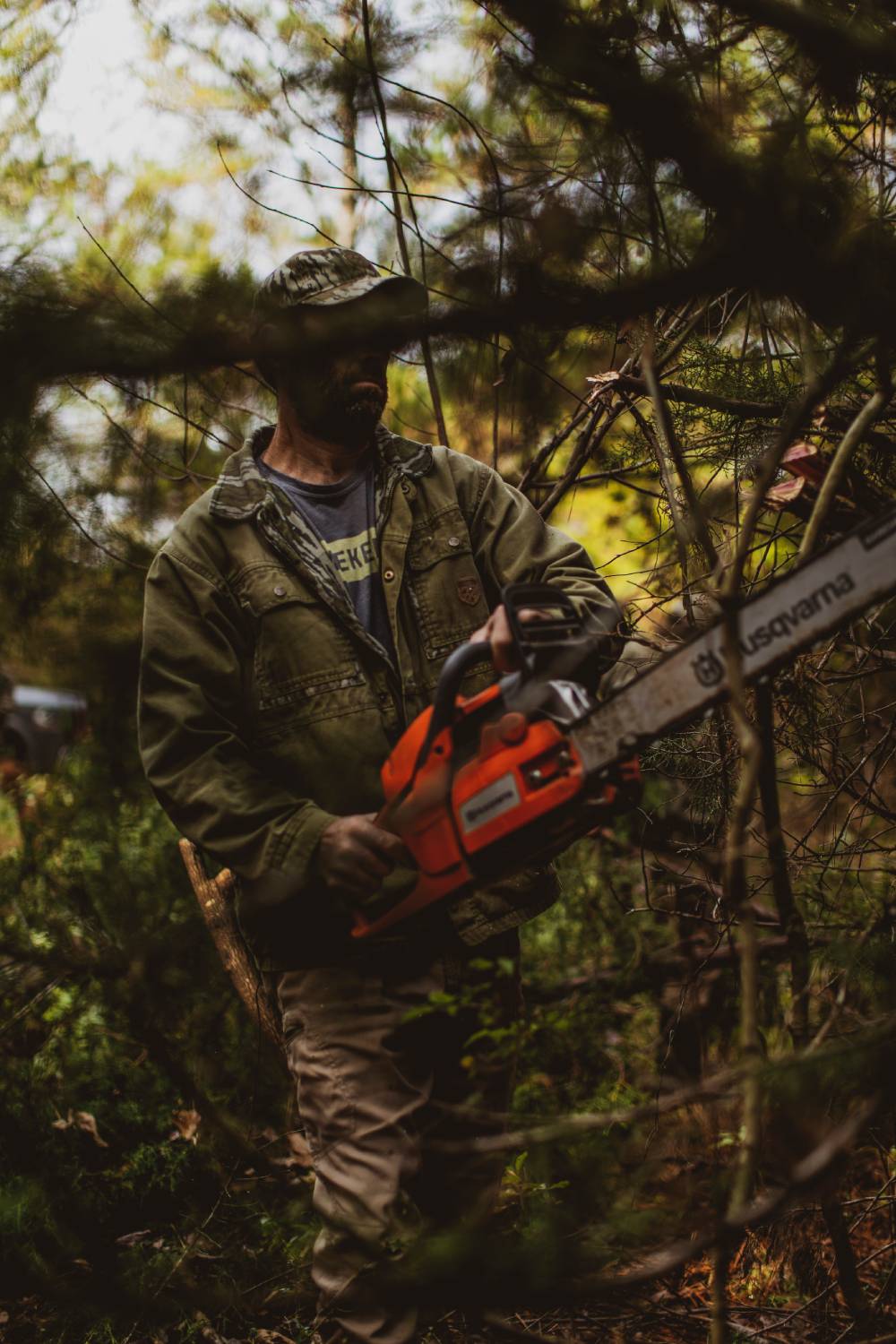
If you have an existing path of travel, remember to trim with a purpose. Access trails shouldn’t feel like hiking trails. You’re not clearing a path for comfort, you’re creating a silent route for stealth. Cut only what’s necessary to slip through undetected, focus on removing branches at waist and shoulder height to eliminate anything that will snag clothing or gear, or make unwanted noise when walking. I love using reflective trail markers that can help identify my trail in the dark. When a flashlight hits them, they light the way for a path, keeping me on track.
It is also important to clear the ground where you will be walking. Throughout the summer, and then again a week or two before I plan to hunt, I like to take my leaf blower, pole saw, or trim saw, and a rake, to clear my path to and from the tree that I will be hunting from. This ensures the removal of sticks, debris, and anything that will crunch when walked on. Noise kills more hunts than scent. Deer can identify a human walking through the woods, compared to another animal. A quiet trail can be the difference between slipping into a stand unnoticed and alerting every deer within 100 yards.
Use Terrain to Your Advantage
Ditches, creek beds, logging roads, and field edges can all serve as natural concealment routes. If you can stay below a deer’s line of sight or keep cover between you and bedding areas, you’re already ahead of the game.
A good entrance and exit route should be one of the top factors in where you hang a stand or blind when scouting during the summer. Design your hunting locations around pressure.
If your current stands require risky access, they’re in the wrong spots, no matter how good the sign looks. The best stand sites check three boxes:
1. They’re huntable with the right wind
2. They allow undetected entry and exit
3. They don’t contaminate bedding areas with human pressure
To achieve these three things, this might mean moving a stand 50–100 yards to align with a better access route. Or, setting up on the downwind edge of travel corridors instead of right on top of them. Creating “observation stands” during the summer can also be another great, yet low impact, way of scouting or gathering intel on where deer will be and how you should access your spot. Don’t marry your stand locations; let access dictate the setup.
Eliminate Unnecessary Disturbance
Every time you step foot on your property, you leave a footprint, literally and figuratively. The goal is to minimize those impacts as much as possible.
Throughout the summer, try to limit intrusions or pressure by avoiding checking cameras too frequently. Combine all off season tasks into single trips instead of every weekend or every other day. Then, no matter what, stay out of core areas, especially bedding cover.
Do major work on your property, such as trimming, hanging stands, and trail clearing, in the offseason or well ahead of hunts. In season intrusion should be minimal and strategic. Try thinking like a deer when on your hunting property. For example, if you were a mature buck, where would you feel safe? More importantly, what would make you leave? Pressure changes deer behavior faster than almost anything. A property that feels safe will naturally produce more daylight movement.
Create a Low Pressure Environment
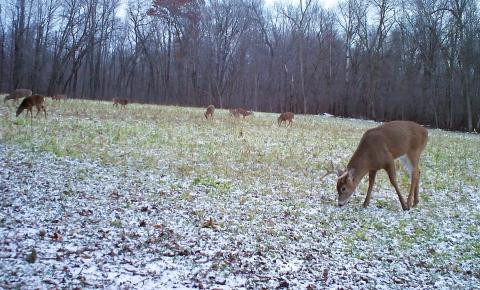
When everything comes together, smart access, quiet trails, and low impact setups, it creates something every hunter is after, a property deer don’t associate with danger. That’s when things start to change, bucks move earlier in the evening, does settle into predictable patterns, and daylight buck encounters will increase. It’s not magic, it’s the result of removing pressure and letting deer be deer.
Another way of creating a low pressure feel for the land is by hunting less to kill more. It sounds backwards, but the hunters who find the most success are often the ones who hunt the least, at least on their best spots.
Once a property is set up with stealth in mind, it becomes much easier to stay disciplined and hunt only when conditions are right. That means waiting for the ideal wind and avoiding hunts on days when the wind could compromise the area. Hunt high impact days only during the pre-rut and rut. Use an app such as Deer Cast, Hunt Stand, or OnX Maps, and use their data that predicts the best days to hunt. When the time is right, you can then slip in and out without detection. That restraint keeps the property fresh and your odds high when it matters most.
Making a property huntable isn’t about doing more, it’s about doing things smarter. It doesn’t always have to include clearing land with heavy machinery or a major facelift of the land. Sometimes, all it takes is paying attention to every trimmed branch, every quiet step, and every carefully planned route. This is what adds up to one thing, less pressure. And in the whitetail woods, less pressure almost always means more opportunity.