




By George Fiorille
Spinnerbaits have been around for several years while the bladed jig often known by the most popular model, the Chatterbait, has been around 20 years or so. When bladed jigs first came out on the scene years ago, I asked one of the top bass pros about them. The angler was trying to tell me they were no better than spinner baits. I imagine over the years his attitude has changed.
Most bass anglers carry both bass baits. Many anglers have a problem knowing when to throw one over the other.
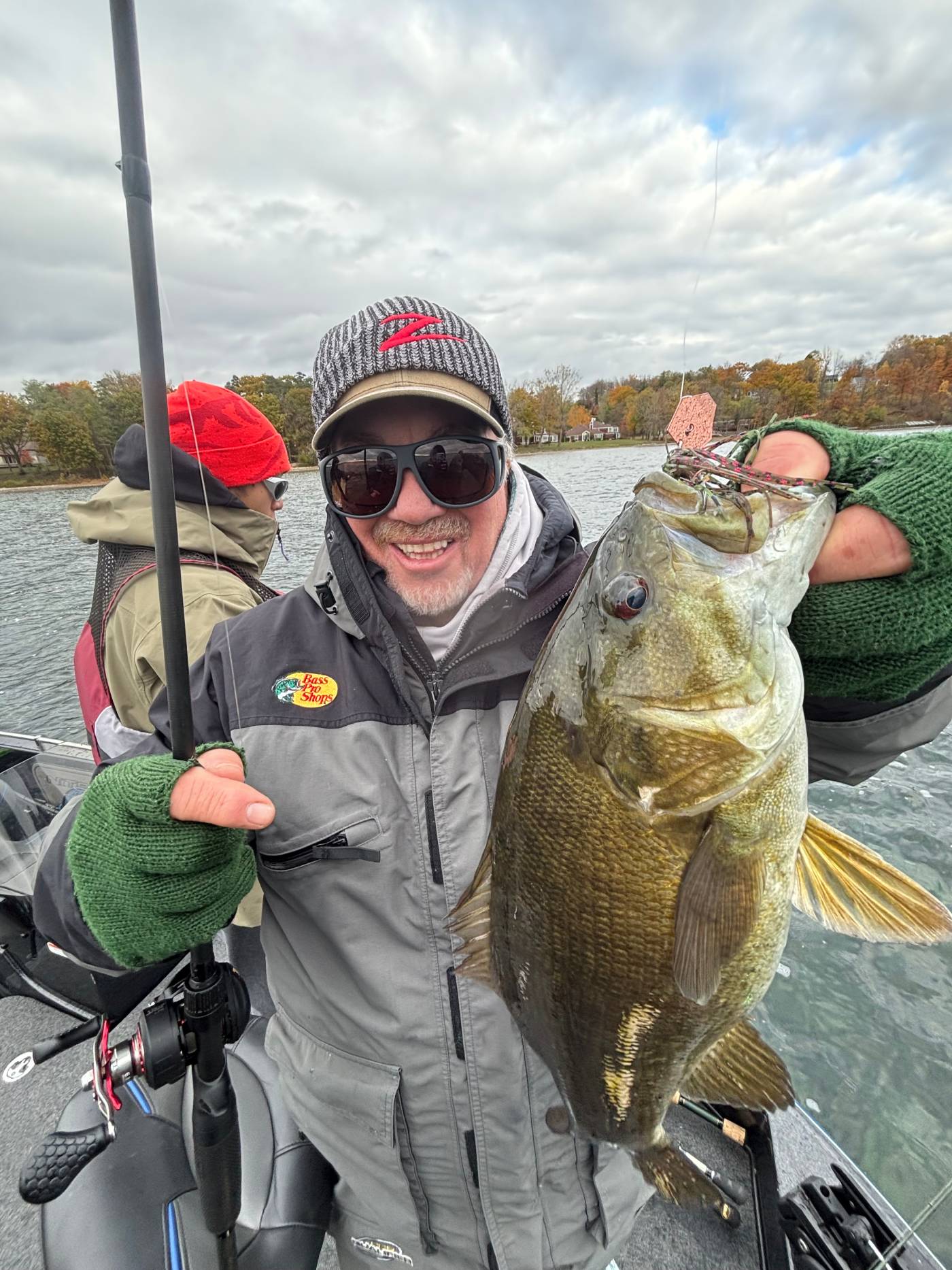
The fall period is a great time to catch smallmouths on a bladed jig.
Different Tackle for Each
Many avid bass anglers who throw chatterbaits prefer either an all glass rod or a glass/graphite composite rod. They want a slower action rod that will give the fish a split second longer to inhale the bait.
Most spinnerbait anglers prefer an all graphite rod for better feel. Whether it’s a slow roll, fast burning, or just a medium retrieve, these fishermen want to know exactly when the lure has been taken in order to set the hook.
This chatterbait/spinnerbait angler personally prefers an all graphite rod for both. I personally used to use an all fiberglass rod for certain baits. Personally I strongly feel, the lack of sensitivity in the rod cost me a few fish that would have won a fairly large state federation tournament.
When fishing either bait in close quarters, I like a Lews 6’10” MH all graphite casting rod. When fishing more open waters along deep weedlines, etc., I like a Lews 7’3” MH all graphite rod for added casting distance.
As far as lines for both lures go, you can usually get away with heavier lines. I like to use Seaguar fluorocarbons such as Abrazx in any tests from 12-20-lb.
Change Your Trailer, Change Your Success
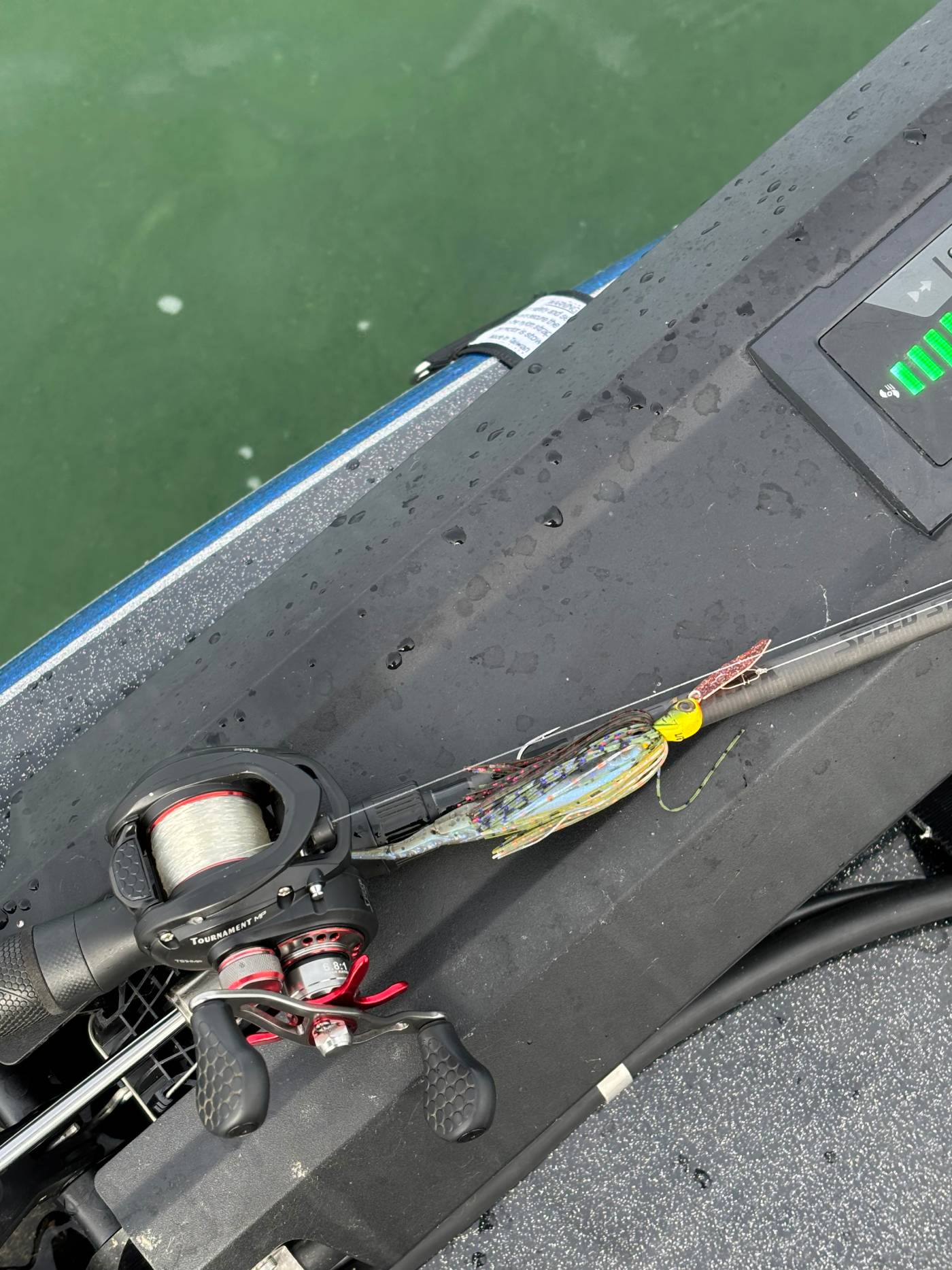
A bladed jig can “match the hatch” for many baits.
Most avid bass anglers who use bladed jigs will use various trailers on the baits. The cover you are fishing often dictates the correct selection. If you use a paddle tail in heavy cover such as grass or branches, the tail will catch the cover and ruin the action of the trailer. In these situations, one of the most popular trailers is a straight tail.
By changing the trailer on a green pumpkin bladed jig from a straight tail to a craw trailer, you change your presentation from possibly a stone cat to a craw dad.
If the water is clear but you have some wind to break up the surface, a spinnerbait with a long cast is usually the lure to pick. When pursuing largemouths on this pattern, most good spinnerbait anglers will use a double straight tail trailer. If the fish are following but not taking the spinner, you may want to try changing the trailer to a curly tail grub.
When making long casts for smallmouths on deep weed lines or suspended over deep water, they will often take a smaller bait with no trailer.
Pick the Right One for Conditions
Using a chatterbait compared to a spinnerbait will usually give you more vibration. They catch quality fish in stained water conditions and on less pressured waters. Even though you can catch some bass during summer on a bladed jig, they seem to excel during spring and fall seasons.
A sunny, calm day is usually bad for either the spinner bait or bladed jig. In colder weather, it pays to slow down your retrieve with a blade bait. When fishing docks and trees, blade baits are a great choice for skipping.
When fishing 3’ or less, a ⅜-ounce blade bait is the way to go. When fishing deeper, go up to a ½-ounce model. Blade baits can also be slowly rolled out in deep water with sizes up to and over 1-ounce.
Today’s blade baits now come in several sizes for the baits and blade sizes. If your waters have lots of small fish, use a smaller blade bait such as a ⅛ or ¼ -oz size with a smaller blade to catch more fish. Last fall I had the pleasure to take one of my Cornell Bass Fishing students fishing with a bladed jig. By downsizing on a calm, sunny day, he was able to catch his biggest bass ever over 5-pounds.
Spinnerbaits work better when fishing around logs and branches. The long wire arm deflects off of branches better than a bladed jig. Tandeem spinners also stay up higher over thicker grass.
As mentioned, smallmouths often prefer smaller lures. Try taking the skirt off of a bladed jig and just use it with a small swimbait trailer.
Some anglers fail to realize that you need to bend the blade on some blade baits. The cupping of the blade will give the lure more vibration. I often thought that it would be a great idea for a bladed jig company to put a blade on the lure such as a cupped spinnerbait Colorado blade.
For some reason, when fishing a bladed jig for smallmouth bass, they will often hit or bump the bait without taking it. The size of the bait could be the reason for the misses. Try using a spinnerbait instead and burn it back so as to not give them a good look at it.
Bladed jigs and spinnerbaits are both great lures to carry. By knowing the advantages of each, will help you know what lure to cast in what situation. Consider which bait, size, color and trailer to catch more and bigger bass. Fish On!