



By Heath Wood
For most deer hunters, scrapes are a sure sign that fall has arrived. As October rolls around, fresh sign appears beneath overhanging branches, trail cameras begin filling with nighttime buck photos, and excitement for the rut reaches a fever pitch.
But what if some of the most valuable scrape activity actually started months earlier?
Over the last few years, mock scrapes have become one of the biggest trends in summer deer scouting. More experienced hunters are creating and monitoring them in July, well before bucks shed their velvet. While some hunters dismiss summer scrapes as just another passing trend, others have discovered they can provide some of the most valuable scouting information of the entire season. Although they may not see the same level of activity as scrapes during the fall and pre-rut, they can reveal mature bucks, uncover consistent travel routes, and help narrow down opening day stand locations. When placed in the right areas, mock scrapes often become year round communication hubs that continue producing valuable intel long before the rut arrives.
Is July Too Early to Make Mock Scrapes?
For many deer hunters, July may be the perfect time. It is no secret that deer communicate year round. One of the biggest misconceptions, however, is that in deer hunting, scrapes only matter during the breeding season.
While scrape activity certainly peaks during the pre-rut and rut, deer use licking branches and scrape locations throughout much of the year. Even during the summer, bachelor groups often investigate overhanging branches, leave scent from their forehead and preorbital glands, and occasionally scrape the dirt beneath them. Does, fawns, and young bucks also visit these locations, making community scrapes a year-round communication hub rather than simply a scrape that is intended to attract does and challenge other bucks during the pre-rut.
Think of a scrape as a neighborhood bulletin board. Every deer that visits leaves behind information about its identity, health, and recent presence through scent. By creating a mock scrape before natural scrape activity increases, hunters can encourage deer to use a specific location repeatedly, which then can be used as a scouting area for trail cameras.
Why July Makes Sense
By July, most mature bucks have settled into predictable summer patterns. Food sources are plentiful, bachelor groups are established, and deer movement remains consistent. This makes it an ideal time to introduce a mock scrape without significantly disturbing the area.
Waiting until late September often means entering bedding or travel corridors just as deer begin transitioning into fall patterns. That additional pressure can educate mature bucks before opening day. Building mock scrapes in July allows plenty of time for deer to discover them naturally while human disturbance remains minimal. During the summer, deer are primarily focused on three things: food, water, and bedding. Territorial behavior and breeding activity are still months away, making this an ideal time to observe natural movement patterns. Once a mock scrape and trail camera are in place, the cameras can do the scouting while minimizing pressure on the property.
Choosing the Right Location
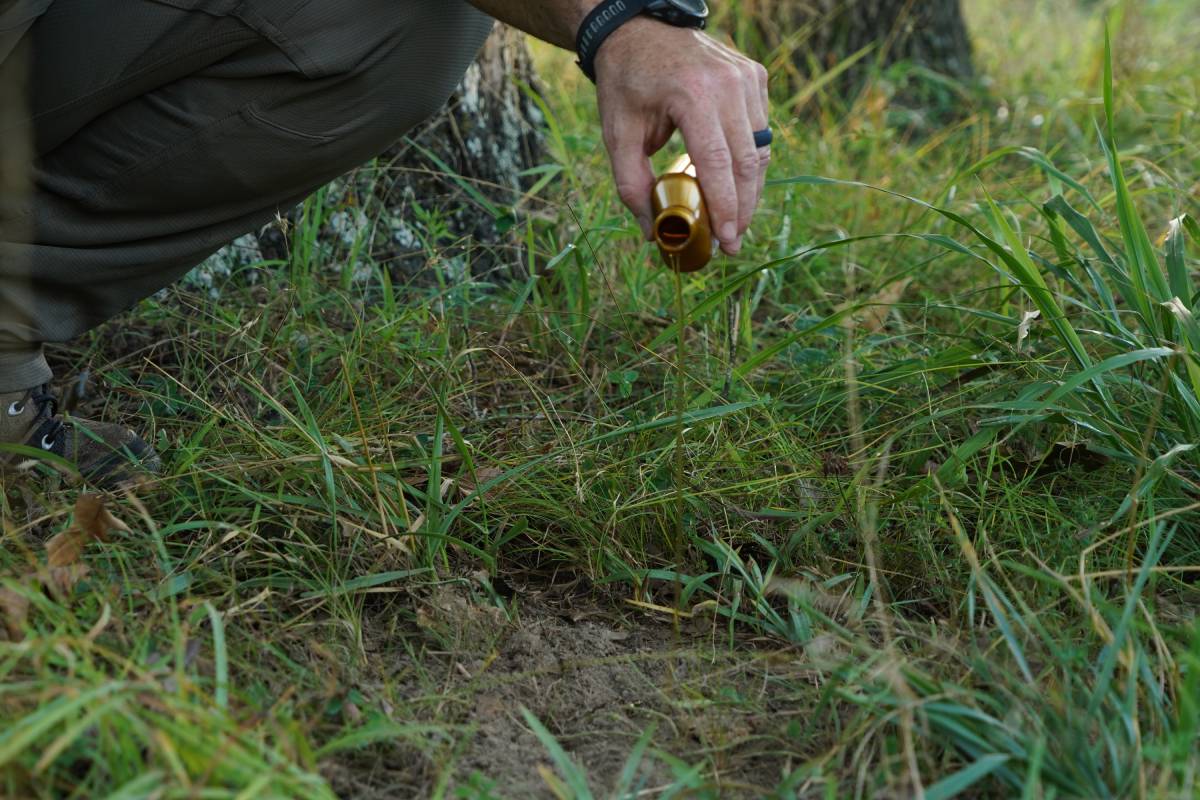
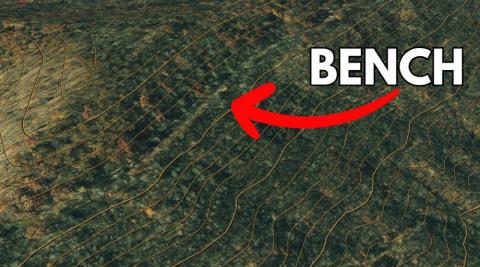
Location is far more important than the scrape itself. Instead of randomly creating a mock scrape along the edge of a food plot, focus on places where deer are already naturally traveling. Look for trail intersections, logging roads, field corners, creek crossings, or other natural funnels that consistently concentrate deer movement.
A couple of seasons ago, I watched the same bachelor group of bucks several times in mid-July on a farm I planned to hunt. The group consisted of three bucks, including two mature deer that were easily shooters. They consistently appeared in a field corner where several well worn trails intersected near an old logging road. One afternoon, I slipped into the area, freshened the location by creating a mock scrape, and hung a cellular trail camera.
Over the next month, the camera captured regular visits from those three bucks, along with four or five additional bucks that stopped by out of curiosity. The information gathered from that single scrape confirmed the area's importance and gave me the confidence to hunt it when the season opened. In early October, that confidence paid off when I arrowed one of those mature bucks within sight of the mock scrape. There's something especially rewarding about seeing a scouting plan come together exactly as you envisioned.
Other high percentage locations for summer mock scrapes include creek crossings, ridge saddles, natural funnels, and corners of food plots where deer movement naturally converges. Transition areas between bedding and feeding cover are also excellent choices, as deer regularly travel these routes throughout the summer, making them ideal places to establish a communication hub.
Whenever possible, build your mock scrape around an existing licking branch or an old scrape from the previous season. During the summer months, deer often show more interest in the licking branch than the exposed dirt below it, using it to investigate and leave scent. The best licking branches hang roughly four to five feet off the ground and are sturdy enough to withstand repeated interaction from multiple deer throughout the season.
How to Build a Mock Scrape
Creating a mock scrape takes only a few minutes. Because the licking branch is typically the main attraction for summer scrapes, I often start my summer scrape areas by selecting a suitable overhanging branch or hanging a scrape rope, such as the Wildlife Research Center Golden Rope Scent Rope Kit.
I often use a stick, boot, or small rake to clear away leaves and debris beneath the branch until I expose fresh soil. Again, I like to make the scrape smaller in size, compared to making a scrape during the fall. Frequently, I make the scrape roughly one or two feet in diameter and not completely cleared to dirt. I like to leave a little grass or leaves in the circle to create more realism.
Next, I use WRC Rope Scent that is included in the kit or an all-season deer scent. I then soak the rope in scent and drip just a few drops on the dirt itself. Again, making sure that the main focus is on the rope or licking branch overhead. This allows deer to discover the scrape naturally. Once the first deer begins using the licking branch, others often follow. After every deer begins to visit the scrape, they leave their own natural scent, which refreshens the scrape each time on its own. This turns the scrape into a true communication hub, all summer, without having to revisit the area to put more scent out.
Trail Camera Placement Matters
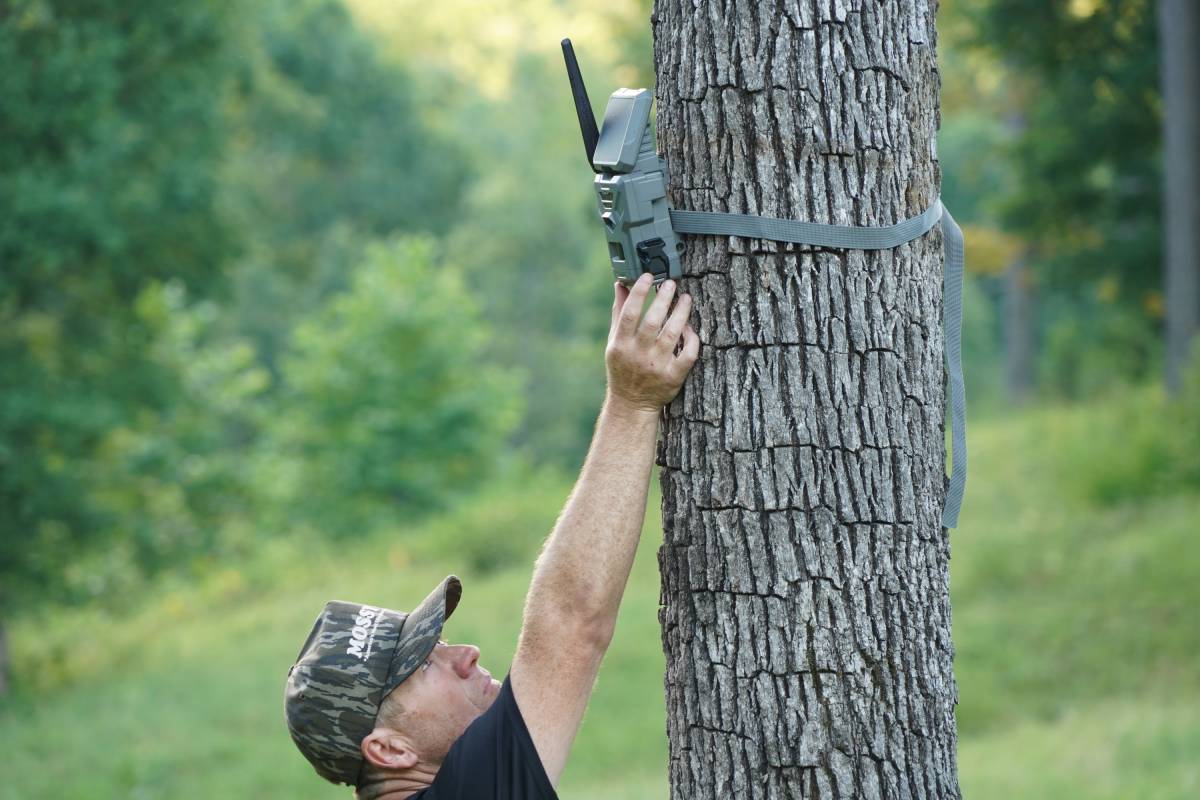
Mock scrapes are outstanding camera locations because they naturally encourage deer to stop.
Instead of walking quickly past a camera, deer often pause to smell the licking branch or hanging rope, then work the scrape.
For the best results, hang cameras 10 to 15 feet from the scrape. Position cameras slightly higher than eye level to reduce detection and angle the camera downward toward the scrape. Use video mode if available to capture behavior instead of just still photos. Those extra few seconds of footage often reveal far more than a single photo.
You may observe which bucks are dominant, how frequently individual deer visit, and whether activity occurs during daylight or only after dark.
What Summer Scrapes Reveal
One of the biggest advantages of establishing mock scrapes in July is taking inventory of the bucks using the property. By late summer, most bucks have reached nearly their full antler potential, making them much easier to identify. Trail camera photos can reveal which mature bucks survived the previous season, which younger bucks made impressive leaps in antler growth, and how many bachelor groups are frequenting the property before the fall shift begins.
As weeks pass, you'll notice certain bucks becoming regular visitors while others only appear occasionally. These patterns become incredibly valuable when planning your opening day strategy. One fascinating thing about monitoring July scrapes is watching deer behavior evolve.
During midsummer, bachelor groups often visit together with little aggression. As daylight shortens and testosterone increases, those same bucks begin changing, and bachelor groups slowly break apart. As this happens, the scrapes often receive more frequent use.
By observing the transition from July through September, hunters gain a much clearer understanding of how individual bucks adjust their movements as hunting season approaches.
Trail camera photos alone don’t lead to success on mature bucks; understanding what those photos reveal does. A buck that consistently appears at a mock scrape every evening in July may completely change its pattern by mid-September as summer food sources disappear or acorns begin to drop. However, the value of the mock scrape is that it often remains relevant because it is connected to deer movement and communication, not just a temporary food source.
When mock scrape information is combined with knowledge of bedding areas, food sources, and low impact access routes, hunters can begin identifying travel corridors and stand locations that have the potential to produce encounters well beyond the summer months.
The Verdict: Too Early or Perfect Timing?
For hunters focused on gathering information, July may be one of the best times of the year to establish mock scrapes.
The work is quick, the disturbance is minimal, and the payoff can last for months. Long before the first scrape frenzy of October, you'll already know which bucks call your property home, how they're using the land, and where your best opportunities may exist. While many hunters don't begin thinking about scrapes until the leaves start turning, those who start in July often head into opening day with a much clearer picture of the deer they're hunting.