



A Week-by-Week Checklist for Getting Ready Without Over Pressuring Your Best Hunting Areas
By Heath Wood
When the summer heat seems to drag on, family vacations are winding down, and the first cool days of fall are still just out of reach, many hunters find themselves counting down the days until deer season. The wait can feel endless, but with opening day getting closer, that final month has a way of disappearing faster than expected. One minute, you’re watching summer bucks grow their velvet antlers on trail cameras, and the next, you’re just 30 days away from climbing into a stand.
The final 30 days before deer season can be some of the most exciting of the year, but they can also be some of the easiest times to make a costly mistake. As opening day approaches, hunters often feel the urge to do more, check cameras one more time, walk the property again, move a stand, freshen up a trail, or scout for another potential spot. But every trip into the woods creates the potential for added pressure, educating deer and changing the very patterns you’ve spent the summer learning.
The key to the final 30 days isn’t doing more. It’s doing the right things at the right time and, just as importantly, knowing when to leave the woods alone. With opening day approaching, here’s a week-by-week plan to help you prepare your property, equipment and hunting strategy while keeping unnecessary pressure on the deer to a minimum.
Four Weeks Before Opening Day

With four weeks remaining until opening day, this is your last real opportunity to conduct thorough scouting without putting too much pressure on the deer. That doesn't mean you should spend every day walking the property. Instead, use this week to answer the questions that will shape your opening day strategy and identify what has changed since your initial summer scouting.
Start by evaluating your food sources. Walk fields, food plots and other major feeding areas to determine which food sources are most likely to attract deer when the season opens. Pay attention to acorns as they begin developing or dropping, standing crops, established food plots and signs of current feeding activity. Don't assume the food source that was drawing deer in July will still be their top choice when September or October arrives.
Next, focus on the trails connecting bedding cover to food. You don't need to map every deer trail on the property. Instead, concentrate on the routes that connect likely bedding areas with important food sources. Look for creek crossings, funnels, pinch points, and terrain features that naturally concentrate deer movement. This is also a good time to identify potential stand locations, but resist the temptation to hang a stand on every promising trail you find. The goal is to develop a strategic plan, not turn the property into a maze of hunting equipment.
This is also the week for one final, thorough trail camera check. Pay attention to which bucks are still using the property as bachelor groups begin to break apart. As individual bucks start showing up more consistently, you may get a better idea of which deer are likely to remain on the property. Also look for patterns in time of day movement, groups of does using the same areas, potential opening day travel routes, and changes in food source usage.
Most importantly, don't become obsessed with a single deer. Seeing a mature buck on camera at 6:30 every morning doesn't automatically mean you should hang a stand over that camera location. Consider where the buck is coming from, where he's going, how the wind will affect your setup and, perhaps most importantly, how you can reach the stand without alerting deer. Your trail cameras are there to help you put the pieces of the puzzle together, not convince you that you've already solved it
21 Days Out: Prepare Your Stands and Access

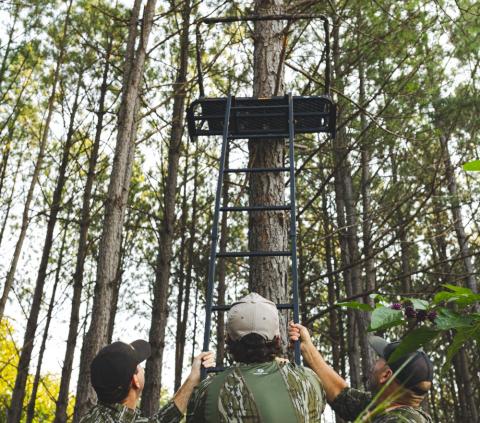
Three weeks before opening day, it’s time to switch gears from scouting to preparation. If you’ve already selected your best stand locations, now is the time to get them ready for the season. Start by inspecting every component of your treestand, looking closely for loose bolts, rust, damaged straps, worn cables, cracked welds, loose seats, or damaged climbing equipment. If you’re using a portable stand, make sure everything functions properly before you find yourself setting it up in the dark on opening morning. This is also the time to replace anything that looks questionable rather than hoping it will make it through another season.
Once your stand is ready, turn your attention to shooting lanes. You don’t need to turn the woods around your stand into a shooting gallery. Instead, trim only the branches and vegetation necessary to create clean shooting lanes, and whenever possible, use the natural openings that are already there. Remember that deer notice changes in their surroundings. A freshly cut trail leading directly to your stand or a large section of vegetation suddenly missing can make an otherwise familiar area look completely different. The goal is to prepare your stand without making it obvious that someone has been there. That means to the deer, and other hunters, if hunting public land.
Establish Your Access Route
Your access route can be just as important as the stand location itself. A great stand can become a bad stand if getting to it requires you to walk through the middle of a bedding area or spook the deer you’re trying to hunt. Before opening day, determine where you’ll park, where you’ll enter the property, where you’ll need to cross fences or creeks, and which trails will provide the quietest and most efficient route to your stand. Pay close attention to areas where you can avoid bedding locations and consider how different wind directions will affect your approach. Ideally, your access route should allow you to slip in and out of the stand while staying out of the areas where deer are most likely to be during legal shooting hours. The less you disturb those areas, the better chance you have of keeping deer patterns intact once the season begins.
14 Days Out: Start Shooting Like You Hunt

Two weeks before opening day, your preparation should shift heavily toward yourself and your gear. Your bow or firearm shouldn’t be something you’re scrambling to sight in the night before the season. By this point, you should be focused on making sure your shooting is comfortable, consistent, and as close to real hunting conditions as possible.
If you’re a bowhunter, don’t limit your practice to standing on the range. Shoot from an elevated position, practice from a seated position, and work on different angles. Wear the clothing you plan to hunt in, use your actual release, and shoot the arrows you’ll carry into the woods. Practice slowly and deliberately, paying attention to your form and making each shot count. For rifle hunters, confirm your zero and then spend some time practicing from the positions you’re most likely to use in the field. The goal isn’t to shoot hundreds of rounds or arrows; it’s to build confidence.
You don’t need to prove anything to yourself by shooting until you’re exhausted every day. A few deliberate, quality shots can do far more for your confidence than a pile of empty boxes or a quiver full of arrows.
7 Days Out: Check Everything, Then Back Out
One week before opening day, your preparation should be nearly complete. This is where many hunters make their biggest mistake. As opening day gets closer, they start second guessing everything. Should they move a stand? Check a camera one more time? Is that buck still around? Maybe there’s a better trail somewhere else. Before long, the confidence they had in their original plan begins to fade, and they feel the urge to keep changing things. Before long, the property that has remained relatively undisturbed all summer gets ruined with human activity during the final week. Don’t do it. At this point, trust the work you’ve already put in and resist the urge to make unnecessary changes.
The last week is also the time to make your final gear check. Lay out everything you’ll need for opening morning and go through it piece by piece. Check your bow and arrows, release, broadheads, rangefinder, binoculars, climbing sticks, headlamp, knife, clothing, boots, backpack, license, and tags. Opening morning is not the time to discover that your headlamp is dead, your release needs a new strap, or an important piece of equipment was left at home. A final gear check now can prevent a frustrating problem when you should be focused on hunting.
Shop: Support Your Local Bow Shop Gear
The Final 30-Day Checklist
30 Days Out
☐ Complete final summer scouting
☐ Identify food sources
☐ Locate bedding-to-food routes
☐ Review trail-camera information
☐ Identify primary and backup stand locations
21 Days Out
☐ Inspect treestands
☐ Check climbing equipment
☐ Trim only necessary shooting lanes
☐ Establish low-impact access routes
☐ Confirm parking and entry points
14 Days Out
☐ Shoot your bow or firearm
☐ Confirm your sights
☐ Practice from hunting positions
☐ Practice wearing hunting clothing
☐ Confirm broadheads
☐ Build confidence with quality shots
7 Days Out
☐ Complete final gear inspection
☐ Check licenses and tags
☐ Prepare backpack
☐ Select opening-day stand
☐ Choose a backup location
☐ Check the forecast and wind
Opening Day
☐ Follow your access route
☐ Hunt the wind
☐ Get settled before prime movement
☐ Be patient
☐ Trust your preparation
☐ Don't force the shot
Preparation Has an Expiration Date
The final month before deer season isn't about cramming four months of preparation into 30 days. It's about taking what you've learned during the summer and turning it into a simple, repeatable hunting plan.
At 30 days out, you should still be learning. At 21 days, you should be preparing. At 14 days, you should be practicing. At seven days, you should be finishing.
And as opening day approaches, you should be doing less, not more. The best hunters understand that preparation isn't just about knowing where to sit. It's knowing when to stop walking, when to stop checking cameras, when to stop trimming branches, and when to simply leave the woods alone. When opening morning finally arrives, the deer won't know how many hours you spent preparing. They'll only know whether the woods feel safe. And that may be the most important part of your 30 day countdown.