




By Ryan Fair
Not every good summer bass bite happens offshore. That seems to get lost anymore. Turn on a fishing show or scroll through social media for five minutes and it feels like every bass in the lake is sitting on a brush pile in 24 feet of water waiting to be found with a pile of electronics. Boats, graphs, mapping, and forward-facing sonar have changed bass fishing, and there’s no denying that. They help anglers find fish that would have been tough to locate years ago. But that doesn’t mean a guy walking the bank is out of the game.
Some of the best summer bass fishing I’ve ever had came from places where I never backed a trailer into the water. Farm ponds, small public lakes, neighborhood reservoirs, riverbanks, and forgotten little ramps where all I had was a rod and reel, a small tackle bag, and enough daylight left to make a few more casts. Sometimes I had the boat sitting at home because I didn’t have time to drag it out. Sometimes I only had an hour after work. Sometimes I just drove past a piece of water that looked too good not to stop. Either way, I’ve never been great at passing up a chance to catch a few bass.
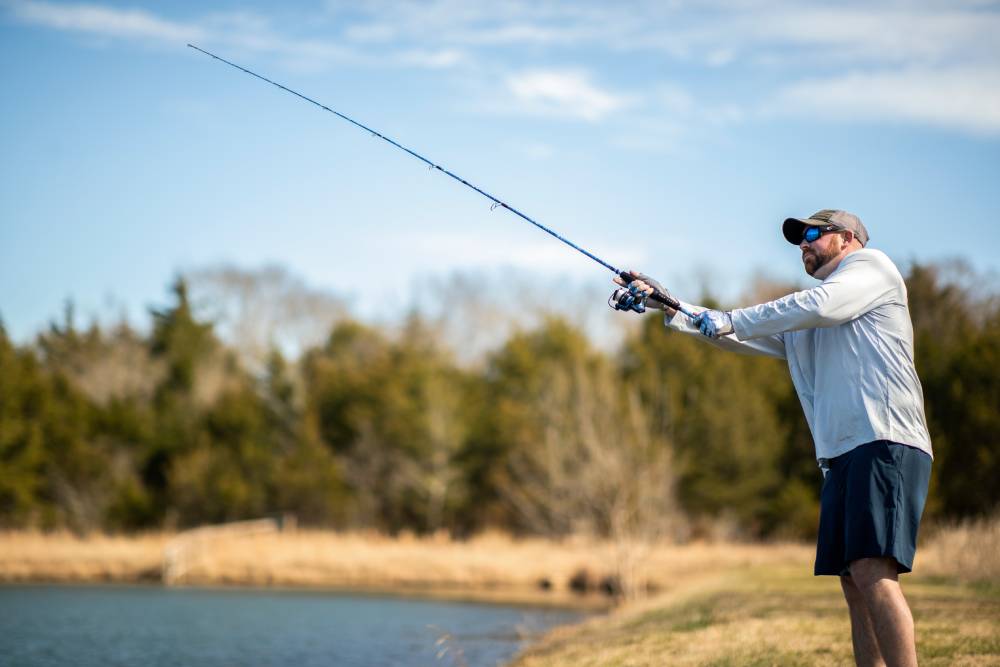
Summer bank fishing is not complicated, but it does take effort. You cannot just sit in one place, fan cast the same dead water, and expect much to happen. July and August bass are not always roaming aimlessly down the shoreline. They are there for a reason. Find that reason, and you will find fish. Most of the time, that reason comes down to shade, moving water, feeder creeks, and shoreline cover that other anglers walk right past.
Shade Is the First Thing I Look For
When the sun gets high and the heat starts settling in, shade becomes one of the most important things on the lake. Bass do not want to sit baking in the sun any more than we do. Shade gives them a place to rest, hide, and ambush anything that gets too close. It also breaks up the water and gives baitfish somewhere to gather.
When I walk up to a lake in the summer, I am looking for shade before I ever make a cast. Overhanging trees, docks, bridges, laydowns, weed edges, and steep banks that block the sun all get my attention. The best shade usually has something extra with it. A tree hanging over deeper water. A dock near a creek channel. A laydown on a point. Shade by itself is good, but shade next to depth or cover is better.
The biggest mistake I see bank anglers make is casting close to shade but not into it. If there is a tree hanging over the water, those bass may be tucked way back under the limbs. You may have to skip a bait in there, bump a branch, or land it right beside the trunk to get bit. For that kind of fishing, a Yamamoto Senko or Hula Grub is about as simple and dependable as it gets. Rig it weightless and let it do the work. It skips well, falls slow, and looks natural. Around heavy shoreline cover, I like something I can put right in front of a fish and leave there long enough for it to make a mistake.
Culverts Are Worth Every Cast
A culvert may not look like much, but I have learned not to walk past one. Anytime water is moving into a lake, pond, or river, bass usually know about it. Culverts, drainage pipes, road crossings, and runoff ditches can all create a small feeding area. Moving water brings oxygen. It washes in bugs, worms, baitfish, and crawfish. It gives bass a place to sit and wait on food. After a summer rain, these spots can get good in a hurry. A lot of anglers see stained runoff and keep walking. I see it and usually stop.
The trick is not always throwing right into the strongest current. Most bass are lazy when the water is hot. They want the benefit of current without fighting it. I like to cast to the edges, seams, and the slack water beside the flow. That is usually where a bass can sit comfortably and dart out when something comes by.
Around culverts, I want a bait that lets me cover water first. A Buckeye Lures spinnerbait, a small swimbait, or a bladed jig is a good place to start. If I get bit, miss one, or see fish chasing, then I will slow down with a soft plastic and work the area harder. A lot of these spots do not look like much from the bank. That is part of what makes them so good, and most anglers walk right past them looking for something prettier.
Feeder Creeks Can Save a Summer Trip
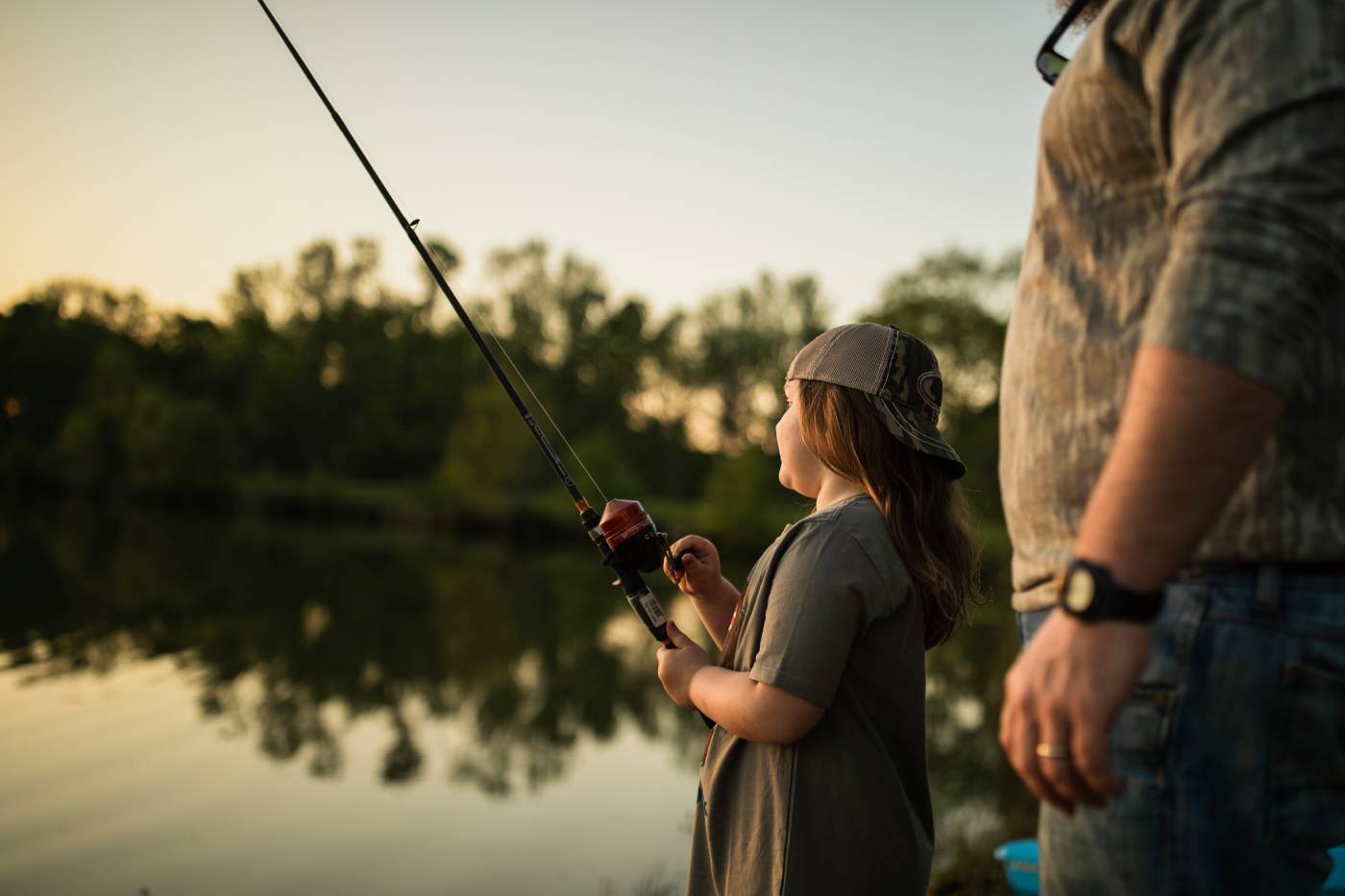
If I am fishing a lake from the bank in the summer, I want to know where the feeder creeks are. Even a small creek can change everything. It can bring in cooler water, more oxygen, and a steady push of food. Bass do not need much of an excuse to use it, especially early and late in the day. I like to start right where the creek enters the lake and then work both sides of the mouth. If there is a laydown, rock, grass, or a little depth change close by, I slow down. Those are the kinds of spots where bass can slide up to feed and still have a quick escape route.
Morning and evening are the best times to fish them. At daylight, bass may push shallow and chase bait around the mouth. In the evening, they often do the same thing as the sun starts dropping and the shoreline cools off. That is when I like having a topwater tied on. A buzzbait, popper, or walking bait can be hard to beat when fish are active around a creek mouth. When that bite dies, I will usually switch to a Senko, Texas-rigged worm, or craw-style bait and pick apart the same cover more slowly.
Fish What Everyone Else Walks By
Some of the best bank fishing spots are not obvious. Everybody fishes the dock by the parking lot. Everybody fishes the big point beside the boat ramp. Everybody throws at the same laydown that is easy to reach. But that little brush pile 75 yards down the bank? The single stump barely sticking out of the water? The patch of grass that does not look like anything productive? Those are the places I like.
Bass do not need a giant piece of cover. Sometimes one isolated object on an otherwise plain bank is enough. It gives them shade, security, and an ambush point. If it is the only piece of cover in the area, it may hold more than one fish. When I find isolated cover, I do not make one cast and leave. I fish it from different angles. I will throw past it, beside it, and right into it if I can. A bass sitting on the backside of a log may never see a bait coming from the wrong direction. Change the angle, and suddenly it looks like an easy meal.
This is where a Texas-rigged soft plastic earns its keep. A Yamamoto creature bait, craw, or worm can be worked through cover without hanging up every other cast. These baits let you slow down and fish the kind of nasty stuff where summer bass like to hang out.
Stay Mobile and Use the Tools You Have
The biggest advantage bank anglers have is mobility. You are not locked into one area. You can walk, drive to another access point, cross the road to a different pond, or jump from one shoreline stretch to the next. The trick is being willing to move when a spot is not producing.
Too many anglers stand in one place too long. If I am not seeing bait, getting bites, or finding the right ingredients, I keep walking. Technology can help here, too. Apps like OnX Fish give bank anglers a better look at access, shoreline layout, feeder creeks, depth changes, and nearby water they may have overlooked. You may not have electronics sitting on the bow of a boat, but you can still use mapping to make better decisions before you ever make a cast.
Summer bank fishing is not about fishing every inch of shoreline. It is about finding the right stretches, shade lines, culverts, creek mouths, and isolated cover. You know the places that give bass a reason to be there. You do not need a boat to catch bass in the summer. You need a handful of baits you trust, a good pair of shoes, and the willingness to keep moving until you find them. Remember not every great summer bite is offshore. Some of them are right there on the bank, waiting on the angler who is willing to find them.