


By Heath Wood
Like many other hunting enthusiasts, I enjoy watching public land bowhunting videos online. Some are entertaining, while others offer lessons and strategies that can be carried into our own hunting experiences. Every once in a while, though, a video comes along that makes me stop and think about my own approach to hunting.
Recently, I watched an episode of Bow Hunt or Die where a hunter traveled more than 10 hours to spend two weeks hunting public land in Kansas. After arriving, he spent the first six days scouting. He never climbed into his saddle. Instead, he spent each day looking for enough sign to give him confidence that a mature buck was using the area. Watching him commit that much time to scouting reminded me of a public land hunt of my own where I learned a similar lesson the hard way.
Last September, three friends and I had a promising bowhunting only public land area picked out. We had done our homework from home using OnX and HuntStand. We studied the aerials, identified areas that appeared to hold deer, and picked out trees that looked like good places to hunt.
When we arrived around midday on Saturday, we were anxious to get into the woods. I rode my e-bike to the area I had picked out on the maps and spent about 30 minutes scouting on foot. I found two travel routes that came together along the edge of a thick bedding area. It looked good enough, so I found a tree, attached my steps and platform, climbed in, and got saddled up for what I hoped would be a productive afternoon; it wasn't.
For the next several hours, I kept expecting to see my first deer. Meanwhile, two other hunters in our group had already punched their tags, with deer hitting the ground between roughly 3:30 and 4:15 p.m. I stayed in my saddle until just before dark, when I received a text that another deer was down. Three hunters, three deer, and I hadn't seen one.
The difference wasn't better equipment, better shooting, or even better luck. One of the hunters had scouted the area weeks before our hunt. The other two spent much of that Saturday afternoon scouting before settling on places to hunt. They found deer because they took the time to find the deer. I hadn't done enough scouting before climbing into my tree.
That experience changed the way I'm approaching September this year. This season, I'm putting a much greater emphasis on scouting. When I'm hunting public land with a bow, I don't want to become attached to a particular tree. I want to become attached to the process: scout, hunt, evaluate, move, and repeat. And that's where a mobile setup and saddle hunting really shine.

Photography by Tes Jolly
Start Scouting Before the Season
The public land strategy doesn't begin on opening morning. It starts weeks or even months before the season opens. Summer is the perfect time to begin learning a property. I like to start with digital scouting, using mapping apps to identify terrain features, likely bedding areas, food sources, water, access routes, funnels, and transition areas. But digital scouting is only the first step. A map can tell you where a ridge, creek, or crop field is located. It can't tell you whether deer are using it or what it looks like in person. That's where boots-on-the-ground scouting comes in.
Instead of relying on online maps or a few minutes of looking around, walk the property in summer or in the days before hunting, and look for the small details that maps can't provide. Look for trails, tracks, rubs, beds, crossings, staging areas, and other evidence of deer activity. Pay close attention to how deer use the terrain. A heavily used trail isn't necessarily the best place to hunt. Sometimes the better opportunity is 50 or 100 yards away where that trail intersects a terrain feature, food source, or bedding area. The goal isn't to find a few deer tracks in the fresh dirt; the goal is to understand why deer are there and how they're likely to move once the season arrives.
Don't Stop Scouting When the Season Opens
One of the biggest mistakes a public land bowhunter can make is assuming summer scouting has answered every question, when it hasn’t. September changes things, which means you must keep scouting even when you're ready to hunt. Food sources disappear from being harvested, and as vegetation changes, deer alter their daily routines. After September arrives, hunting pressure begins to influence movement as well. That's why scouting is an ongoing process.
When you're walking into your hunting area, pay attention to fresh tracks, new rubs, fresh droppings, where deer are feeding, and trails that appear to be getting more use. Sometimes the most valuable scouting happens while you're actually hunting.
Opening Week: Hunt the Best Information
Opening week isn't the time to blindly sit in the same tree because that's where you planned to hunt three months ago or it looked good after a few minutes of scouting. It's time to put your scouting to work and identify where deer are spending time right now.
Early season deer are often patternable because their routines can be relatively consistent. Food, water, bedding, and cover can dictate much of their movement, and that gives a mobile hunter an advantage. Rather than hanging a permanent stand and hoping the deer eventually change their pattern to fit my setup, I can move my saddle hunting setup to fit the deer. That's an important distinction on public land.
Hunt the Wind, Not Just the Deer
A good location isn't a great location if the wind doesn't cooperate. Before climbing a tree, consider where your scent will travel throughout the entire hunt. Think about the wind direction at the time you're hunting, but also consider what happens as temperatures change and thermals shift. A location that looks perfect on a map can become a terrible stand site when the wind is wrong. That's another reason I like mobile hunting. If the wind isn't right for the location I want to hunt, I don't have to force it. I can always find another tree. The wind determines where I hunt; the deer do.
Hunt It, Then Evaluate It
One of the biggest advantages of hunting public land with a tree saddle or mobile setup is the ability to make a move when needed. Every hunt gives you information, and I try to use that information to make the next hunt better. After climbing down, I take a few minutes to evaluate the hunt. I consider the deer I saw, when and where they moved, and whether they used the trails I expected. I also reflect on how well my access route worked, whether the wind behaved as expected, and if other hunters influenced deer movement. Most importantly, I look for fresh sign that may point me in a different direction for the next hunt. Maybe everything about the setup was right, and I simply didn't get a shot opportunity. If that's the case, I'll probably hunt it again. But if I sit from 2 p.m. until dark and see very little or no deer activity while finding fresh sign 100 yards away, I'm not going to stubbornly keep hunting the same tree just because I have a stand there. That's one of the advantages of a mobile setup. If the sign tells me to move, I can move. Sometimes the best decision isn't to sit longer. It's to pull my tree saddle, adjust the plan, and hunt the sign in a different area.
Where Saddle Hunting Shines
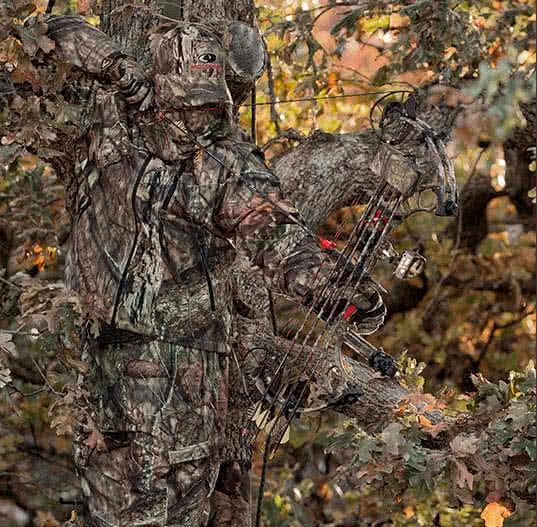
One of the reasons saddle hunting has become such an important part of my public land strategy is because a saddle gives me the ability to remain mobile without carrying a traditional treestand through the woods every time I want to adjust.
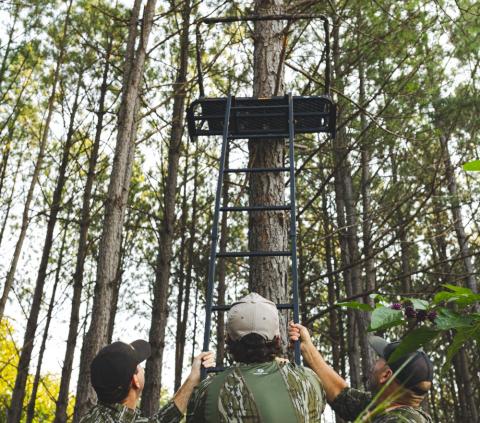
I can carry my saddle, platform, and climbing sticks into an area, find the tree that gives me the best combination of wind, access, cover, and shot opportunities, and set up. If conditions change, I can move. If I discover better sign, I can move. If another hunter pressures deer in my area, I can move. I'm not committed to one tree; I'm committed to finding the best opportunity. That's a huge advantage when hunting pressured public land.
Scout. Hunt. Move. Repeat. That's the playbook I plan to follow this year. Scout the property thoroughly before the season. Hunt the locations that offer the best combination of fresh sign, deer movement, access, and wind. Then, evaluate everything you learn from each sit.
Public land hunting isn't always about finding the perfect spot before opening day. In fact, I'm not sure there is such a thing as a perfect spot. It's about gathering information and being willing to act on it. Last year, I learned that spending 30 minutes scouting a public land area wasn't enough. I had relied too heavily on what I could see on my mapping app and not enough on what was actually happening on the ground. This year, I'm taking a different approach. I'm going to scout harder, pay attention to fresh sign, hunt intelligently, pay close attention to the wind, and evaluate every sit. Because on public land, mobility is an advantage, but mobility only matters when you have the information to know where to move.