Photography by Tes Jolly
Written by Derrick Dixon of Whitetail Research Youtube Channel
On falling temperatures, the peculiar habits of deer hunters, and the curious conviction that the whitetail pays particular attention to the weather forecast.
Among the many convictions held by deer hunters, few are defended with greater enthusiasm or investigated with less suspicion than the supposed influence of a cold front upon the movements of the white-tailed deer. A northwest wind, accompanied by a respectable decline in temperature and perhaps a little rain, suffices to send half the sporting population into a state of considerable excitement. Trail cameras are inspected, employment obligations are reconsidered, and every mature buck in the surrounding countryside is presumed to be preparing for an unusually active afternoon.
I have no particular quarrel with hunting a cold front. A cool autumn afternoon is a pleasant improvement over one spent perspiring in a tree in temperatures better suited to growing tobacco, and I can readily understand why anyone might prefer the former. What I find less convincing is the assumption that the deer share our enthusiasm, or that falling temps constitute sufficient evidence that they will shortly abandon their customary habits.
I do not propose that cold fronts have no influence on deer movement. Nor would I suggest that the countless hunters who have enjoyed their finest encounters under such conditions have imagined the animals they observed. The difficulty concerns the explanation rather than the observation, for there is a substantial difference between establishing that something happened and demonstrating what caused it.
My own investigations into deer behavior, particularly those conducted with thermal drones, have increasingly led me to suspect that we have been studying the wrong end of the thermometer.
The Unfortunate Habit of Remembering What Suits Us
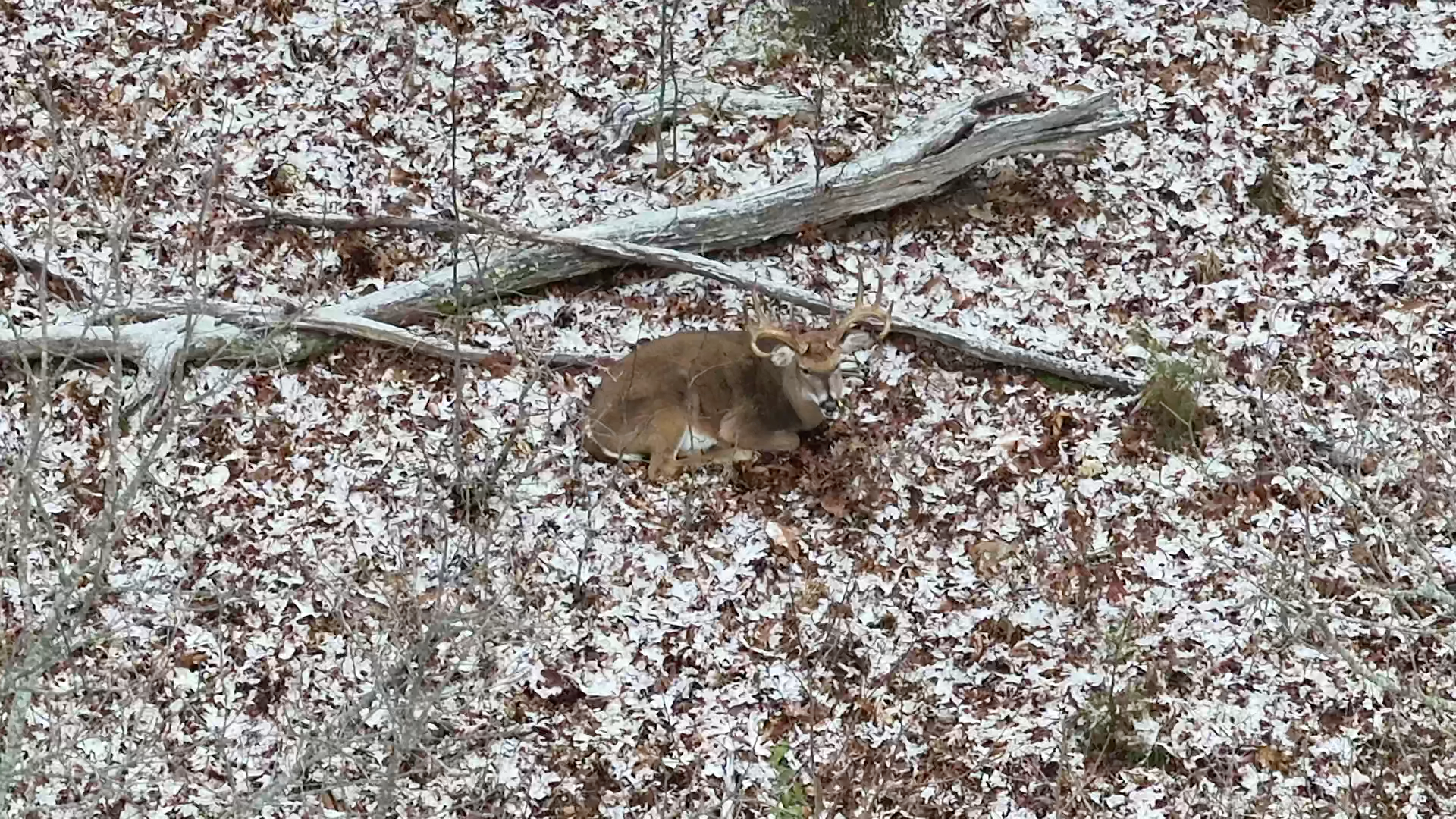
Deer hunters are, by necessity, observers of nature, although not always impartial ones. A hunter may spend six uneventful afternoons contemplating an empty forest, yet upon seeing a mature buck during the seventh, recall the wind direction, temperature, and barometric pressure with precision that would astonish a meteorologist. The conditions prevailing during the preceding six afternoons, meanwhile, disappear from memory altogether.
Such is the peculiar advantage of a successful hunt: it improves the hunter’s disposition and, rather conveniently, their confidence in whatever theory seemed convincing upon entering the woods.
It is not especially difficult to understand how a few such experiences, repeated over several seasons and discussed among agreeable company, can eventually acquire the dignity of established fact. A buck appears during a cold front, and the weather receives the credit. Another front passes without producing an animal of consequence, and people regard the incident as an exception. After sufficient repetition, the theory withstands every outcome and is therefore considered practically beyond dispute.
This is a comfortable arrangement for the theory, although a rather unsatisfactory one for scientific investigation.
If we wish to determine whether cold fronts influence deer movement, we must examine the animals under a variety of conditions, including those during which hunters are less inclined to be present. More importantly, we must account for the other circumstances influencing their behavior, since a buck may have excellent reasons for traveling that have nothing whatever to do with atmospheric pressure.
What the Scientific Literature Suggests
The difficulty with the familiar cold-front theory is that deer fitted with GPS collars have not consistently demonstrated the dramatic changes in activity that hunting forecasts so confidently predict.
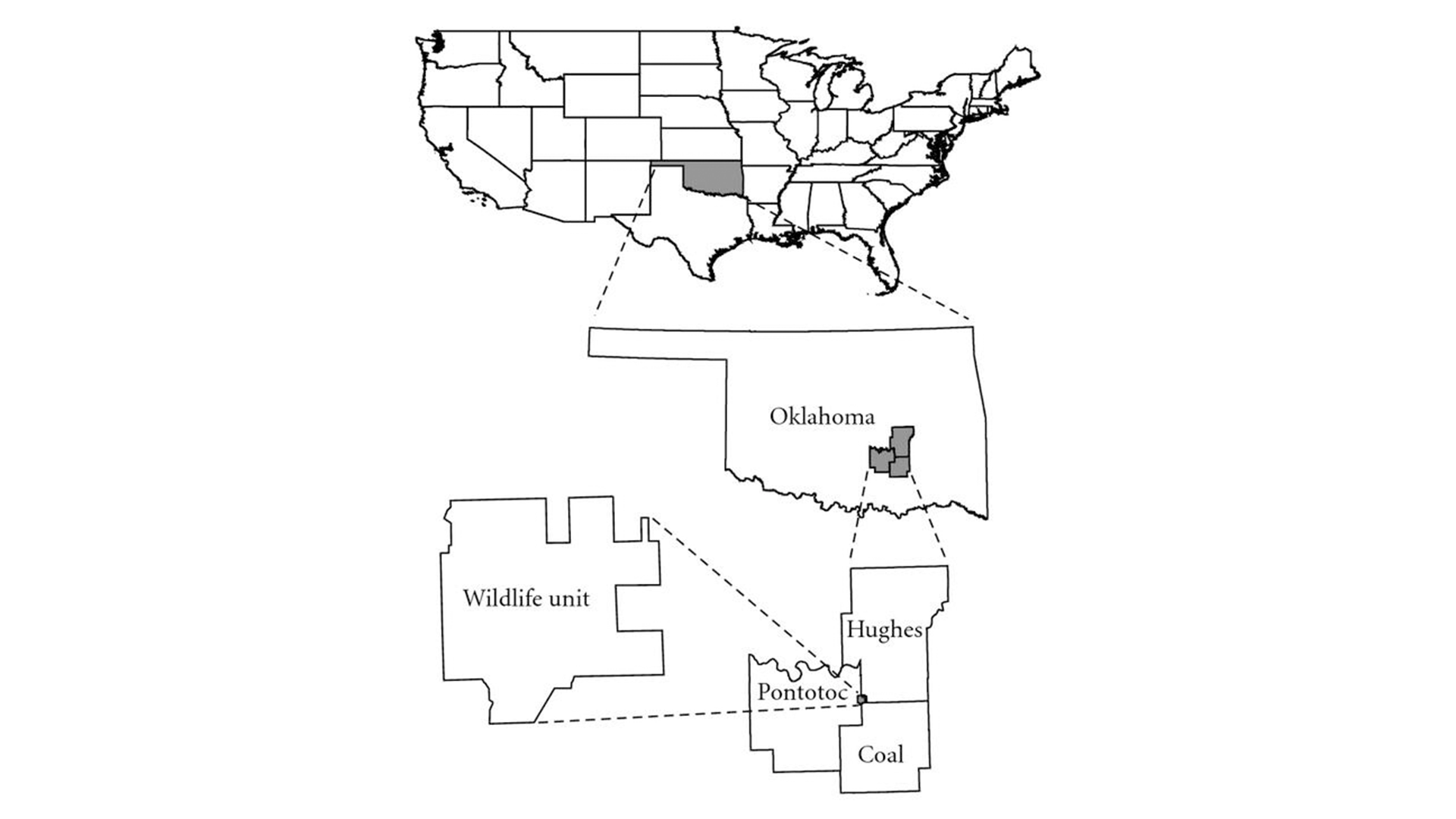
In a study published in 2010, Dr. Stephen Webb and his colleagues, including Dr. Bronson Strickland of Mississippi State University, examined the movements of 32 white-tailed deer in Oklahoma. The animals were equipped with GPS collars that recorded their locations at intervals as frequent as fifteen minutes, allowing researchers to examine their movements throughout the day and night without requiring a human observer to be conveniently positioned nearby.
This last advantage is considerable, since deer have shown little inclination to arrange their activities around the schedules of the people studying them.
The researchers examined several influences upon movement, including reproductive condition, lunar phase, and short-term weather variables. In one analysis comparing changes in weather from one day to the next, significant associations with deer movement appeared in just ten of eighty models. These associations occurred primarily during periods of relatively limited movement, rather than the familiar peaks around dawn and dusk.
More broadly, the researchers characterized the relationships between weather and movement as generally weak, frequently of little biological significance, and lacking a consistent pattern of response to departures from normal seasonal conditions.
The animals exhibited predominantly crepuscular movement, concentrating much of their activity around dawn and dusk. Male daily movement averaged approximately twenty percent greater during the rut than afterward, although this difference did not reach conventional statistical significance. The observation nevertheless illustrates the importance of considering reproductive circumstances when examining seasonal movement patterns.
Now, I would not suggest that a single investigation conducted in Oklahoma has settled the question for every deer inhabiting North America. An animal enduring a northern winter may face environmental circumstances substantially different from those confronting a deer in the southern plains. Nevertheless, the findings should give us reason to question predictions offered with such extraordinary certainty.
The researchers examined the animals themselves, rather than relying upon the recollections of hunters, and the resulting picture was considerably less accommodating to the notion that short-term changes in weather reliably produce predictable changes in deer movement.
Although the overall influence of weather was inconsistent, temperature appeared more frequently than other weather variables in their analyses. The researchers also acknowledged that deer may respond differently to environmental conditions during periods of summer heat or winter cold.
Their findings did not establish a reliable weather-based prediction, nor did they demonstrate that prolonged heat suppresses movement. They did, however, raise a question that has become increasingly relevant during my research: whether the duration and severity of warm conditions, and the ways deer distribute their activity in response, might tell us more than the arrival of cooler weather alone.
What the Thermal Drone Has Shown Me
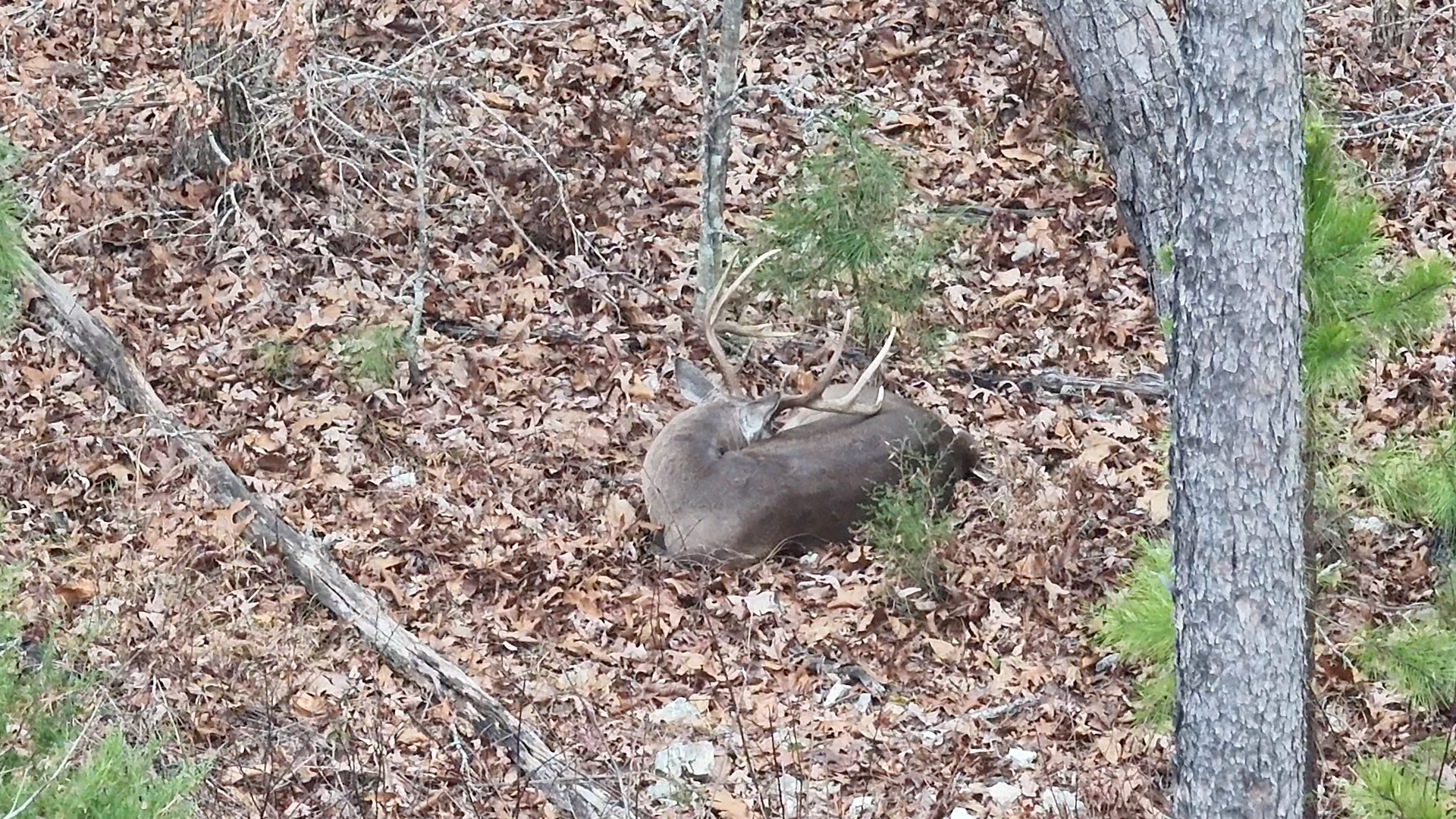
There are few pursuits so effective at making a person question their understanding of deer behavior as spending considerable time watching deer that do not know they are being watched.
Thermal drone technology has afforded me this opportunity on a scale that would have been difficult to imagine only a few decades ago. Rather than depending upon the occasional animal emerging into a field or crossing an opening at an agreeable hour, I can repeatedly examine deer in locations where they might otherwise escape observation.
During periods of excessive heat, the view can become remarkably monotonous. Animals remain beneath available shade for extended periods, changing position occasionally but displaying little of the activity one ordinarily associates with evening feeding movement. To a hunter stationed on the opposite side of the property, the country might appear almost entirely devoid of deer, which would no doubt provide excellent material for a discussion about the effects of the moon.
As evening approaches, however, these animals may stir, and the activity that had been conspicuously absent during the afternoon becomes increasingly apparent. On some exceptionally hot days, I have observed deer delay their departure from cover until the final twenty or thirty minutes of usable daylight, after which their movement toward feeding destinations becomes comparatively rapid.
The interesting thing is not that deer move when the evening becomes cooler, which would hardly qualify as a remarkable discovery, but the apparent consistency with which excessively warm conditions seem to influence their activity.
Across thousands of observations, I have repeatedly encountered similar patterns during periods of unusually high temperatures. These are observations rather than a count of unique deer, and some individuals may have been observed more than once. I would be reluctant to suggest that every deer responds identically, but the frequency with which I have observed this general pattern has been difficult to ignore.
I should point out that these observations do not constitute a controlled experiment. Thermal drones are remarkable instruments, although they do not possess the useful ability to eliminate confounding variables, and repeated observations cannot by themselves establish that temperature independently caused the behavior recorded. Differences in habitat, survey timing, animal detectability, and the possibility of repeatedly observing the same individuals must all be considered.
Still, the physiological explanation is reasonable. Deer, like other mammals, must keep their internal temperature within a functional range, and their activity generates metabolic heat that they must eventually dissipate. When environmental conditions make this process more difficult, redistributing activity may offer an advantage.
The question, then, is whether the apparent response is best explained by the cold front itself or by relief from the excessive heat that preceded it.
The Peculiar Importance of October
October occupies an awkward position in the annual affairs of the white-tailed deer, and an even more awkward one in the theories of those who hunt it. Across much of the whitetail's range, the month is characterized by declining daylight, changing food availability, increasing hunting pressure, and the gradual approach of reproductive activity. Temperatures may vary considerably, occasionally creating afternoons that resemble those in August.
A hunter entering the woods during such conditions may find the experience decidedly unpleasant. A buck, meanwhile, may have his own reasons for remaining beneath suitable cover, and neither is necessarily enjoying their afternoon.
It is under these circumstances that a substantial cold front tends to attract the most attention. After several afternoons in the eighties, a forecast promising temperatures in the fifties is greeted with the sort of enthusiasm one might expect if the deer had collectively announced their intention to surrender.
There may be sound biological reasons to consider such a change important. An animal experiencing excessive environmental heat faces different physiological circumstances from one occupying an environment in which maintaining body temperature requires comparatively little effort. The eventual response will depend upon the animal, the available habitat, and the severity of the conditions, but the distinction between these circumstances is worth examining.
October, however, offers another complication. Changes in food resources and habitat use may occur at approximately the same time as changes in temperature, while the approach of the breeding season influences the behavior of males. A mature buck that alters his movements during the latter portion of the month may respond to any combination of these influences, and isolating the contribution of weather becomes correspondingly difficult.
The hunter, observing only the buck and the forecast, must choose an explanation. Not surprisingly, the explanation often selected is the very one that informed the decision to hunt that afternoon.
I believe we should examine October more carefully than we usually do, especially when unusually hot weather gives way to more favorable temperatures. But the month should not be treated as a biological constant throughout the whitetail's range, nor should every increase in activity be attributed to the most conspicuous change in the weather.
The Complication of the Rut
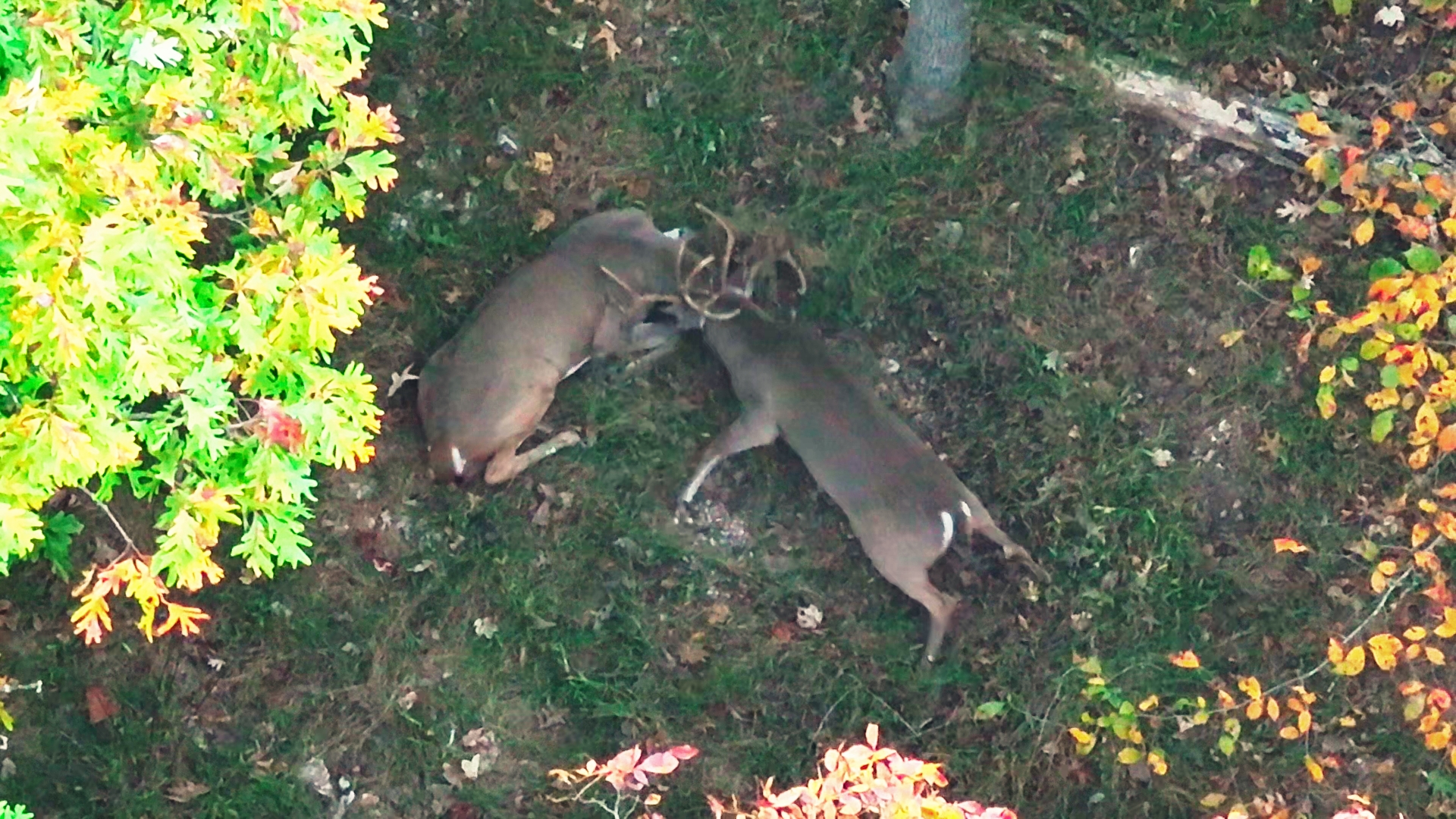
By November, across much of the Midwest, the business of reproduction has introduced complications of its own.
A mature buck searching for receptive females may travel considerable distances under weather that the hunting forecast regards as entirely unsuitable. He may wander through country he has scarcely visited for months, cross openings during daylight, and undertake journeys that would appear thoroughly out of character only a few weeks earlier.
At other times, the same animal may spend much of the day in a comparatively restricted area attending to a receptive doe, apparently indifferent to the splendid cold front that has persuaded half the county to request leave from work.
These behaviors arise from the circumstances of reproduction, including the distribution and receptivity of females, competition among males, and the individual tendencies of the buck concerned. Temperature may influence the conditions under which such activities occur, but it is hardly reasonable to assume that an animal engaged in the rather important business of perpetuating its species will abandon the enterprise because the afternoon becomes warmer than a hunter would prefer.
This is not an argument that weather cannot influence rutting behavior. It is an argument that reproductive behavior introduces a powerful competing explanation for the movements we observe, particularly when cold fronts arrive during periods already characterized by increased activity among males.
One might consequently remember a buck appearing at noon on the first cool day of November as further evidence of the cold-front theory, although a receptive female somewhere beyond the next ridge might explain his travels more satisfactorily.
From the standpoint of the theory, the inconvenience lies in the fact that one cannot readily persuade the buck to explain himself.
Are We Measuring Movement, or Merely Our Ability to Observe It?
There is a further difficulty in interpreting deer movement from hunting experiences, and it concerns the difference between what an animal actually does and what a hunter happens to witness.
A deer may travel a considerable distance through dense cover without once entering a field, crossing a logging road, or passing a trail camera. Another may travel only a few hundred yards but do so during the last minutes of daylight across an opening where it can be readily observed. The second animal will frequently be remembered as evidence of activity, although the first may have covered considerably more ground.
Environmental conditions may influence the timing, duration, or location of movement without producing a comparable change in the total distance traveled. These distinctions matter because GPS-collar researchers, trail-camera operators, and hunters may each be measuring different aspects of the same animal's behavior.
The matter becomes still more troublesome when we consider that hunters frequently arrange their limited time afield according to the weather forecast.
During October and November, when a hunter may have only a handful of days available, the promise of an approaching cold front often assumes extraordinary importance. Vacation days are requested, family arrangements are negotiated, and otherwise suitable afternoons are passed over because the forecast suggests the deer will be more accommodating on Thursday.
Thursday arrives. The temperature declines, and the hunter enters the woods with considerable confidence. An encounter with a mature buck provides not only a hunting opportunity but apparent confirmation that the decision was scientifically justified.
If hunters devote substantially more time to hunting during cold fronts than under other conditions, it is entirely possible for a disproportionate number of encounters to occur during those fronts with no corresponding increase in deer activity. A hunter with five afternoons during cold weather and only one during warmer conditions has little reason to be astonished when most sightings occur during the former.
This is a rather elementary difficulty, though it seems to have escaped a surprising amount of discussion.
The problem grows when members of an entire hunting community repeat individual experiences. Successful encounters during cold fronts are discussed and circulated as evidence of their importance, while animals moving through the woods during periods of comparatively little hunting activity contribute nothing to the conversation.
Under such circumstances, the very belief that cold fronts produce exceptional movement may encourage a distribution of hunting effort that subsequently appears to support the belief.
A useful investigation would need to account for hunting effort, observation conditions, and seasonal circumstances rather than simply comparing the number of deer encountered or harvested during different weather events. Even encounters per hour hunted would need to be interpreted cautiously, since hunters may choose different locations, employ different strategies, or devote greater attention to their surroundings depending on which football matchups occur that day.
The practical distinction between total movement and daylight encounters should not be dismissed, since the latter is plainly important to hunters. But a meaningful improvement in hunting opportunity is not necessarily evidence of an increase in overall movement, and neither can be established reliably from a collection of memorable afternoons.
Where I Believe the Emphasis Belongs
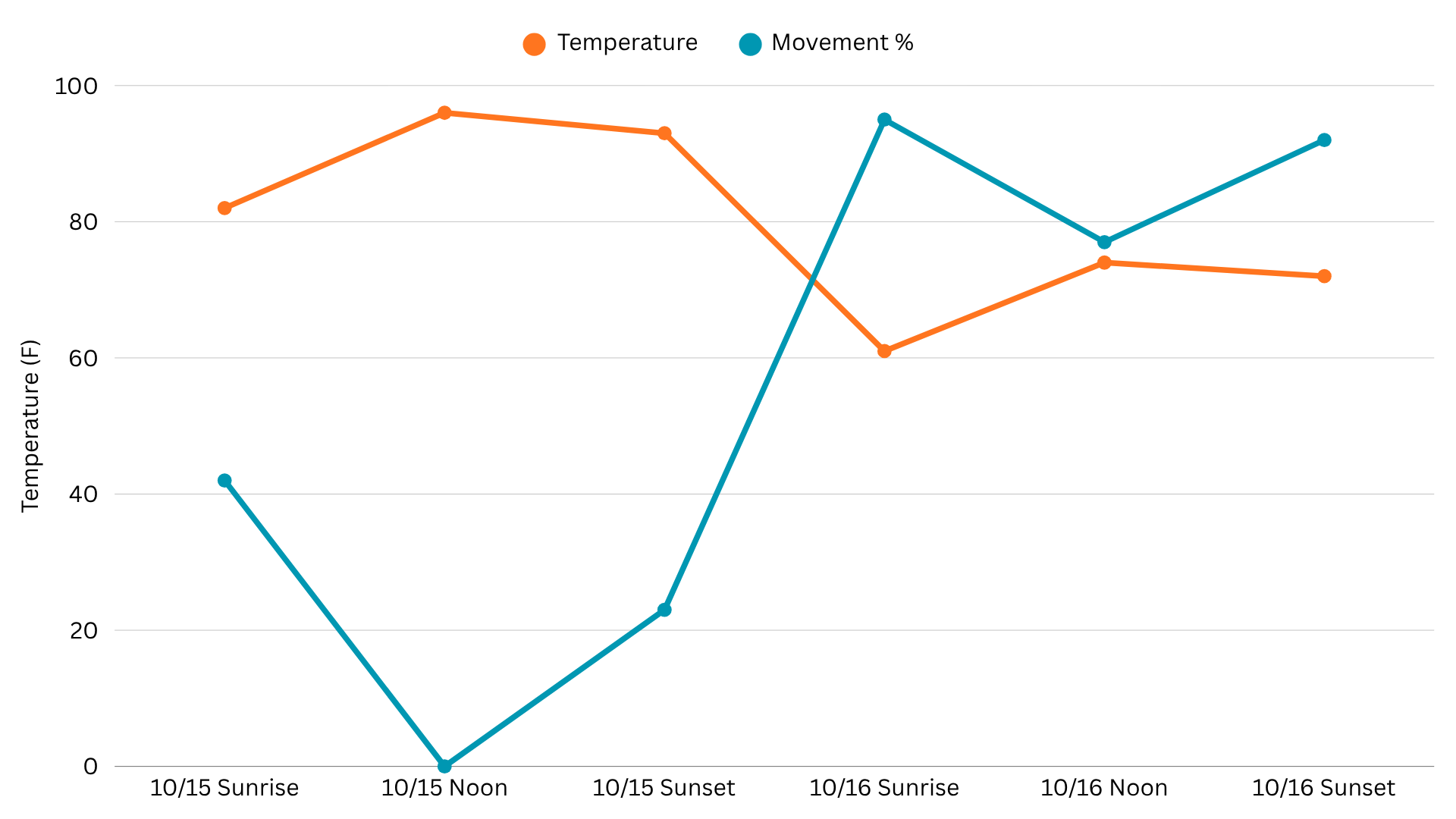
After considering the scientific literature alongside my field observations, I am increasingly inclined to question whether the ordinary cold-front discussion begins with the most useful variable.
My interest is less in the magnitude of a temperature decline than in the conditions the animal was experiencing beforehand. An afternoon during which temperatures fall from ninety degrees into the sixties presents a different biological circumstance from one in which they fall from fifty degrees into the twenties, notwithstanding that either event may be enthusiastically advertised as a substantial cold front.
If excessive warmth has influenced an animal's activity, the return of more favorable conditions may reasonably be expected to alter the constraints under which it operates. Whether this results in greater total movement, an earlier departure from cover, or some other behavioral adjustment remains a question requiring more deliberate investigation.
The important point is that one cannot properly understand an environmental change without referring to the conditions that preceded it.
This is relevant to the hunter with limited time afield. The distribution of food, suitable bedding cover, the movements of receptive females, hunting pressure, and the ability to approach a location without alerting deer remain important considerations whether the forecast is agreeable or otherwise.
I would certainly be interested in an approaching decline in temperature following several days of excessive heat, especially where recent observations suggested deer had been reallocating much of their activity to the cooler portions of the day. I should be considerably less inclined, however, to discard an otherwise sound hunting opportunity merely because the temperature was not expected to perform some particularly impressive feat.
There is enough uncertainty involved in locating and approaching a mature buck without voluntarily surrendering suitable opportunities to a weather forecast.
A Final Consideration
Deer hunting has always possessed a generous collection of theories, some supported by evidence, others sustained largely by repetition, and a few that appear capable of surviving any observation that contradicts them. The supposed influence of cold fronts has secured a firm place among these beliefs, perhaps because it suggests that anyone with access to upcoming weather information can anticipate the unpredictable movements of a wild animal.
The scientific literature presents a less accommodating picture. Short-term weather changes have not consistently demonstrated the substantial influence upon movement that popular hunting wisdom would lead us to expect, while my thermal drone observations suggest that the effects of excessive heat deserve considerably more attention than they ordinarily receive.
I do not consider these observations sufficient to establish a general rule, nor would I wish to replace one oversimplified explanation with another. The relationship among temperature, physiological constraints, reproductive behavior, and movement is complicated, and understanding it properly will require observations collected under a variety of conditions with sufficient care to distinguish the effects of each.
For the present, it seems reasonable to entertain the possibility that some of the movement attributed to cold fronts represents the restoration or redistribution of activity following periods of unfavorable environmental conditions. That hypothesis provides a useful direction for further investigation while allowing for other influences that researchers have yet to examine adequately.
I have no objection to anyone arranging a hunting schedule around the weather, provided they understand that the deer have made no corresponding agreement.
Fine bucks will undoubtedly continue to be taken during cold fronts, and each will lend further credibility to a theory whose reputation has long since outgrown the evidence supporting it. I have no intention of disputing these successes, though I suspect that during the latter part of October and throughout the breeding season, many of those same bucks might have met a similar fate even if the weather had been less cooperative. It is a curious habit of hunters to spend weeks studying an animal, its habits, and the country it inhabits, only to give the weather most of the credit when their efforts finally succeed.
Scientific Reference
Webb, S. L., Gee, K. L., Strickland, B. K., Demarais, S., & DeYoung, R. W. (2010). Measuring Fine-Scale White-Tailed Deer Movements and Environmental Influences Using GPS Collars. International Journal of Ecology, 2010, Article 459610.