




By Ryan Fair
Trail cameras have probably helped me kill more deer than any other piece of modern hunting gear I own. They have also caused me to mess up more good spots than I care to admit.
That second part is something hunters do not talk about nearly enough.
We love getting pictures. We love checking cameras. We love knowing a certain buck walked past a certain tree at 7:42 on a Tuesday evening. But somewhere along the way, getting information can become more important than protecting the deer we are trying to hunt.
I have been guilty of it plenty of times.
I have walked into a spot because I could not stand waiting another week to check a card. I have moved cameras around during September because a buck quit showing up. I have freshened scrapes, trimmed limbs, swapped batteries and generally made way too much commotion in places that probably would have been better left alone. Eventually though, mature bucks have a way of teaching you better.
Checking Cameras Too Often
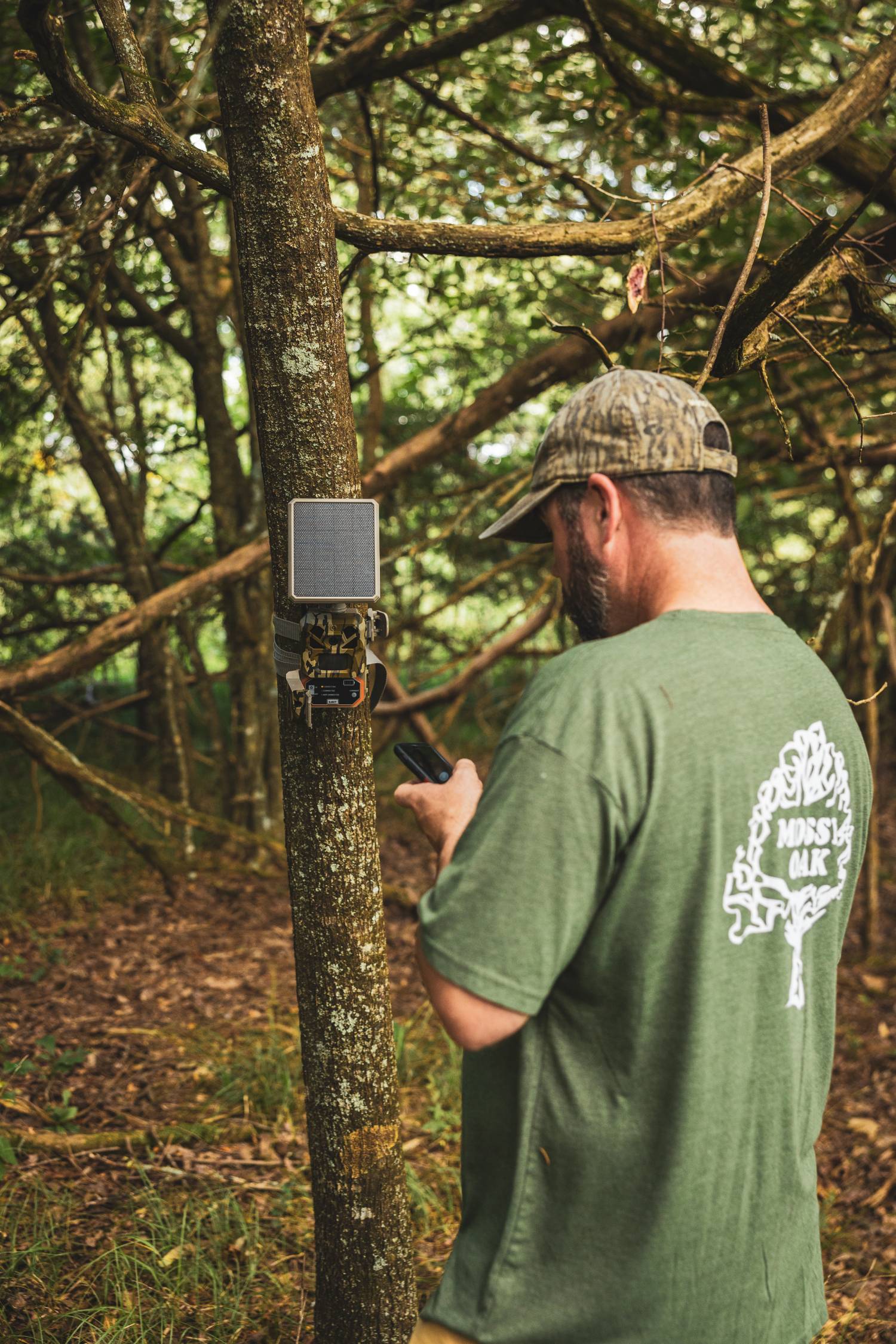
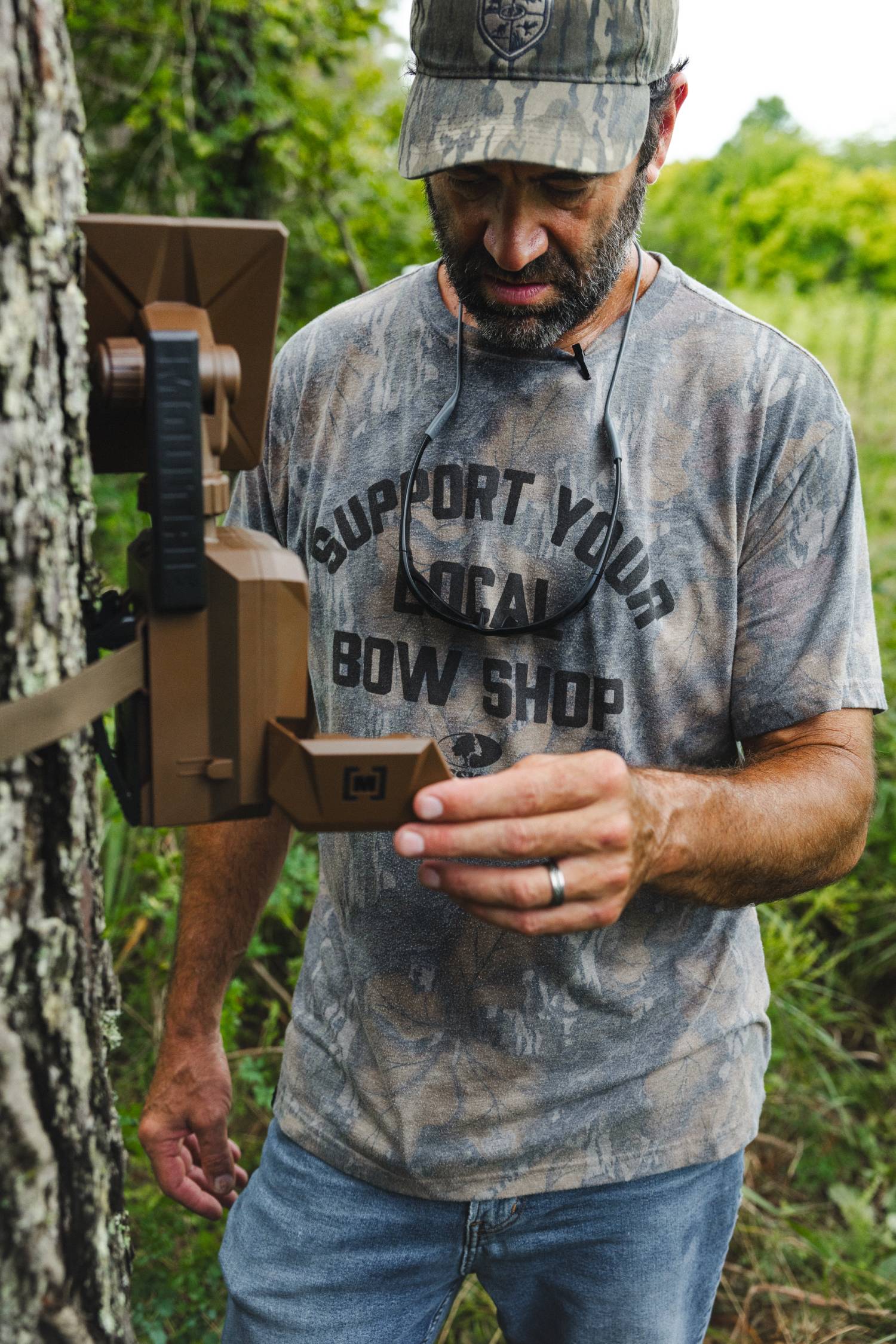
Pictured: Checking the Moultrie Edge 4 Cellular Solar Trail Camera
This is probably the biggest mistake hunters make, especially during summer. A camera has been sitting for five days and curiosity starts getting the better of you. Maybe you saw a good buck there last week. Maybe your buddy just sent you a picture of a giant. Pretty soon you convince yourself there is some legitimate reason to walk in there. When most of the time, there isn’t.
Summer deer can tolerate a fair amount of disturbance around field edges, mineral sites and other low-pressure locations. But as September rolls along and bucks begin shifting toward fall ranges, I become much more cautious. Every trip into the woods leaves something behind.
Your boots leave scent. Your hands leave scent on the camera. You brush against vegetation. Maybe a deer watches you walk away from 80 yards away and you never even know it happened. One intrusion probably will not blow a spot up completely, but several of them can add up fast. The older I get, the more I believe mature bucks notice patterns before we ever realize we are creating one.
Putting Cameras Too Close to the Bedroom
There is a difference between knowing where a buck lives and needing a photograph of him standing beside his bed. I used to push cameras deeper and deeper because I wanted better information. If a camera showed a buck entering a field after dark, I wanted to know where he came from. Then I wanted to know where he staged. Then I wanted to know where he bedded. Before long, I was practically knocking on his front door.
That can work occasionally, but it can also cost you the deer before the season even gets started. When possible, I would rather gather information from the outside in. Field edges, creek crossings, logging roads, scrape lines and transition areas can tell you a lot without forcing you into the thickest cover on the property. Sometimes the best camera location is not the spot that gives you the most pictures. It is the spot that gives you enough information without changing how the deer use the area.
Chasing Every Picture
This one has probably burned me more than anything. A good buck shows up on a camera and suddenly everything changes. You move another camera closer. You start walking trails looking for tracks. You hang a stand. Then maybe you move that stand because you found another rub 100 yards away. Pretty soon, that one picture has caused three or four trips into the same area.
Mature bucks are already moving quite a bit during late summer and early fall. Food changes, crops mature, acorns begin falling, velvet comes off, and bachelor groups break apart. A buck disappearing from a camera does not always mean something is wrong. Sometimes he simply moved.
I have learned to give those situations more time. Instead of immediately chasing the deer, I start looking at the bigger picture. What food sources changed? Did the wind change? Did nearby farm activity increase? Are acorns dropping somewhere nearby? Trail cameras are supposed to help you make better decisions. They become a problem when every photograph causes another decision.
Ignoring Access
Where you put a camera matters, but how you get to it matters just as much. I have had cameras positioned perfectly on a deer trail only to realize later that I had to cross the same trail to check them. That defeats the purpose.
When I am placing cameras now, one of the first things I think about is access. I want to use field edges, creeks, ditches, roads or any other feature that allows me to get in and out without wandering through where deer are spending most of their time. This becomes even more important during September and October. If I have to walk through bedding cover or cross a major travel corridor every time a camera needs attention, I probably need to find another place for the camera.
Knowing When to Pull a Camera
There comes a point when information has done its job. This is something I had to learn. Years ago, I wanted cameras running right up until the day I hunted a spot. Now there are places where I would rather pull the camera early and leave the area completely alone. If I already know a buck is using a certain trail, staging area or scrape line, there may not be much to gain by continuing to walk in there.
This is especially true when you’re not using cell cameras.
Every card pull requires an intrusion. Every battery change requires an intrusion. Sometimes knowing less is actually better if it keeps the spot clean. I have pulled cameras several weeks before hunting an area simply because I felt like I already had enough information. At that point, I would rather hunt fresh deer than collect fresh pictures.
Let the Camera Work for You
Cell cameras have changed the game because they allow hunters to gather information without physically entering a spot. Even then, I still try not to let the constant stream of photos dictate every move I make. A nighttime picture does not mean I need to move a stand. One daylight picture does not mean I need to hunt tomorrow. And a buck disappearing for a week does not mean he is gone.
The best trail-camera information usually comes from patterns built over time.
I pay attention to wind direction, weather changes, daylight movement, food-source shifts and how frequently a buck is using an area. One photograph is interesting. Ten photographs showing the same general behavior are useful. That is a big difference.
Sometimes the Best Move Is Doing Nothing
That might be the hardest lesson trail cameras have taught me.
Hunters like to tinker.
We like moving things, checking things and trying to improve things. But mature bucks usually respond well to the exact opposite. They like consistency, security, and places where people are not constantly walking around. Trail cameras should help us understand those places without ruining them.
I still use cameras heavily. I probably always will. But I try to look at every camera location through a simple question now: Is the information I am gaining worth the intrusion it takes to get it? If the answer is no, I stay out. Because when a mature buck finally starts doing exactly what you hoped he would do, the last thing you want is for the camera that helped you find him to be the reason he disappears.