




Robert S Dieter MD RVT ALM
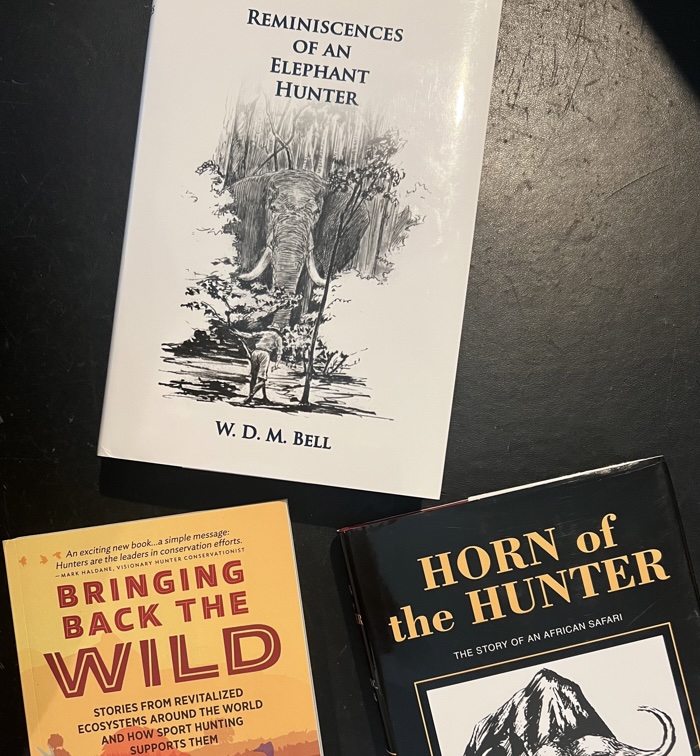
A few things have intrigued me, not always good or bad, just what I have found interesting. Why do some people have two middle names like Walter Dalyrmple Maitland Bell. Also, what does it take to have a nick name? Bell not only had two middle names, but he also earned the revered nickname of “Karamojo Bell.” Some of the books we read give us a glimpse into another world or way of life, a mystery, a sense of adventure, or a moral compass. Often these can be fictional stories, but when they are true-life autobiographies giving us a glimpse of an intentional way of life, seeing the world as a place to be explored rather than intimidated by, then we are inspired by such readings. In Reminiscences of an Elephant Hunter, Bell tells the story of his life, in his own words, and we are strengthened.
There are a number of Scottish naturalists, explorers, writers, and sometimes all in one. Bell describes his childhood in his autobiography. Born to successful parents outside of Edinburgh in the late 19th century, his parents died before he reached double digits. Despite attempts by his older brothers, Bell managed to find himself in Uganda at 16 years old. Imagine, the same age you get your driver’s license, you are hunting lions and then Bell decides to head to Alaska for the Gold Rush. But, what he describes in the book is earning his way by not panning for gold, but hunting to provide meat for those that are panning for gold. Bell’s naturally positive character is uplifting despite the reality of how arduous and difficult finding meat became, “Although I had no difficulty in filling the cabin with frozen meat, much was inevitably wasted—that is, eaten by wolves. When I killed a moose, I could not possibly get it all home at once…Inevitably much of it was gone when I returned for it. In spite of the difficulties, I soon had that shack piled with meat ready for Bill’s return.” The coup de grâce is that he was cheated out of his earnings, “…I left what was then one of the best game countries I knew outside of Africa. There was no word of Bill at the claims, and no word of Bill in Dawson itself…Whether he skipped with the money or was caught in a spring break-up, I never learned.” Resilient and undeterred, Bell describes how he joined the Canadian Mounted Rifles to serve in the Boer War to get back to Africa, “I now had to face up to a crisis in my affairs. I was pretty well cleaned out. I was standing around...and thinking about what in the world I would do next when I head that some war had broken out in South Africa and that Canada was said to be sending a contingent. The very thing, thought I. Back to Africa!”.
Throughout these times, Bell learns to shoot lions, moose, bear and more with a single shot rifle. His accuracy is described as legendary and he later develops techniques to shoot elephants with smaller caliber rifles by his precision.
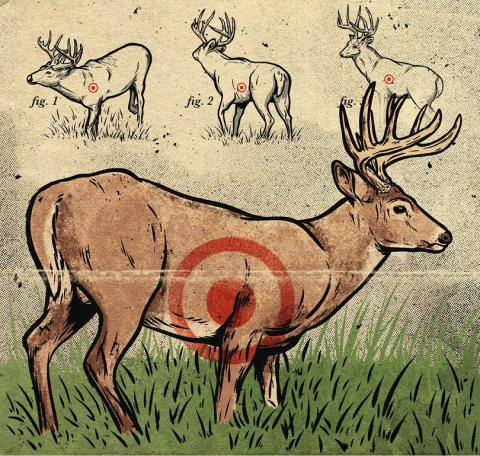
Bell’s Reminiscences of an Elephant Hunter should deliberately be juxtaposed to Roosevelt’s African Game Trails ,Hemingway’s Green Hill of Africa, Ruark’s Horn of the Hunter, or Arnold’s modern books about the African Safari, Bringing Back the Wild. Bell shows us the progression through his life from his youthful rebellion in Scotland to Africa, the Yukon, and back to Africa. He becomes not just another hunter, he becomes Karamojo Bell, the elephant hunter. His precise anatomic mapping of the best shot placement is used today, allowing him to shoot over a thousand elephants, many with his Rigby 7x57 (.275) with 172.8gr bullets; imagine using a .30-06 with slightly better ballistics than the 7x57 for elephant hunting.
Bell was willing to face head on any obstacle he encountered, “On our journey through the highlands we were hampered by heavy rains and swollen rivers. But we knew how to deal with natural obstacles. Both of us were experienced travelers and nothing could stop us. Where we had trouble was in dealing with the local chiefs who were far more trouble than were ordinary Africans. These gentry seemed to combine all the objectionable traits of every race.” The book details how he needed to navigate these obstacles of nature and man.
There is such an incredible amount in this book which tells of his life from beginning to end. Like Saint-Exupéry’, he learned to fly and did so in World War I. In his later years he returned to Scotland and lift on his family estate, enjoying sailing. Reminiscences of an Elephant Hunter compromises the arrangement of his memoirs, is divided into his autobiography and hunting stories and scattered with drawings and even some photographs. Bell not only describes a lifetime of purposeful adventure and hunting, but we have all benefited from his attention to anatomy and precision hunting.