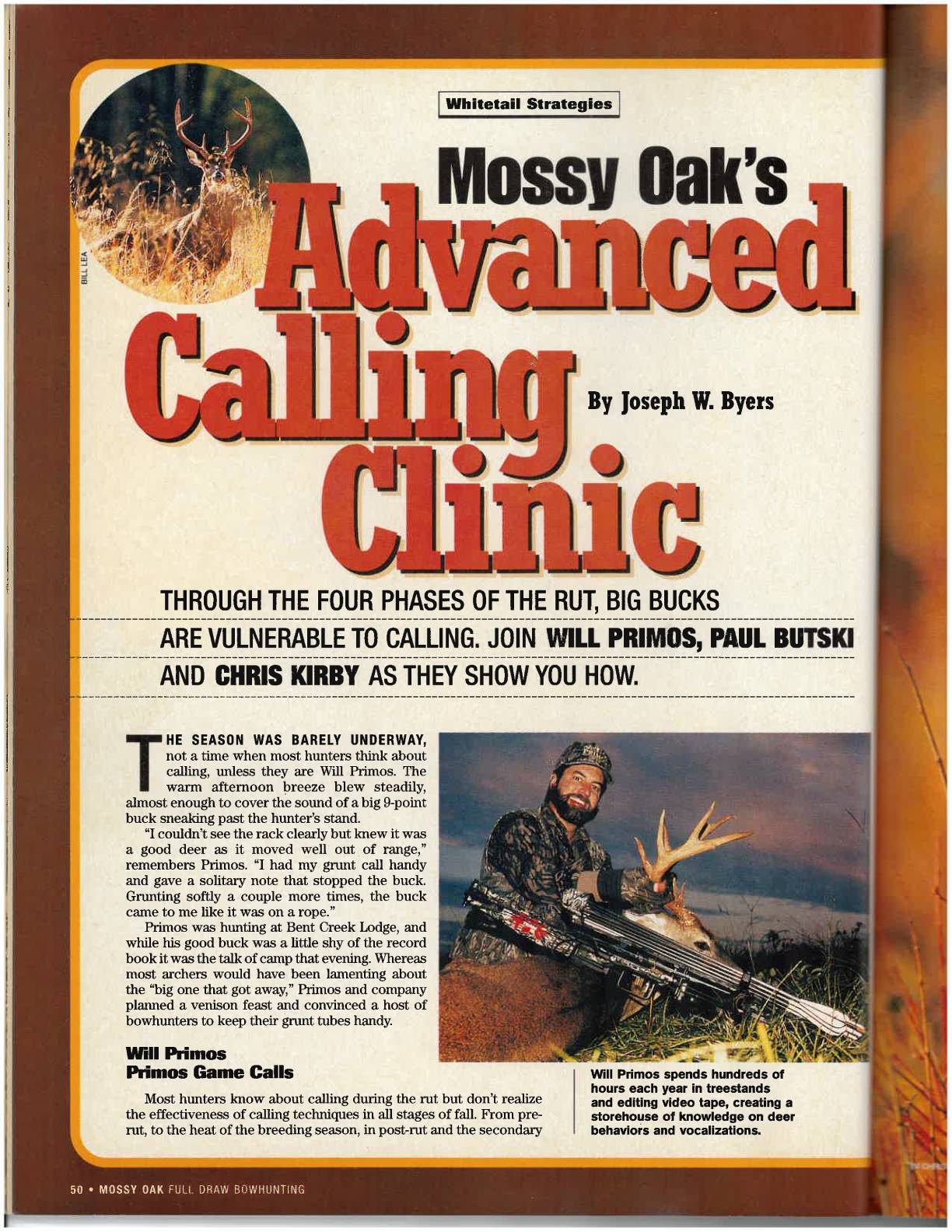
By Joseph W. Byers
Through the four phases of the rut, big bucks are vulnerable to calling. Join Will Primos, Paul Butski and Chris Kirby as they show you how.
The season was barely underway, not a time when most hunters think about calling, unless they are Will Primos. The warm afternoon breeze blew steadily, almost enough to cover the sound of a big 9-point buck sneaking past the hunter’s stand.
“I couldn’t see the rack clearly but knew it was a good deer as it moved well out of range,” remembers Primos. “I had my grunt call handy and gave a solitary note that stopped the buck. Grunting softly a couple more times, the buck came to me like it was on a rope.”
Primos was hunting at Bent Creek Lodge, and while his good buck was a little shy of the record book it was the talk of camp that evening. Whereas most archers would have been lamenting about the “big one that got away,” Primos and company planned a venison feast and convinced a host of bowhunters to keep their grunt tubes handy.
Will Primos
Primos Game Calls
Most hunters know about calling during the rut but don’t realize the effectiveness of calling techniques in all stages of fall. From pre-rut, to the heat of the breeding season, in post-rut and the secondary rut, calling can make you a more successful hunter.
Will Primos is President of the well-known Primos Game Calls and the producer of the “Truth Series” of hunting videos. Hunting in front of a video camera for much of the year gives Primos an opportunity to evaluate the effectiveness of each call and “instant replay” deer reactions. If you’ve had the opportunity to watch deer behavior on video tape, you can appreciate this scientific approach.
“Two factors dictate deer reaction to calling in the rut or any other time,” says Primos. “Deer calls work best when you are at the right distance and in the right place. It’s difficult to call a buck over a fence or across a creek. You’ll have more success if you call in places where deer are likely to travel—near scrapes and thickets. Second, deer calls aren’t very loud, so it’s important to get as close as possible.”
Deer call to each other year-round so a grunt call is not just something to use during the rut. The grunt is issued by both males and females, continues Primos. “Many people think the female version is higher in pitch, but I have heard bucks with very high-pitched grunts. Does grunt to their fawns and other deer and often have a lower pitch than a buck. Anytime you sound like a deer you increase your chances of calling deer.”
Primos likes the pre-rut period best for rattling and grunting with a caution not to overdo this effective technique. “Bucks do much more pushing and shoving than clashing antlers,” he says. When you sound like a pushing match between two bucks in the pre-rut, you are saying, “a doe has come into estrus early and two males are battling for the opportunity to breed.”
Bucks are very territorial in the pre-rut and the presence of another breeder in the vicinity will cause dominant bucks to become aggressive. “The tending grunt is an invitation for another buck to ‘join the chase,’ but the sequence of the sound is the key. Tending grunts are continuous sounds. You are appealing to a buck territorially, and challenging it to be competitive.”
Primos thinks pre-rut is prime time for calling and urges hunters to experiment with a seldom-heard sound at this time. “Many people are skeptical about the estrous bawl and miss a dynamite opportunity,” suggests Primos. “This is a pleading low-pitched sound made by a doe that is ready to breed. We witnessed this behavior on a videotaped hunt. A doe made the sound very loudly and within five minutes, five different bucks came to her. She bawled frequently but ran off when the bucks began chasing her. You can make the sound with the Trophy Grunter by extending the ringing out toward the end. It’s a baaaah sound, almost like a sheep.”
Primos regrets the fact that the estrous bawl call has not gotten press coverage because he gets letters that highly praise the idea. Primos makes a small can that produces the “baaaah” sound by turning the call upside down. Each time you invert it, the sound is produced, making it practically foolproof in a treestand or ground blind.
Most hunters live for the rut, but this is the most difficult time of the year to call effectively. “It’s hard to pattern deer at this stage of the fall because does and bucks do not travel consistently. Animals are so busy chasing each other, it’s ‘hopscotch’ treestand hunting. Primos likes to quote his friend Hank Stern who summarizes the problem: “You don’t hunt deer where they are but where they want to be.” You have to be really lucky to guess where a buck will be chasing a doe unless terrain or cover funnels them into a specific spot.
Paul Butski
Butski Game Calls
Paul Butski is a resident of New York and a famous call manufacturer. Recently he just leased a new property and was excited about a particular ridge where he had seen a big 7-point buck. “I saw the buck two evenings in a row, but it was lower down the ridge and too far to shoot,” said Butski. “The next afternoon, I moved in quietly, checked the wind and put up a stand. I was sure the buck hadn’t caught my scent or seen me and I hoped it would travel the same route.”
Butski saw movement higher on the ridge and, as you might guess, the buck was walking and feeding directly toward the tree he had hunted two evenings before. “I used my grunt call and made a couple of soft sounds,” said Butski, “which stopped the buck in its tracks. I grunted twice more and then got ready. Sure enough, the buck made a baseline for my tree and came in, fairly relaxed, looking for another deer. When it offered a good angle at 18 yards, I made the final shot.”
Butski’s deer didn’t make the P&Y but was a respectable deer for the mountain ground he hunted. He’d had the animal been one of the Empire State’s suburban monarchs, it would have had tines galore.
Butski lives in Niagara Falls, New York, and hunts both sides of the border from Saskatchewan to Alabama. Despite this variance in terrain and climate, the savvy archer uses an adjustable grunt call as his No. 1 tool for success. Because he can adjust the tube for sounds that mimic fawns to rutting bucks, he uses the call that best suits the situation.
“So often you get a deer beyond shooting distance and a grunt will bring it around (like the 7-pointer),” says Butski. “I can’t ever recall spooking a buck with a grunt call—they either pay no attention or come to the call. It’s not quite as effective as a turkey call but can give you the edge on a once in a lifetime buck.”
Grunting can be effective in the pre-rut, according to Butski, who uses a doe call even before bucks begin to show rutting behavior. On a stand, he grunts every 15 minutes or so because deer may be moving behind him or just out of sight.
The buck-to-doe ratio is a factor as Butski hunts in various parts of North America. He often combines rattling with grunting and finds it most effective in locations where the buck:doe ratio is similar, such as Texas, Montana and Saskatchewan. He believes that grunt calls are more effective where dominant bucks have more competition. In Canada, he varies the reed in his calls to give deeper tones because deer average 50 to 100 pounds larger than stateside bucks. A deeper sound is more effective since Saskatchewan bucks average between 250 and 300 pounds.
Because Butski hunts in various parts of the country, he adapts his calling to whatever stage of the rut is in progress. On a post-rut hunt in Montana, near Great Falls (where else would a fellow from Niagara hunt?), he employed both persistence and calling skills.
“In Montana in late season, you can see deer any time of day, and I wanted to take advantage of off-hours hunting. I was in my treestand at first light but came back to camp around 10 a.m. so I could warm up, get a bite to eat and then spend the rest of the day in my stand. By noon, I had called in several smaller bucks but no shooters. Suddenly, I saw this good buck across a stream on a far canyon wall. I gave several grunts that turned the buck. Two more and the buck came down the slope, crossed the stream and approached the stand. The 20-yard shot ended the thrilling scenario and netted a nice 9-point buck that scored about 130 P&Y points.”
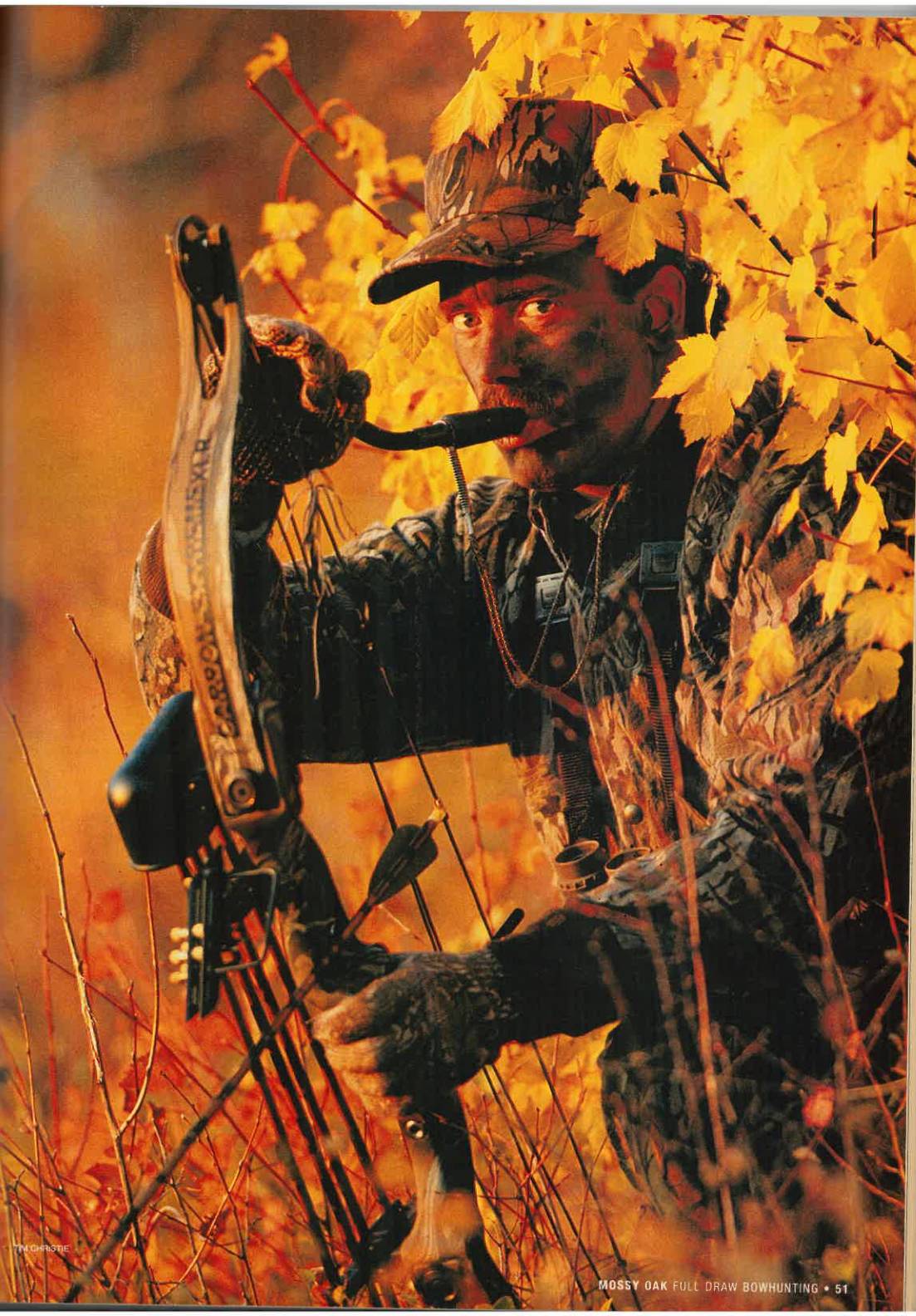
Chris Kirby
Quaker Boy Inc.
Chris Kirby grew up in a deer-calling family, headed by Dick Kirby, President of Quaker Boy Inc., a leader in calls for decades. Like Primos and Butski, Chris Kirby calls in more deer in the pre-rut stage than any other time. “Deer are constantly marking their territories and are curious about what’s going on,” he says.
“In particular, grunt calls work well because bucks are so high strung and more apt to come to antlers or grunts.”
Kirby killed a 3 1/2-year-old 8-pointer during the first month of the season last year. Overlooking a fresh scrape from a tree stand, he watched a small 6-point buck come in, suddenly snort and run away. Kirby grunted and got an unexpected result. The 6-pointer was long gone, but the larger 8 came directly to the scrape, apparently convinced that another buck was nearby and had chased the small buck away.
During the rut, Kirby relies on bleat calls. “During breeding, I believe that bucks have shifted gears, from establishing territory to seeking does. When they have finished breeding one doe, they are really susceptible to doe bleats.”
Quaker Boy is well known for turkey calls, and Kirby sees a parallel between turkey and deer calling in the post-rut. “After deer have been called a lot [by turkeys], they get a feel for what’s going on and don’t respond as well. In the post-rut, I focus on three or four places to hunt, especially if they contain doe activity. I wait and eventually a buck will come through. Grunting still works, just not as well.”
Kirby sees the secondary-rut as the second-wind season when bucks and a few does become interested in breeding again. “I use doe and buck grunt calls in combination,” says Kirby. “Deer have been through it all and need to have their interest sparked again. If you fire them up with the bleat and grunt call, you will have good success.”
Sometimes this combination can work too well, sort of. Kirby was rattling with 8 inches of fresh snow on the ground during a late archery season in December. Using a series of calls, he glimpsed a buck running toward him. “He caught me flat footed with my hands on the horns and call and I didn’t get a shot.” Kirby tried to call the animal back, a ploy that works on occasion, but this fellow was fooled once and wouldn’t fall for the ruse a second time.
Strategies For Success
Calling whitetails is the most exciting form of hunting in this writer’s opinion, and you can dramatically increase the odds of calling success by following a few pointers.
First, remember that deer will respond to what their ears tell them but won’t override their nose. The best callers in the world can’t entice a buck to approach if it gets a whiff of human scent. Calling or rattling from a tree stand is very effective but don’t rely on the elevation of the stand to cover your scent. Especially in cold damp weather, your scent falls like a 10-pound acorn and will spook game in bow range.
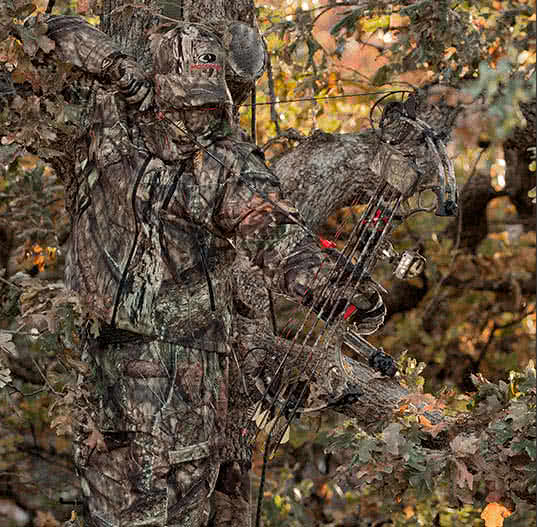
Many scent elimination products on the market really work. Spray your clothing and equipment with scent eliminator and a deer’s nose will not be the wiser. Scent-containing garments like Browning’s new SCENT-SORB and SCENT-LOK suits use modern scent absorption technology that traps human scent before it can escape into the air.
Location Matters
If you want a real calling treat, try hunting whitetails in Wyoming, Montana or South Dakota. Due to the lack of pressure and a good buck-to-doe ratio, even big mature bucks are suckers for rattling and grunting. I hunted with Jim Schell from Glenrock, Wyoming, last year and he rattled in bucks repeatedly. Because western whitetails tend to bunch up in creek and river bottoms, concentrations are high and the hunting is fantastic.
Closer to home, location is just as important. You’ll get a better response if you are near bedding areas because deer spend most of the daylight areas in or around such cover. If you have competition from other hunters, consider putting up “calling stands” that are near good cover but not within bow range of trails and crossings. If other archers use your stands, they’ll get discouraged and abandon them. Slip in quietly before daylight, get your horns and calls ready, and set the trap. Research from experienced hunters repeatedly suggests the first time you use a stand is the best, so plot the use of these calling stands carefully.
Making Things Happen
Calling and rattling for whitetails is fairly easy to learn but quality counts more than quantity. Most deer hunters don’t hear whitetail vocalizations because deer sounds are usually soft and infrequent. Even fights among bucks rarely ring the forest with clashing antlers. More often, antlers click a few times as bucks push and shove to establish dominance.
The best way to sharpen your skills during pre-season is to rent or buy calling videos from Primos, Butski, Kirby and other top-notch callers. By actually hearing the vocalizations you can reproduce them accurately when excitement is high and a buck is in sight. Adjustable calls are a big help since you don’t have to fumble through a pocket full of calls to find the right one.
Finally, calling adds spice to the success of the hunt. Any deer with a bow may be a trophy but rattle or call one in and see if it isn’t the story you tell over, and over, and ....