By Shawn Swearingen
Canvasbacks are ‘king’ of the divers and when it comes to puddleducks, it is ‘greenheads or bust’ for purists. However, wood ducks have the in-flight acrobatics of teal, are table fare as good (if not better) than mallards, drakes in flamboyant colors, and a call that haunts hunters’ dreams. Seasons can kick off with local birds providing fast shooting at daybreak and in the right locale, can make a colorfully full strap in January. What brought these marvelous winged wonders back from the brink?
At the turn of the 20th century, wood ducks were a rare sight to behold due to overharvest and loss of habitat. Now, thanks to conservation efforts and decades of harvest management there are as many as 3 million breeding pairs according to the U.S. Fish and Wildlife Services (USFWS).
Part of the successful conservation efforts have been nesting boxes. Kelly Warren, Waterfowl Biologist for Ducks Unlimited based in Oregon, shares, “Wood ducks need riparian and wetland habitats that provide the three basic necessities: food, water, and shelter. Shelter consists of nesting cavities, either natural or artificial ones such as wood duck boxes.”
“A lot of people don’t realize that boxes are not a ‘one-and-done’ project.They need to be installed an appropriate distance from other nesting cavities, require annual maintenance, and should be placed in ways to minimize predation. This includes using predator guards and mounting boxes on metal poles whenever possible.”
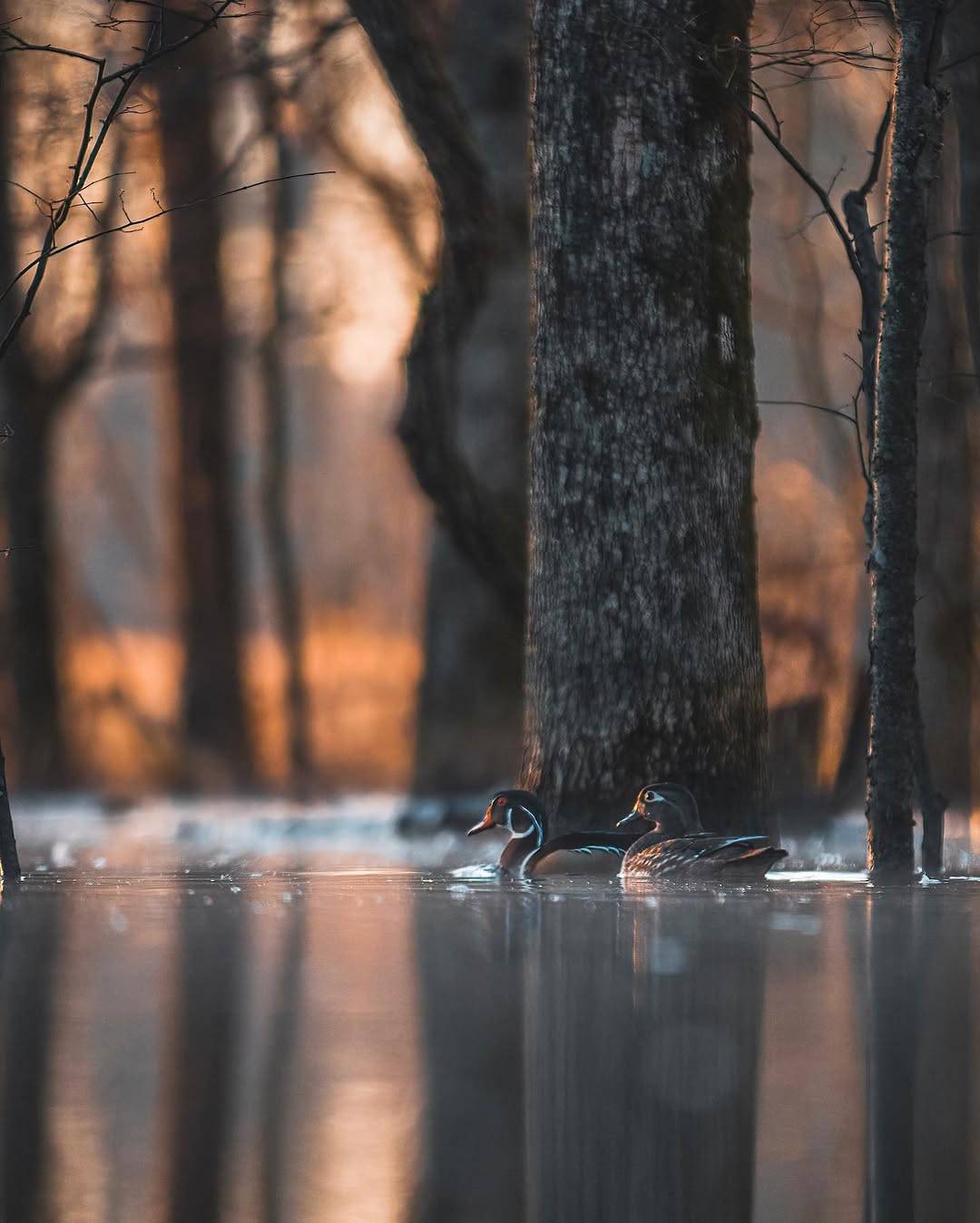
Photography by Matt Carey
Dr. Chris Nicolai with the Nevada Waterfowl Association echos, “Wood ducks need cavities. Several studies are showing that natural cavities are no longer limiting the population as they once were. Historically, the recovery of older age classes of cavity producing trees have helped wood ducks. The birds need to be able to get away from predators. Obviously, boxes should never be put on a bare tree trunk and should try to reduce predation [with predator guards]. Every predator likes to eat eggs. Keep in mind, that includes a few species of woodpeckers, too!”
Once the ducklings hatch, they need safe cover and abundant food resources to successfully reach fledging age. As Dr. Nicolai states, “The broods need good brood water too. Good stuff full of invertebrates!”
Kelly adds that, “Common mistakes people make when placing wood duck boxes include putting them on ponds that:
- Are loaded with predators, including largemouth bass, or have limited cover, allowing predators such as hawks, eagles, and herons to make short work of broods.
- Go dry by mid-summer, forcing broods to travel over land to find new water sources, which greatly increases their vulnerability to predation.”
I have been fortunate over the years to harvest wood ducks from the early days of season in October to the end of the season in January, and in the Pacific and Atlantic Flyways. What makes the wood ducks migrate? “Wood ducks are probably more migratory than many people realize,” states Kelly Warren. “I only have a few examples that might help explain what triggers migration. The first was a wood duck harvested in the Willamette Valley that had been banded in Idaho. This occurred shortly after a significant freeze affected Canada and parts of the Columbia Basin.”
“The second involved two banded birds that showed up in the lower Willamette Valley after a cold snap hit southern Idaho. They were subsequently harvested in areas with much milder weather. Lastly, I know several Nevada-banded wood ducks from Dr. Nicolai's work and graduate student projects have been recovered in the Willamette Valley.”
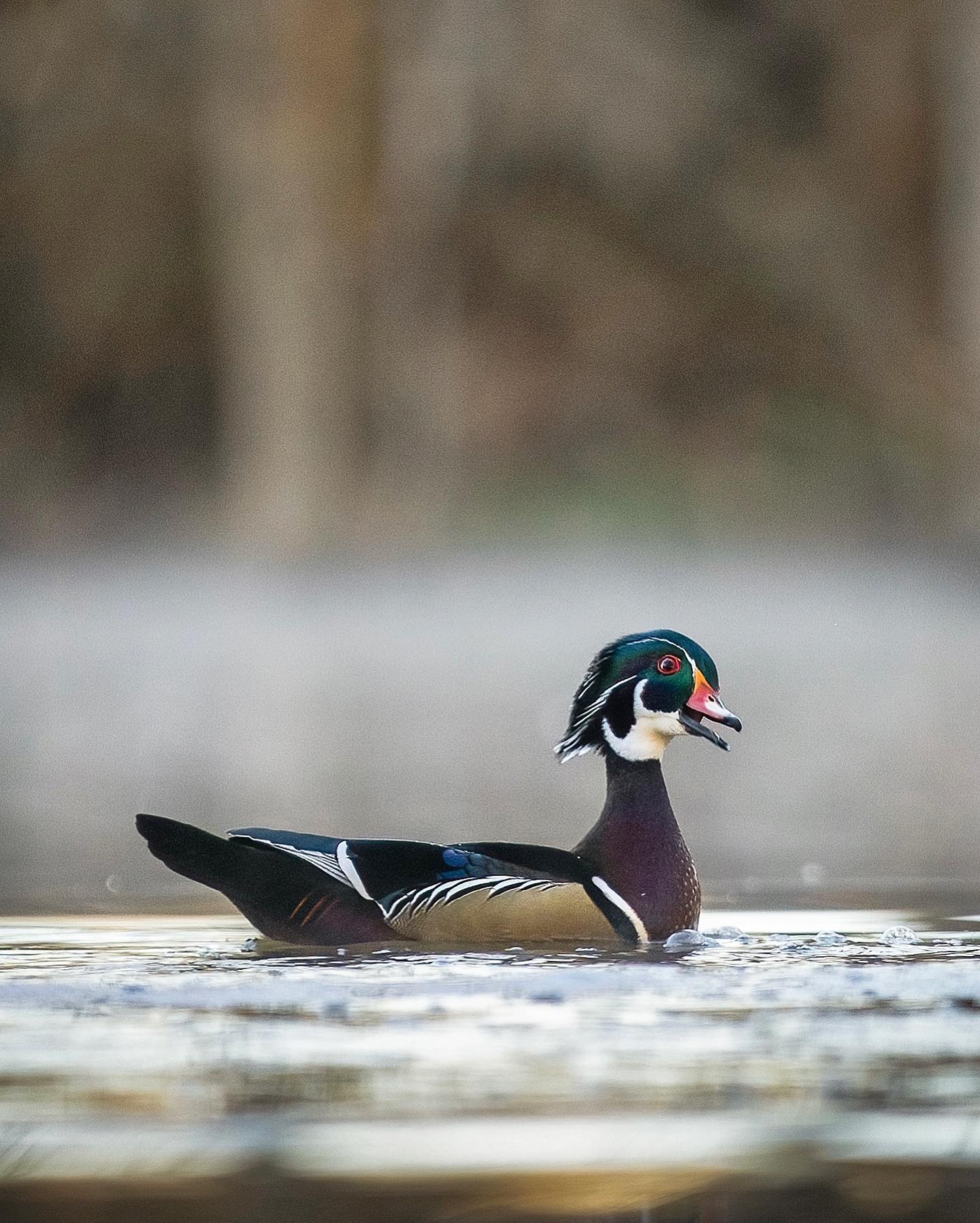
Photography by Matt Carey
What are wood ducks looking for when they are migrating? Kelly underlines that, “Food is probably the most important factor. Birds need to reach breeding season in good body condition to maximize nesting success. They also need cover in the areas they use and places where they can avoid disturbance. Wood ducks seemingly prefer nuts (Acorns and hazelnuts) and grains. Wood ducks are extremely adaptable to hunting pressure and other disturbances. They can utilize small, tucked-away microhabitats where many other duck species require larger or more open areas.”
“They need large seeds. Obviously acorns across the flyways, but out west, Russian olives can be important too. Wood ducks are also fond of corn! Keep in mind too, in the Pacific Flyway, they are known to winter at higher latitudes than mid-continent or eastern wood ducks,” Dr. Nicolai adds.
Despite decades of research and observation, there are still unknowns about the species. When putting together research for this article I had reached out to Dr. Philip Lavretsky of the University of Texas El Paso (UTEP) and of the duckDNA project with Ducks Unlimited, about something I had read about slight genetic differences between wood ducks. “The east/west split was first recorded by Dr. Jeffrey Peters and colleagues back in 2005. This is really the only publication showing some population structure, although conversations with Dr. John Eadie out of UC-Davis confirmed that they were seeing similar patterns then. This is also something that I think we can confirm with much better data than what was available back in 2005.”
Wood ducks have brought me many memories from my dog’s first retrieves, shared meals with friends, and even hanging and checking wood duck boxes with my sons. Efforts to bring wood ducks back from near extinction and has been a success story for the North American Model of Wildlife Conservation. I’m excited to see what research brings for us to know more about a duck species we care so much about.