



By Heath Wood
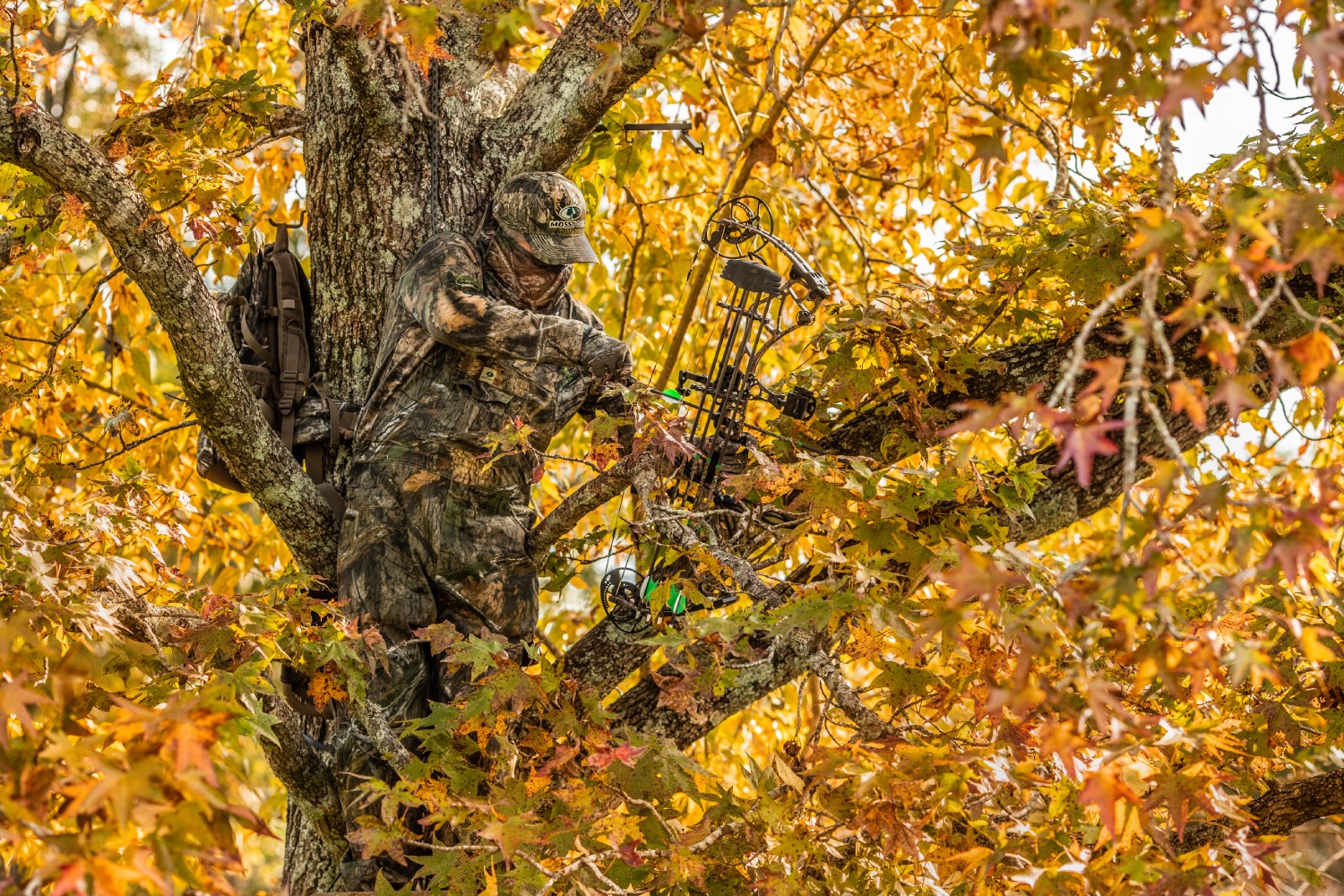
October is one of my favorite months to hunt whitetails from a saddle. The leaves are changing, temperatures are beginning to cool, and bucks are becoming increasingly active as the rut approaches. But October hunting also requires hunters to recognize that deer movement is changing throughout the month.
One of the greatest advantages of saddle hunting is the mobility it provides. Before making the switch, I often found myself sitting in a tree stand, wondering what was happening on the other side of the property or watching deer at a distance and wishing I were set up close to them. With a saddle, I'm no longer tied to a permanent stand location. Instead, I can choose a tree based on current deer movement, wind direction, and the freshest sign. The real key is knowing which areas offer the best opportunities and when it’s time to make a move.
Start With Food and Water
During the first part of October, I still pay close attention to food and water. Bucks are often following predictable patterns, especially when hunting pressure is still relatively low, which hasn’t disrupted their routine.
Food sources such as crop fields, food plots, acorn producing hardwoods, and other preferred browse can be excellent places to start. Water can also be important, particularly during warmer October weather. Rather than setting up directly over the food source, look for the trails and transition areas leading to it. A saddle allows you to get closer to these travel routes without necessarily sitting directly on top of the primary destination. A tree along a trail between bedding and food can be a much better setup than sitting on the edge of the food source itself.
Hunt the Staging Areas
As October progresses, staging areas become increasingly important. A staging area is typically a place where deer, or more importantly bucks, spend time before entering an open food source. It might be a thick patch of cover, a small section of timber, a brushy point, or a transition zone just inside the woods. This is one of my favorite places to set up a saddle.
Instead of waiting for a buck to walk into a field during the last few minutes of legal shooting light, I would rather intercept him while he is still in the timber. Look for heavily used trails, fresh rubs, tracks, and beds. If several of those clues come together in a small area, it may be worth hanging a saddle nearby. For example, a few years ago while hunting a family friend’s farm in southern Missouri, I found the perfect area to do just that. An old logging road that was overgrown with tall grass and small saplings. The road was about 100 yards long and went from a CRP field into the timber until it came to an end at the point of a thick covered ridge. The road had scrapes and rubs up and down it, which allowed me to take my Latitude Outdoors Lonestar Bottomland saddle and sit a few yards off of it, catching deer going from bed to food. I was able to harvest one of the biggest bucks I have taken on that farm by intercepting the deer traveling from point A to point B.
Find the Funnels
October is also a great time to start looking harder at terrain funnels. A funnel doesn't have to be dramatic. It could be a narrow strip of timber between two fields, a creek crossing, a steep bank, a fence line, or where cover naturally directs deer movement.
When several terrain features come together, deer often have fewer options for getting from one area to another. That's exactly what a mobile saddle hunter wants. Rather than trying to cover an entire property, find the places where the terrain forces deer to travel through a predictable area. Then determine how the wind will affect your access and where you can get into a tree without alerting deer.
Don't Ignore the Doe Groups
As the pre-rut begins to develop, doe activity becomes increasingly important. Bucks don't necessarily have to be chasing does for doe bedding areas to become valuable hunting locations. Mature bucks may begin checking areas where does are concentrated, especially as daylight activity increases. I like to look for the downwind side of doe bedding areas and the travel routes leading away from them.
This is another situation where a saddle shines. You can move into a tree that gives you the wind advantage without being locked into a traditional stand location. The goal isn't necessarily to sit directly over the bedding area. Instead, look for a travel route a buck can use while checking for does.
Hunt Fresh Sign
One mistake mobile hunters can make is becoming too attached to a location simply because it produced deer in the past. Fresh rubs, scrapes, tracks, and heavily used trails can tell you much more than sign that was made weeks earlier. When I find fresh sign concentrated along a travel route, I start looking for a nearby tree that gives me a good wind and shooting opportunities. This is where the mobility of a saddle system really pays off. You don't have to force the deer to fit your setup; instead, move your setup to fit the deer.
Pay Attention to the Wind
Finding the perfect October location doesn't matter if the wind is wrong. Before climbing a tree, I want to know where the wind is coming from and how it will behave throughout the hunt. Thermals, terrain, and nearby openings can all affect the way scent travels. I also consider how I'm going to access the tree. A great ambush location isn't great if getting there means walking through the area where deer are bedding or crossing a major travel route. Sometimes the best saddle setup is the tree that gives you a slightly less perfect shot but allows you to enter and exit without educating deer.
Don't Overlook the First Signs of the Rut
By the latter part of October, things can start changing quickly. Scrapes become more prominent, bucks begin checking more areas, and daylight movement can increase. When that happens, I start paying closer attention to scrape lines, community scrapes and travel routes connecting bedding areas.
A scrape located along a major travel route can be an excellent saddle setup, especially if there is cover nearby and the wind allows you to approach without being detected. You don't necessarily need to find the biggest scrape on the property. Sometimes a smaller scrape in the right location is more valuable because of where it sits in relation to travel.
Let the Saddle Do What It's Designed to Do
October is not the month I want to be married to one tree. Deer movement can change because of food availability, weather, hunting pressure, and the approaching rut. That's why I like using a saddle during October.
I'll scout, identify the freshest sign and then look for a tree that gives me the combination I'm looking for: deer movement, a favorable wind, good access and a clean shot opportunity. Sometimes that tree may only be 50 yards from where I hunted the day before or the previous weekend. Other times, it may be on an entirely different part of the property. That's the beauty of a mobile saddle setup.
October gives a bowhunter plenty of opportunities, but those opportunities often go to the hunter willing to adjust. Instead of sitting in the same stand hoping deer eventually return to an old pattern, use the mobility of your saddle to take advantage of where deer are moving right now.