




By Heath Wood
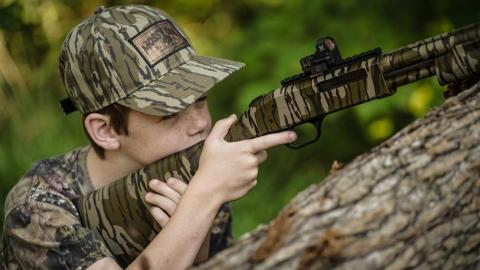
On a recent youth turkey hunt, I joined a fourteen-year-old hunter at his farm, both of us eager to see if we could get him on a mature gobbler. After arriving, well before sunrise, we gathered our gear and then ventured our way down a farm road. Because of hunting in years past, we stopped a mere fifty yards from the truck, and made a single note owl hoot, to see if anything was roosted down the road we would be walking down. In the past, I have been caught in the wrong location because turkeys were roosted closer than expected. Nothing answered on the first attempt, so the boy and I walked another fifty yards and tried again. Again, no response, so we made our way down the road. Suddenly, a tom gobbled back in the direction of our truck, where we had just owl hooted. We hurried and got set up, then, closer to the time the turkeys were supposed to fly down, I made a few yelps on a diaphragm call. The tom answered each time, as well as several other toms that were farther away in the opposite direction.

Photography by Tes Jolly
After several minutes of periodically calling, the closest tom flew off the roost, but into a bottom field that was on the other side of the roosted gobbler. Once the tom was on the ground, I called a couple more times, only to realize that a group of gobblers that was behind us had closed a large distance and were coming to our call. After running through scenarios in my head about whether we should move or stay put, I elected to position the boy behind me. The birds were closing fast, and I knew we didn’t have time to move. Within a few minutes, we had five mature toms at sixty yards, then forty, then thirty. When they got in range, the boy waited until their heads separated and one tom broke away. The boy aimed, then shot. Sadly, he missed his mark, and the birds got a lucky pass. The young man was heartbroken, yet, on a positive note, we called five longbeards into close range, and made the right choice by sitting still and not moving. Our plan worked.
When to move, when to sit, and when to risk it all; These are decisions every turkey hunter faces each season, and more often than not, they come at first light. When a gobble rips through the timber, close enough to raise the hair on your neck, or distant enough to make you question everything, you’re forced into that defining moment every hunter waits for. It’s the moment where a choice has to be made. You either make a move, stay rooted to your tree, or take the risk and make a bold play.
The Decision Window
At daybreak, every move matters. Turkeys haven’t hit the ground yet, hens are still dictating which way the tom is going to fly out of the tree, and a gobbler’s next ten minutes will shape your entire hunt. This is where many hunts are won or lost. The key isn’t just hearing that first gobble, it’s knowing how to interpret it: judging the distance, recognizing whether he’s still on the roost, reading if he’s alone or with hens, and understanding whether the terrain is working for you or against you. This is where the difference between good turkey callers and great turkey hunters reveals itself. Success lies in not just reacting; a great turkey hunter must read the moment.
Scenario 1: The Bird That Hangs Up

You set up perfectly, or so you thought. The tom answers your every call. He is cutting each of your calls off with a gobble. He is coming, then he stops at 80 yards, just out of range, and hangs up. This is one of the most common and frustrating situations in turkey hunting.
In this scenario, the tom expects the “hen” (you) to come to him; that is the way Mother Nature intended. Another common factor is terrain (a ditch, fence, or thick cover) that may be blocking his path. Or probably the most common, especially during the early part of the season, he’s with hens and waiting for them to lead. Either way, the gamble is now to move or stay.
Sit Tight:
He’s gobbling consistently
You know the terrain, and there’s no barrier
Mid-morning is approaching (he may break eventually)
Make A Move:
He’s losing interest
You suspect a physical barrier
You can reposition without being seen
Pro Tip: Sometimes the best move is no move at all. Many hunters get impatient and bump a bird that would have eventually committed.
Scenario 2: The Bird That’s Leaving
You hear him gobble on the limb, then again on the ground. You think he is coming to you, then he gobbles again, and now he’s getting farther. Every instinct tells you you’re losing him.
In this scenario, he is following hens in the opposite direction. His natural travel route is pulling him away, and you set up too far from his fly-down zone.
This is where the aggressive style of turkey hunting tactics shines. Cutting the distance quickly can work effectively. But make sure to move quietly. Use terrain (ridges, creek bottoms, logging roads) to stay hidden and get ahead of where he’s going, not where he’s been. This is also where the classic “run and gun” turkey hunting tactic can be effective, and when done right, it can turn a lost bird into a punched tag.
The Risk:
Move too fast or too carelessly, and you’ll bump him for good.
The Reward:
Close the gap, strike him again, and set up inside his comfort zone.
Scenario 3: The Silent Treatment
Many times during the early season, I have had toms gobble over 100 times on the roost. In my mind, I think, this is a done deal. Then, moments after he flies down, nothing! The hunt that once seemed so promising has now turned for the worse. Or did it?
He gobbled on the roost, maybe once on the ground, now… nothing. No gobbles, no drumming, just silence. This is where hunts fall apart mentally.
In this scenario, often, he’s with hens and doesn’t need to gobble. On the roost, he can’t see the hen(s), and he is gobbling. After he is on the ground, the hen is often there waiting, or she flies down too. After she is in sight, she keeps him quiet. Another scenario could be that he is coming in quietly. He has lost interest or thinks you did. This is where turkey hunters make one of the biggest mistakes: leaving too soon. Be patient and let him come naturally. Many longbeards have been killed by hunters who simply stayed put. Give it at least 30–45 minutes after the last gobble. Keep your eyes and ears peeled, many times the bird will slip in quietly, especially when he doesn’t want other gobblers to know he is moving towards a hen.
What To Do: Watch don’t just listen, call sparingly by using soft yelps, subtle clucks, and maybe soft purrs.
If you decide to move, do it with purpose. Know where you are going and how he will walk into your setup.
Reading The Woods

The best turkey hunters aren’t just reacting to gobbles, they’re reading and analyzing the entire situation. Terrain is often one of the biggest factors running through a hunter’s head. Ridges, fields, water, fences, and thick cover all influence movement, and a hunter must know where and how the land lies to determine the best setup.
Reading the woods doesn’t always mean the “woods” themselves. Hen behavior is also a way for a hunter to analyze their situation. If hens are vocal, the gobbler will follow them. See what the hens are doing and mimic them or determine what you must do to break the gobbler away.
Another way to read the woods is by recognizing hunting pressure. Birds on public land often demand more patience and a softer approach. Success comes from understanding why a gobbler isn’t responding, whether it’s the terrain, a hen, or pressure from other hunters, including past encounters that have made him cautious. In these situations, calling sparingly and knowing where that tom wants to go can make all the difference.
Sometimes you make a move and bump him. Other times, you sit tight, and he never shows. But then there are those moments when you get it right. You slide 50 yards, or stay glued to that tree, or make a bold loop to cut him off, and suddenly, there he is. That’s the gamble. And that’s what keeps us coming back.
There’s no perfect answer to that first gobble. No move that works every time. But the hunters who consistently fill tags are the ones who stay patient when it matters, get aggressive when they need to, and trust the instincts they’ve built through experience.
In turkey hunting, success often comes down to a single moment, a single decision, and the willingness to take that gamble at first light.